

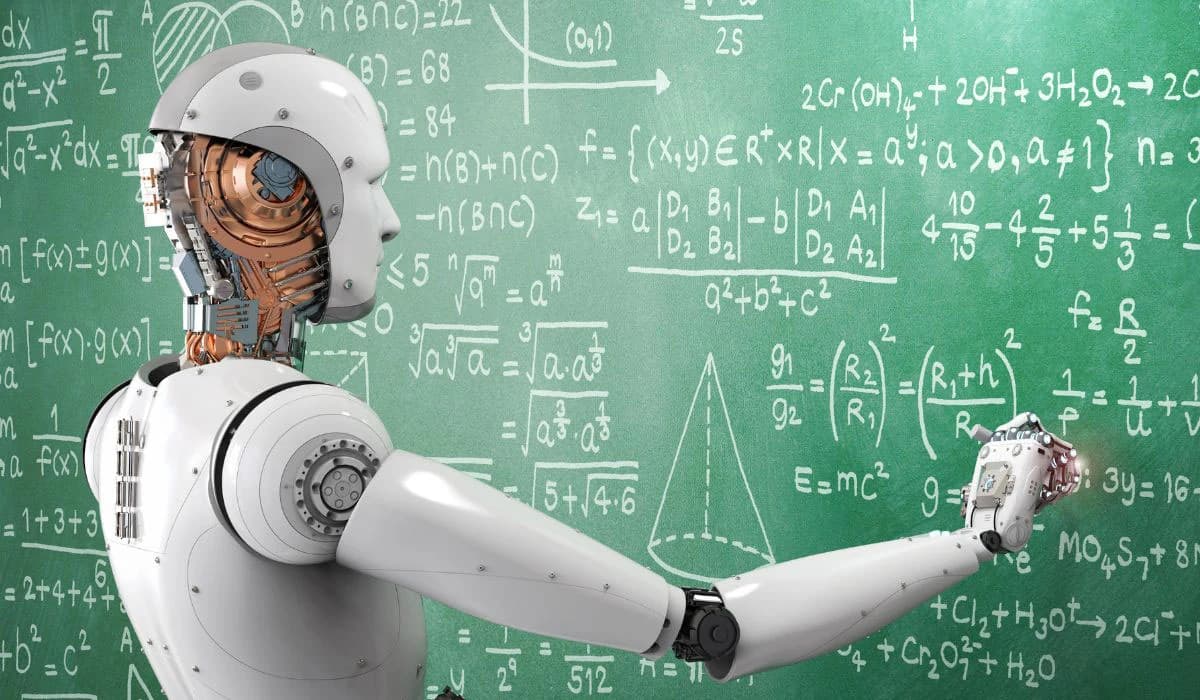






The debate over artificial intelligence (AI) in education should focus not on whether machines can replace teachers, but on how technology can strengthen teaching without undermining the human relationships at the heart of learning.
The question has gained renewed attention on social media and mainstream platforms. Demonstrations of AI answering questions, generating educational content and simulating conversations have fuelled speculation that machines could eventually take over the classroom. But the debate risks confusing the ability to deliver information with the responsibility to educate human beings.
AI can process enormous amounts of data, explain concepts, generate exercises and provide personalised learning support. These capabilities can improve education, particularly where teachers face heavy workloads and learners need extra help. But teaching involves far more than transmitting information. It requires professional judgment, emotional intelligence, ethical responsibility and an understanding of the individual learner.
The place of humanity and technology
At the Nigerian Schools Foundation (UK) seminar on October 17, 2026, I reaffirmed a principle that should guide society's engagement with technological advancement: "God does not create humanity to be replaced by technology, nor is humanity willing to replace humans with technology."
This reflects a faith-based understanding of human dignity, responsibility and purpose. Technology is a product of human ingenuity, created to solve problems and improve life, so its value should be measured by how well it serves humanity and not by its ability to displace people. Producing a convincing response is not the same as exercising moral responsibility. Simulating empathy is not the same as experiencing another person's suffering, and generating information does not automatically amount to wisdom. These distinctions matter in education, where decisions can shape a learner's confidence, character and future opportunities.
Teachers are more than conveyors of information
A teacher's work goes beyond explaining concepts, setting examinations and marking assignments. Teachers observe learners, identify difficulties, encourage participation and help young people build confidence.
A learner's poor performance may reflect more than an inability to understand a subject. It could arise from anxiety, family difficulties, inadequate learning materials, language barriers or a lack of confidence. An experienced teacher can investigate these circumstances, adapt instruction and decide when extra support is needed. AI can identify patterns in a learner's responses and recommend remedial exercises, but interpreting those patterns within the learner's wider circumstances requires professional judgment and often direct human engagement.
Teachers also model fairness, integrity, discipline, cooperation and respect. This matters in Kenya's Competency-Based Education (CBE) framework, which emphasises practical abilities, creativity, values and the capacity to apply knowledge. Such outcomes cannot be secured merely by giving learners digital content. They need suitable learning experiences, professional guidance, constructive feedback and interaction with others. A teacher can also recognise potential that formal assessments may miss, such as creativity, leadership, practical ability or perseverance.
What AI can realistically do in the classroom?
Rejecting the idea that AI can replace teachers should not mean dismissing its legitimate benefits. Used responsibly, AI can help educators prepare lesson plans, develop teaching resources, generate practice questions, analyse assessment results and provide extra explanations for learners who need them. It can support differentiated instruction and expand access to resources where conventional materials are limited. For teachers working under demanding conditions, automation could reduce time spent on repetitive administrative tasks and leave more time for learners.
These benefits depend on appropriate implementation. AI-generated content can contain errors, reproduce bias or present misleading information with apparent confidence, and learners may become overly dependent on automated answers. Schools must protect learners' personal data. Access to technology also remains uneven, and differences in internet connectivity, electricity, devices and digital literacy can widen educational inequalities if AI is introduced without adequate investment and planning. AI should therefore be treated as an instructional aid whose outputs need professional scrutiny, not as an unquestionable authority or a substitute for qualified teachers.
The future lies in human-technology collaboration
The most promising future for education combines machine efficiency with human judgment. AI can help teachers identify learning gaps, prepare exercises and organise information, and teachers can use these insights to decide what learners need. This could be especially valuable in large classes, where individual attention is hard to give.
Technological investment must not, however, become a reason to reduce the number of teachers or weaken professional support. Digital tools cannot compensate for overcrowded classrooms, inadequate facilities, insufficient learning materials or a shortage of qualified educators. Governments, school managers and policymakers should therefore treat AI adoption as part of a broader strategy for improving educational quality.
Teachers need training in digital literacy, AI-assisted lesson preparation, information verification, data protection and responsible technology use, and teacher education institutions should prepare future educators for both the possibilities and the limits of emerging technologies. Clear policies are needed on how AI should be used in assessment, how academic integrity can be protected and who is accountable when automated systems make mistakes. The aim should be to empower teachers, improve learning outcomes and widen educational opportunities, not to make human educators expendable.
Educational leadership must put people first
Every major technological development has challenged established practices. The printing press transformed access to written knowledge, radio and television expanded educational communication, and the internet changed how information is obtained and shared. Yet access to information has never removed the need to interpret, evaluate and apply it responsibly.
AI presents a similar challenge, although its ability to generate content and imitate human communication adds new complexity. Educational leaders must look beyond excitement about what technology can do and ask whether AI improves learning, protects children's rights, supports teachers' professional responsibilities and benefits disadvantaged communities. In Kenya, these questions should inform decisions on digital infrastructure, teacher preparation, curriculum implementation and the use of technology in CBE.
School leaders should set clear boundaries for AI use. Learners must be taught to verify information, acknowledge assistance where required, protect personal data and complete tasks that show their own understanding. Teachers should keep responsibility for professional assessments, safeguarding learners and decisions that need contextual knowledge and human judgment. From a faith perspective, this includes ensuring that innovation serves humanity's higher purpose, since knowledge must be accompanied by wisdom.
Technology should strengthen the teacher's role
AI will continue to transform how information is created, accessed and used, and education must respond rather than ignore it. But embracing innovation does not mean abandoning the human relationships that make learning meaningful. AI can explain a concept, generate a lesson plan and recommend an intervention, while teachers must still interpret learners' needs, exercise professional judgment, nurture character and take responsibility for educational decisions.
The future classroom may become more digital and personalised, but its success will depend on how well these innovations support learners and the professionals who guide them. A more constructive question than whether AI can replace teachers is how it can help teachers teach better, reach more learners and give greater attention to the intellectual, social and moral development of every child.
Technology can strengthen the tools of education, but the responsibility to educate must remain anchored in human dignity, professional accountability and the enduring value of the teacher.

Reader Discussion (0)
Sign in to comment