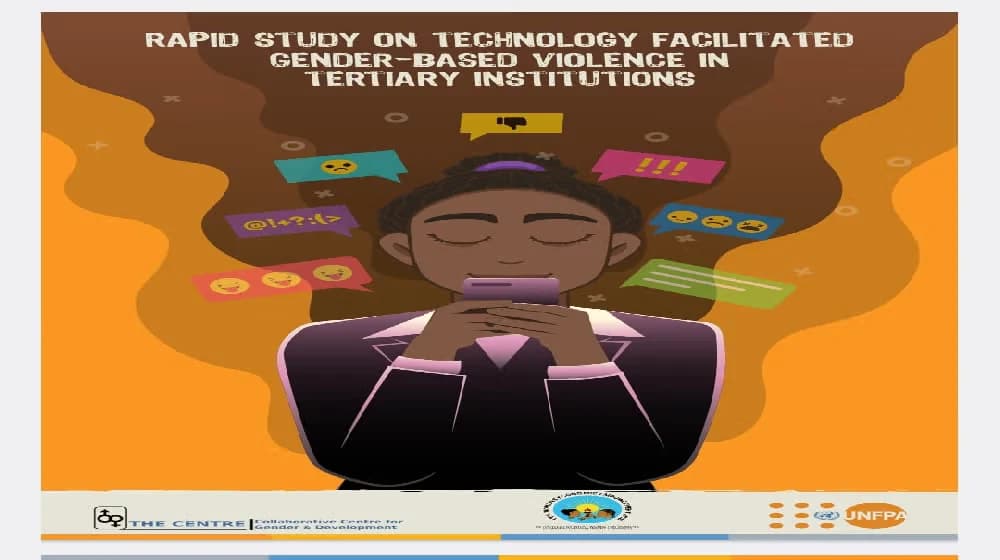









A disturbing picture of technology-facilitated gender-based violence in Kenya’s universities and tertiary institutions has emerged, with nearly nine out of every ten students surveyed at three institutions saying they had witnessed digital violence.
The findings highlight the dangers facing young people on platforms that support communication, learning and business but also provide channels for harassment, intimidation, humiliation and sexual exploitation.
The 2024 study by the Collaborative Centre for Gender and Development (CCGD), in partnership with the University of Nairobi Women’s Economic Empowerment Hub and supported by UNFPA, found that 89.8 per cent of students surveyed had witnessed technology-facilitated gender-based violence (TFGBV), while 39.3 per cent had personally experienced it.
Researchers engaged 728 respondents between October and December 2023 at the University of Nairobi, Zetech University and Kabete National Polytechnic. The findings relate to the institutions surveyed and should not be presented as national prevalence estimates. kenya.unfpa.org
Female students were disproportionately affected, while male students were most frequently identified as perpetrators.
Digital abuse follows students beyond campus
The research identified online defamation, cyberbullying and the non-consensual sharing of intimate images among the most common forms of abuse.
Students reported incidents involving social media and messaging platforms, including X, WhatsApp, Facebook, Telegram, Instagram and TikTok.
Personal disagreements, jealousy, romantic breakups, peer pressure and financial motives were among the reported triggers. The circulation of intimate or embarrassing material following relationship breakdowns exposed victims to humiliation and the possibility of content remaining accessible long after the original dispute.
The findings also highlighted risks arising outside student relationships. During focus group discussions, female students described receiving suggestive messages from service providers who had obtained their telephone numbers during transactions.
Researchers identified economic vulnerability, exposure of personal information, limited digital-safety knowledge and social pressures among factors increasing students’ exposure to abuse.
New students could be particularly vulnerable as they adjusted to unfamiliar environments and sought social acceptance. These circumstances underline the importance of incorporating digital safety into university and college orientation programmes.
Stigma and limited awareness hinder reporting
The consequences extended beyond the screen, affecting students’ psychological wellbeing, relationships and participation in social life.
Victims sought help from friends and other support networks, reported offensive material to platforms or approached legal actors. Others remained silent because of fear, embarrassment, stigma or uncertainty about reporting procedures.
Institutional support was not always well understood. Although counselling services were among the better-known sources of assistance, some students were unaware of available reporting and support mechanisms.
UNFPA’s account of the research also identified resource limitations within law enforcement and justice institutions, affecting their capacity to respond to evolving forms of digital abuse. kenya.unfpa.org
Investigating such cases can involve difficulties tracing anonymous accounts, obtaining information from platforms and preserving electronic evidence.
The findings point to the need for clear institutional procedures that explain where students can report abuse, how complaints will be handled and what support is available.
Universities and colleges also have a role in ensuring that survivors can seek assistance confidentially and without fear of retaliation.
Pwani conference to focus on prevention and response
The findings provide important background to the Third National Conference on Technology-Facilitated Gender-Based Violence, scheduled for December 1 to 3, 2026, at Pwani University.
The gathering will focus attention on strengthening prevention and responses to digital violence in universities and TVET institutions. pu.ac.ke
It falls within the global 16 Days of Activism Against Gender-Based Violence campaign, which runs from November 25 to December 10. UN Women Australia
The study calls for sustained digital-safety education, student-centred awareness programmes, clearer reporting procedures and stronger institutional support.
Its recommendations include strengthening counselling, peer support and gender desks, alongside targeted assistance for economically and digitally vulnerable students.
Better coordination between institutions, technology companies and justice agencies could also improve prevention and case handling.
As universities and colleges expand digital learning and online communication, student protection must extend to the platforms where learners study, socialise and conduct business.
The research highlights the importance of teaching responsible online behaviour, respect for privacy and practical ways of seeking help when abuse occurs.




Reader Discussion (0)
Sign in to comment