








For generations, academic grades have been regarded as the principal measure of intelligence and educational achievement among students. A student's potential has often been reduced to examination scores, classroom rankings and academic certificates.
Yet, as artificial intelligence (AI) increasingly transforms education, an important question emerges: Are our education systems preparing intelligent human beings or simply producing learners who know how to pass examinations?
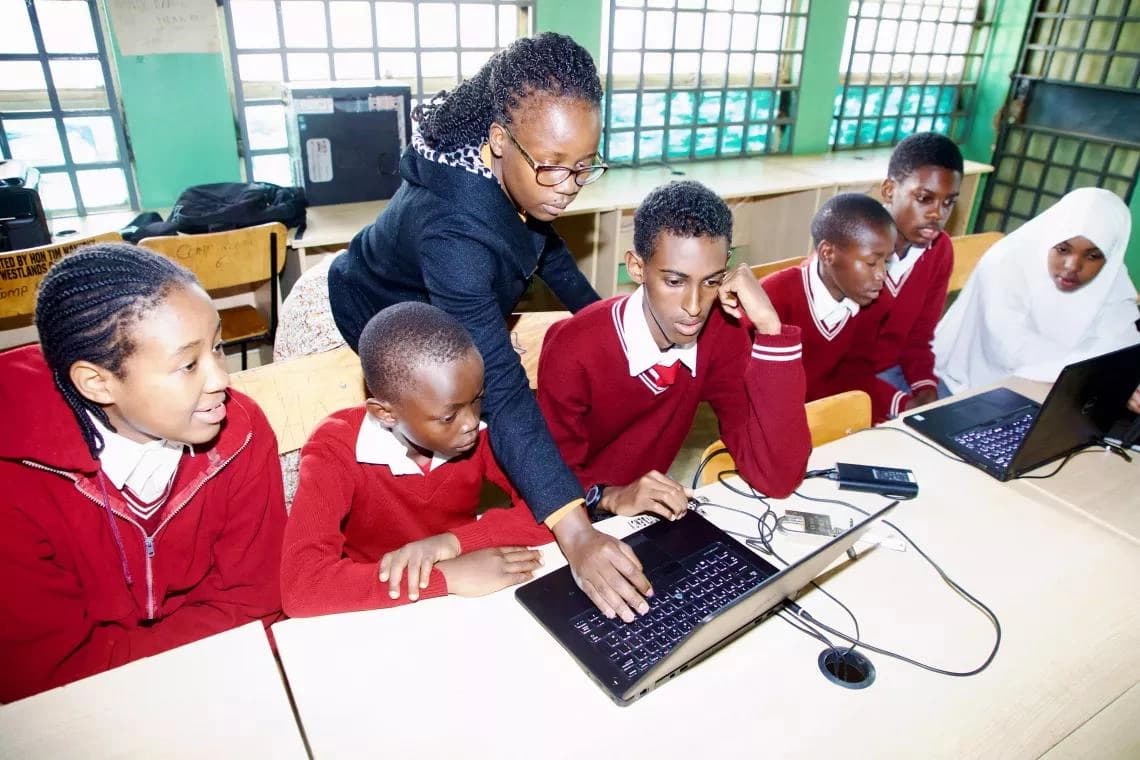
The modern classroom is undergoing a significant transformation. Digital learning platforms, automated assessment systems and artificial intelligence tools are changing how knowledge is acquired, processed and evaluated.
Students can now access information within seconds, receive instant feedback and use intelligent systems to assist with academic tasks that previously required considerable time and effort.
While these developments present enormous opportunities, they also challenge our traditional understanding of intelligence.
The central concern should not be whether technology belongs in the classroom, but whether education is adapting quickly enough to preserve and develop the human qualities that make learning meaningful and impactful.
Academic grades cannot define human intelligence
For a long time, educational achievement has been closely associated with the ability to memorise information, cram, reproduce facts and perform well in examinations.
Although these abilities remain important, they do not provide a complete picture of human intelligence.
A learner who excels academically may not necessarily possess the creativity, leadership, emotional awareness or problem-solving abilities required to address real-world challenges.
Equally, a student whose examination performance is average may demonstrate remarkable innovation, practical intelligence and entrepreneurial potential.
This raises questions about an education system that places considerable emphasis on measurable academic outcomes while sometimes overlooking abilities that are difficult to quantify.
In Kenya, the introduction of the Competency-Based Curriculum (CBC), now evolving into Competency-Based Education (CBE), represents an attempt to move away from an examination-centred approach towards the development of practical competencies, creativity, communication and critical thinking.
Its philosophy recognises that education should prepare learners for life beyond the classroom.
However, the success of this transformation depends on more than changing the curriculum. It requires a fundamental shift in how society understands academic achievement.
Parents, teachers, educational institutions and policymakers must begin appreciating that a learner's potential cannot be adequately determined by grades alone, but also by creativity, character and the ability to solve real-life problems in society.
Artificial intelligence and the changing role of teachers
The growing influence of artificial intelligence makes this conversation even more urgent.
AI can generate essays, summarise complex information, solve mathematical problems and provide explanations across different academic disciplines.
These capabilities offer valuable learning opportunities, particularly where access to qualified educational support is limited.
Nevertheless, the convenience of automated learning also presents a challenge.
When students increasingly depend on technology to generate answers, there is a possibility that independent thinking, intellectual curiosity and the ability to engage critically with information may receive less attention.
The danger is not necessarily that machines will become more intelligent than human beings in every respect.
Rather, it is that education systems may fail to develop the qualities that distinguish meaningful human intelligence from automated information processing.
A classroom should therefore be a place where learners are encouraged to question, investigate, debate and develop original ideas.
Technology should support these processes rather than replace them.
Students must learn not only how to obtain information but also how to evaluate its credibility, understand its implications and apply it responsibly.
This also places teachers at the centre of the future of education.
Despite the growing capabilities of artificial intelligence, teaching remains fundamentally a human responsibility.
Teachers do more than deliver information. They mentor learners, recognise individual abilities, encourage discipline and provide emotional and social guidance.
These responsibilities require human judgement, understanding and interaction.
Consequently, the introduction of automated learning should not be interpreted as a movement towards eliminating teachers.
Instead, it should create opportunities for educators to concentrate more on mentorship, creativity and the individual development of learners.
Building an inclusive education system beyond examinations
There is also an important question of educational equality.
In Kenya, access to digital infrastructure, reliable internet connectivity and modern learning resources remains uneven.
While some schools are increasingly embracing digital technologies, others continue to struggle with basic educational facilities.
An education system that adopts automation without addressing these inequalities risks widening the existing gap between learners from different social and economic backgrounds.
Technology-driven education must therefore be accompanied by deliberate investment in infrastructure, teacher training, affordable digital resources and inclusive educational policies.
Innovation should not become a privilege reserved for learners in well-equipped institutions.
Furthermore, assessment methods must evolve alongside technological advancement.
If education is intended to prepare learners for a changing society, examinations should not remain the only significant indicator of achievement.
Practical projects, research, teamwork, creativity, communication and problem-solving should receive greater recognition.
This does not mean abandoning examinations. Rather, it means recognising their limitations and complementing them with approaches that capture a broader understanding of human ability.
The future workplace will increasingly demand individuals who can collaborate, adapt, make ethical decisions and solve unfamiliar problems.
Such abilities cannot be developed through memorisation alone.
They require educational environments that encourage experimentation, independent judgement and the confidence to challenge established ideas.
Ultimately, artificial intelligence should compel us to reconsider what it means to be educated.
The purpose of education cannot simply be to compete with machines in processing information, because technology will continue to advance in that area.
Its greater responsibility is to cultivate people who can use knowledge wisely, understand others, make responsible decisions and contribute meaningfully to society.
Kenya's education reforms must therefore look beyond the pursuit of impressive grades and embrace a broader vision of human development.
The success of an education system should not only be reflected in the number of students who pass examinations, but also in the quality of thinkers, innovators, professionals and responsible citizens it produces.
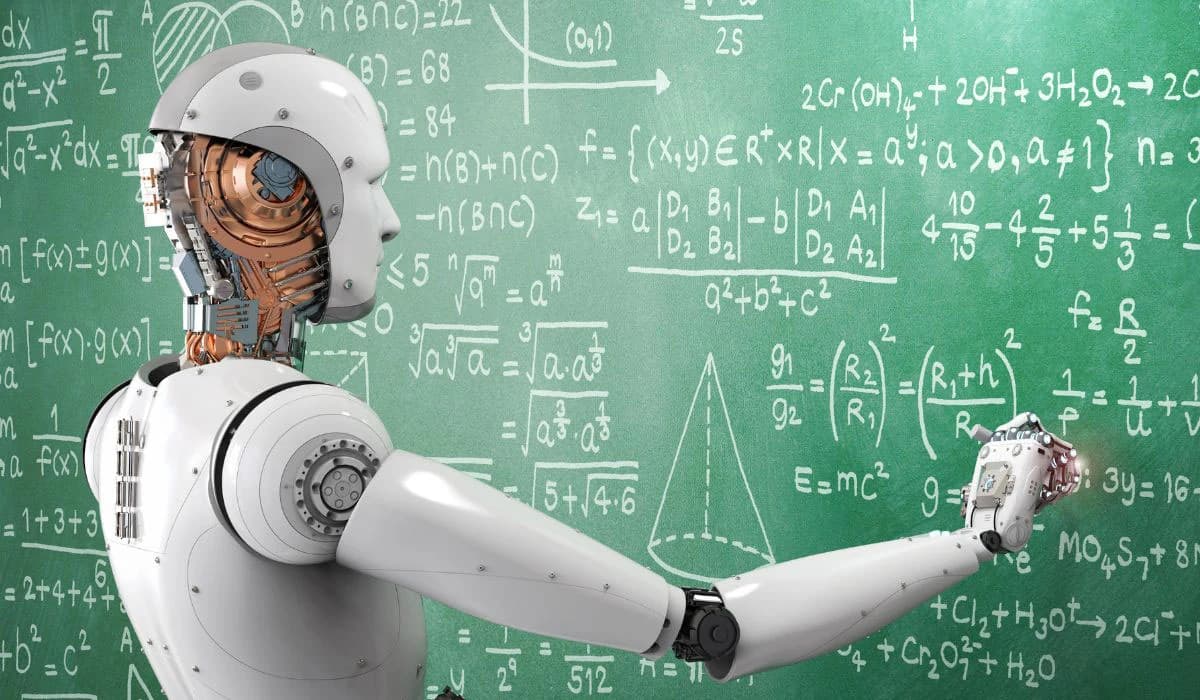
The automated classroom is no longer a distant possibility. It is becoming part of our educational reality.
The challenge is to ensure that, amid technological advancement, the human purpose of education is not lost.
Perhaps the most important measure of an educated person in the age of artificial intelligence will not be how much information they can remember, but how intelligently, creatively and responsibly they can use what they know.



Reader Discussion (0)
Sign in to comment