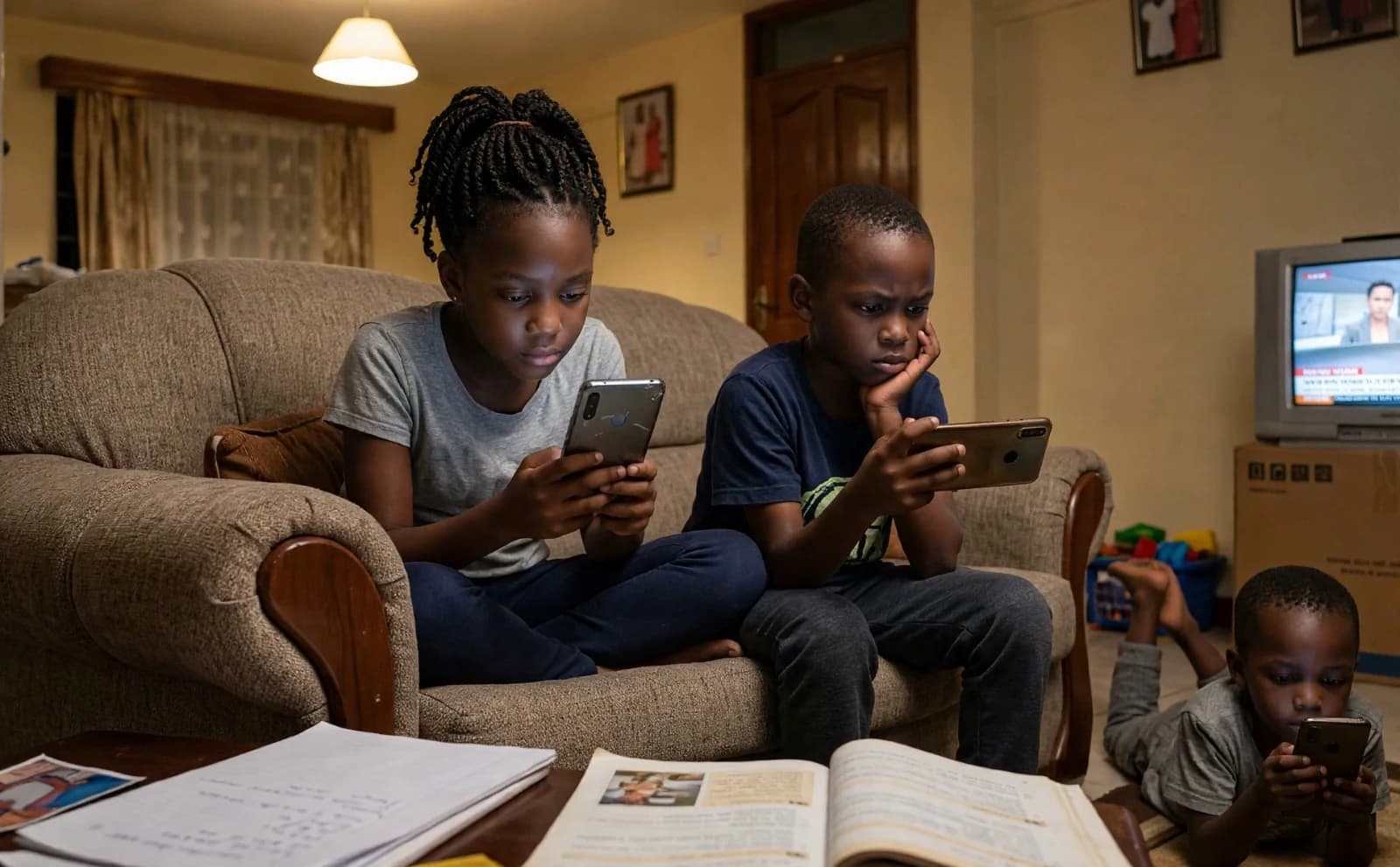









As schools close for the holidays, many Kenyan parents are busy with fees, shopping, travel and Christmas plans. But one question deserves a place on the list: who is shaping our children's minds while they spend hours on their phones?
Increasingly, the answer includes social media platforms, content creators, algorithms and artificial intelligence (AI).
Picture a child who wakes up and opens YouTube or TikTok. Before breakfast, an algorithm has begun deciding what appears on the screen. Later, the same child may ask an AI chatbot for homework help, relationship advice or answers to questions too awkward for a parent. We worry about the company our children keep in the physical world. How much attention do we pay to the invisible company they keep online?
Two children on the same platform may encounter entirely different lifestyles and values. What begins as entertainment can shape how a child understands beauty, success, money and identity. This is an invisible curriculum, rarely discussed at parents' meetings yet at work every day.
AI also offers real opportunity. It can explain difficult concepts, translate languages and give personalised support. But using AI as a resource is different from treating it as an unquestionable authority. Can a young learner tell when a system is wrong but sounds confident?
Some platforms offer digital companions that simulate empathy and friendship. Not every interaction is harmful, but such attachments raise questions about privacy, emotional development and a child's grasp of human relationships.
Behind all this lies a gap between children's exposure and adults' preparedness. Many parents hand over smartphones without understanding how algorithms work, and teachers receive little training. This is not about blame. But a smartphone in a child's hand is not the same as readiness to use it responsibly.
Kenya has made progress. Section 33 of the Data Protection Act, 2019, safeguards children's personal data, and the National AI Strategy 2025-2030 signals the country's ambition. UNICEF's 2025 guidance on AI and children stresses safety, privacy, accountability and age-appropriate design, principles we should adopt.
Policy alone is not enough. Parents must take an interest in the platforms their children use, set age-appropriate boundaries and create space for children to report uncomfortable experiences without fear of automatic punishment. Schools should teach learners to question information, recognise manipulation and protect personal data. Technology companies must take greater responsibility for what they build for children, and government must keep child protection central to digital transformation.
Is this healthy scepticism or paranoia? I believe responsible scepticism is necessary. We should neither deny children the benefits of AI nor embrace every innovation without asking hard questions.
Raising children has always been collective work. Technology has added a powerful new influence, but it must not replace human care, guidance and accountability. We must raise young people who are not only digitally competent but also independent thinkers, capable of empathy and sound judgement.
The greatest question of the AI age is not whether machines can become intelligent enough to influence our children. It is whether we are wise enough to guide that influence. Before asking what AI can teach our children, perhaps we should ask whether we are still teaching them how to be human.
The writer is an Educational Management and Policy expert




Reader Discussion (0)
Sign in to comment