The High Court's decision to quash a government circular seeking to merge Early Childhood Development Education (ECDE) and primary school diploma teacher training has opened the way to examining the consequences the policy could have had on Kenya's education system.
The merger may have been intended to harmonise teacher preparation, streamline training programmes and improve administrative efficiency. Its implications, however, extended beyond teacher training institutions, raising questions about professional identity, employment opportunities, remuneration, career progression and the future quality of foundational education.
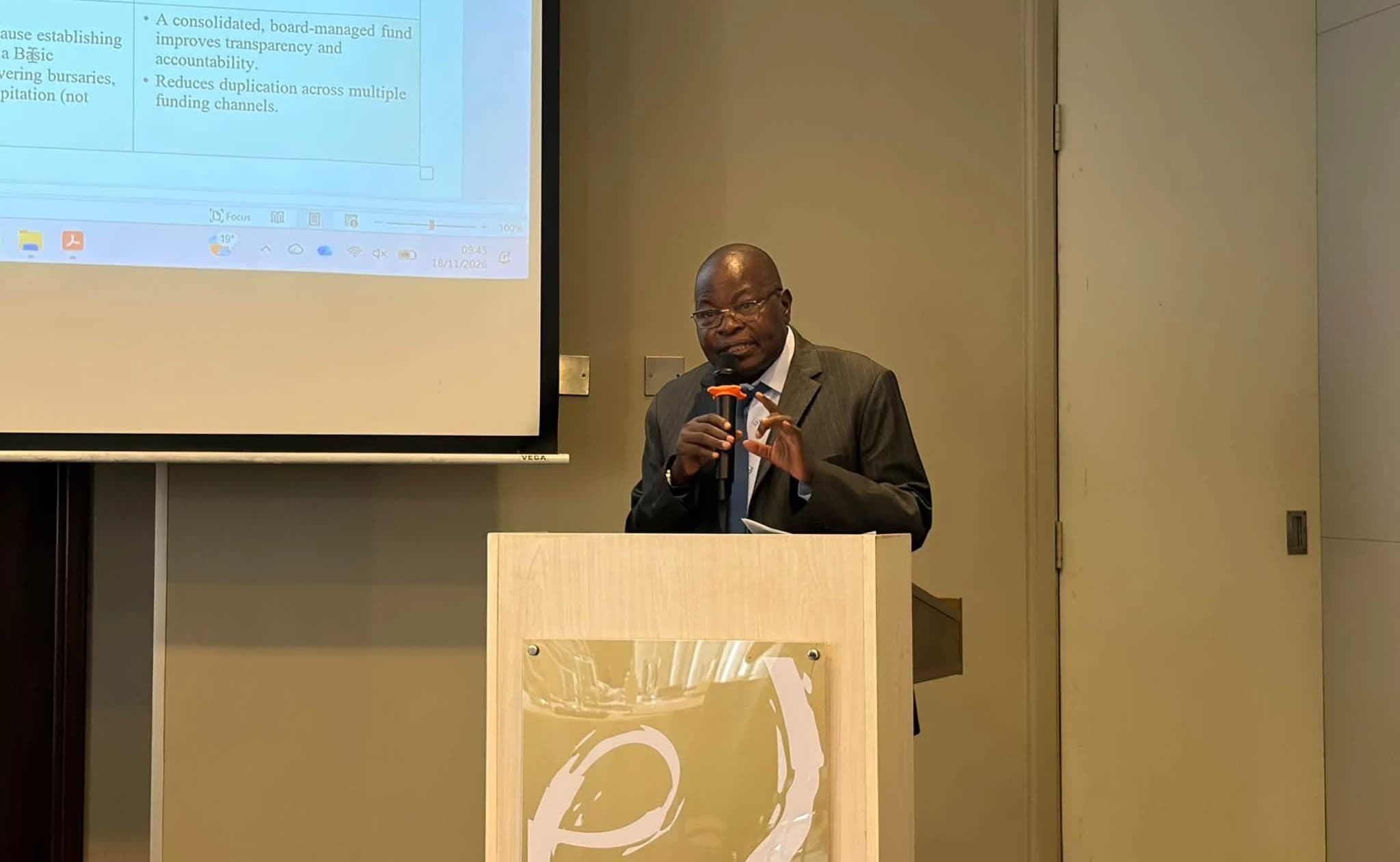
KUNNOPET Secretary General Samuel Opiyo has warned that the merger could have created serious challenges for ECDE teacher recruitment and retention, particularly if the government harmonised training qualifications without addressing existing inequalities in employment conditions.
"No teacher will be willing to teach in ECDE," Opiyo said.
His concern is that graduates trained under a common qualification framework could prefer primary school employment, especially if differences in remuneration, employment security, benefits and career advancement remained unresolved. That raises a policy question: what happens when Kenya invests heavily in training teachers qualified to serve both levels, but graduates overwhelmingly prefer primary school jobs?(Education News Kenya — https://educationnews.co.ke/news/kunnopet-warns-ecde-primary-teacher-training-merger-could-have-triggered-future-staffing-crisis)
Although ECDE and primary education form a continuous learning journey, they serve children at different developmental stages and require distinct pedagogical competencies.
ECDE is a specialised discipline concerned with children's cognitive, emotional, physical, social and psychological development during their formative years. Teachers at this level need specialised knowledge in child psychology, play-based learning, language acquisition, early identification of developmental difficulties and age-appropriate assessment. Primary education involves progressively structured academic instruction and the development of more advanced competencies. Their professional preparation cannot be treated as interchangeable without risking the dilution of specialised knowledge.
One of the greatest dangers of the merger, in Opiyo's view and that of other critics, was the potential erosion of ECDE as an independent professional specialisation. Absorbing specialised early childhood training into a broader primary teacher programme could gradually shift institutional attention towards general classroom teaching at the expense of the competencies unique to early childhood development.
The most immediate challenge could have emerged in the employment market. Public ECDE teachers are largely employed by county governments, while primary school teachers are employed by the Teachers Service Commission (TSC). The two categories have historically operated under different employment arrangements, remuneration structures, benefits and career progression opportunities.
Harmonising academic qualifications without addressing these disparities could have created a contradiction, with graduates qualified for both levels gravitating towards primary school jobs if they offered better pay, greater security and clearer advancement.
"It would be unfair to harmonise teacher training qualifications while maintaining different employment terms and remuneration structures for ECDE and primary school teachers," Opiyo said.
That could have put county governments in a difficult position. Having invested in ECDE teacher training, counties might still struggle to attract and retain graduates because the national employment structure offers alternatives under potentially more attractive conditions. Some graduates could have regarded ECDE employment as a temporary arrangement while waiting for primary school vacancies, increasing turnover and disrupting continuity in children's learning. Financially constrained counties would have been hit hardest, and children in disadvantaged regions could have borne the greatest consequences through inadequate staffing and inconsistent learning experiences.
"Counties may eventually struggle to recruit and retain ECDE teachers if graduates have better employment opportunities in primary schools," he said.
Beyond employment, the merger raised concerns about the professional identity of ECDE teachers, who have for years sought recognition of their specialised contribution, better pay and clear career progression pathways.
"ECDE is a specialised profession and should not be reduced to an extension of primary school teacher training," Opiyo said.
ECDE teachers are not merely preparing children for primary school. They are responsible for establishing the developmental, emotional, social and intellectual foundations on which later learning depends. A merger that failed to protect their professional identity could have raised questions about the recognition of existing qualifications, opportunities for further studies, professional mobility and future recruitment. Thousands of ECDE teachers have invested years in specialised qualifications and experience, and any restructuring that diminished the recognition of their credentials would have undermined the confidence of an established workforce.
There would also have been uncertainty over whether graduates with harmonised qualifications could be deployed interchangeably between ECDE and primary classrooms. Without a defined framework, county governments, TSC, training institutions and professional organisations could have disagreed over recruitment, deployment and professional responsibilities.
The implications for training institutions would also have been significant. Colleges with established ECDE departments, specialised lecturers, infrastructure and teaching resources could have been compelled to restructure their programmes, which over time could weaken specialised research and training in child development, play-based learning, developmental assessment, inclusive education and early intervention.
The consequences would ultimately have reached classrooms. The formative years are critical in establishing the cognitive, emotional, social and communication abilities that influence later academic achievement. A shortage of properly prepared ECDE teachers could compromise school readiness, delay the identification of developmental difficulties and weaken the acquisition of foundational literacy, numeracy and communication competencies. There was also a risk of introducing excessive formal academic instruction at an age when children need developmentally appropriate learning, including play-based learning, exploration and social interaction.
A common training qualification does not automatically guarantee an equitable distribution of teachers across educational levels. The country could have ended up producing more broadly qualified teachers while experiencing persistent shortages in the institutions responsible for foundational learning.
The financial justification for the merger also deserved closer examination. Consolidating training programmes might initially appear to reduce administrative and training costs, but the government could eventually have incurred additional expenses through curriculum restructuring, retraining lecturers, acquiring specialised learning materials and resolving disputes over qualifications and employment arrangements.
A more sustainable alternative would be to harmonise selected foundational units while preserving distinct professional specialisations. ECDE and primary trainees could share components such as educational psychology, inclusive education, ICT, professional ethics and education policy, while each category retains enough specialised training for the unique demands of its classrooms. ECDE training should maintain a strong emphasis on child development, play-based learning, developmental assessment, language acquisition and early intervention, while primary teacher preparation should retain the competencies required for structured instruction.
Kenya must also confront the employment inequalities that could make ECDE teaching unattractive. County governments need sustainable remuneration structures, improved working conditions, employment security and defined career progression pathways, and the national and county governments need a coherent framework for teacher education, recruitment and deployment so that qualifications translate into meaningful employment.
The court's decision should give policymakers an opportunity to reconsider the entire approach to teacher education. Future reforms should involve ECDE teachers, primary school teachers, training institutions, professional organisations and county governments through meaningful public participation.
The debate should not be reduced to whether ECDE and primary teachers can study common academic units, which they certainly can. The real question is whether the pursuit of administrative uniformity should override the need for professional specialisation. Teacher education can be harmonised without making all teachers identical: collaboration should be encouraged and specialisation protected, and administrative efficiency should not come at the expense of educational quality.
ECDE is the foundation on which the entire learning journey is built. Its teachers deserve specialised training, professional dignity, attractive employment conditions and a clearly defined career structure.











Reader Discussion (0)
Sign in to comment