




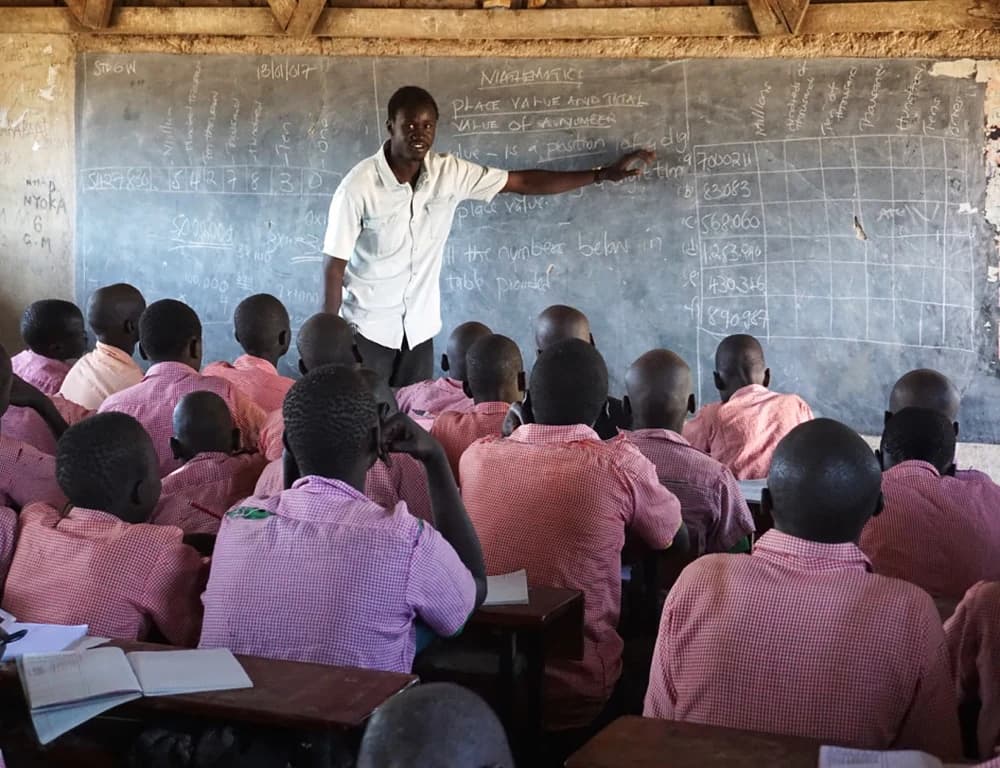



A new study has found that most refugee teachers in Kenya's camp schools earn far less than their Kenyan colleagues and have little job security, and that none of those surveyed are registered with the Teachers Service Commission (TSC).
The study, by the African Population and Health Research Center (APHRC), found that 87 per cent of refugee teachers earn Sh9,000 or less a month. By comparison, 71.4 per cent of Kenyan citizen teachers surveyed earn at least Sh30,000.
The report, titled Teacher Well-Being in Refugee and Host Community Schools: A Study of Garissa and Turkana Counties, Kenya, warns that difficult working conditions threaten the well-being of teachers who educate children affected by conflict, displacement and disrupted schooling.
The research covered 927 teachers from 74 schools, as well as 105 participants in interviews and focus group discussions.
More than 92 per cent of refugee teachers work on short-term contracts, which limits their job security and chances of career advancement.
None of the refugee teachers surveyed were registered with the TSC, compared with 92.8 per cent of Kenyan citizen teachers. This leaves refugee teachers with limited access to established career paths, despite their contribution to learning in some of the country's most challenging school settings.
The findings raise concerns about education in refugee-hosting areas, particularly Kakuma in Turkana County and Dadaab in Garissa County, where schools serve children whose education has often been interrupted by displacement and conflict.
Teachers in refugee camp schools handle significantly larger classes than those in host-community schools, often with fewer teaching resources. In some schools, the teacher-to-learner ratio reaches 1:104.
More than 90 per cent of the teachers surveyed reported strong professional commitment, engagement and a sense of purpose. However, overall teacher well-being was moderate, with a mean score of 59.2 out of 100.
Women make up less than 10 per cent of the refugee teaching workforce, according to the study. Caregiving duties and maternity-related pressures are among the challenges affecting their participation and retention.
The researchers identified supportive school leadership, good teacher-learner relationships, peer collaboration, professional recognition and opportunities to take part in decisions as important to improving well-being.
They called for coordinated action by government agencies, school managers and education partners to improve employment conditions, expand professional development, strengthen mental health and psychosocial support, and create clearer routes to professional recognition for refugee teachers.
The study says that improving teachers' welfare is essential to sustaining quality education for refugee children and learners in surrounding host communities, and calls for reforms that address both school-level challenges and wider structural inequalities in the education system.



Reader Discussion (0)
Sign in to comment