Education Cabinet Secretary Julius Ogamba has outlined a renewed government strategy to increase girls' participation in Science, Technology, Engineering and Mathematics (STEM), with the Competency-Based Education (CBE) reforms at the centre of efforts to address gender disparities in Kenya's education system.
The strategy seeks to give more girls opportunities to pursue science-oriented subjects and prepare for careers in fields traditionally dominated by men. Ogamba said senior school pathways, scholarships, mentorship and school re-entry programmes would help dismantle the barriers that keep girls from science and technology careers.
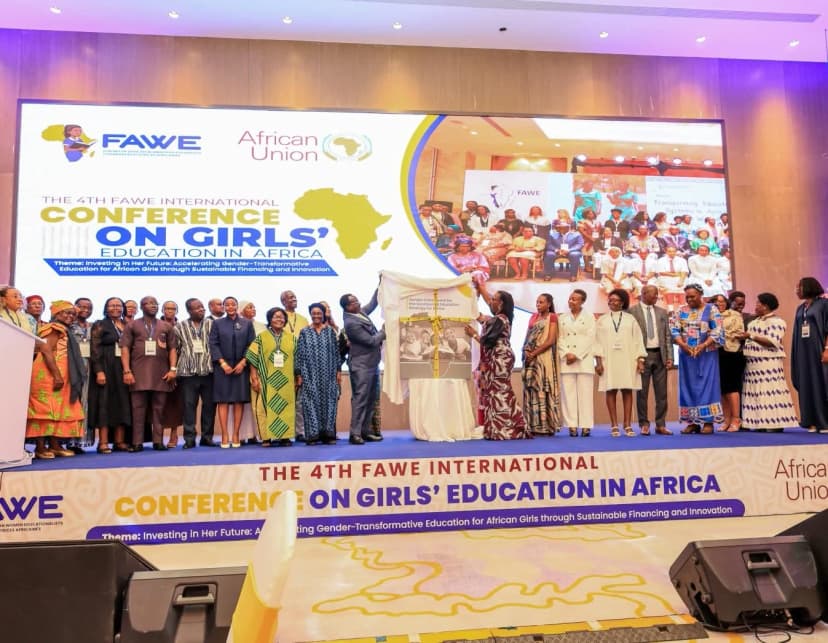
Speaking on Tuesday, November 17, 2026, at the 4th FAWE International Conference on Girls' Education in Africa, Ogamba said the ongoing education reforms were designed to widen learners' academic choices, particularly as they move to senior school.
The CS said the senior school pathways under CBE would let learners identify and pursue subjects that match their abilities, interests and future career ambitions. He said the reforms were deliberately structured to strengthen girls' participation in STEM and address historical inequalities that have limited female representation in science and technology professions.(Education News Kenya — https://educationnews.co.ke/news/ogamba-outlines-strategy-to-get-more-kenyan-girls-into-stem-careers-through-cbe)
"Kenya is undertaking education reforms through the competency-based education system, with a deliberate emphasis on senior school pathways that expand learners' choices and strengthen girls' participation in science, technology, engineering and mathematics," Ogamba said.
He described CBE as a comprehensive transformation of the education system, arguing that its objective goes beyond changing the curriculum. The approach seeks to equip learners with practical competencies, skills and knowledge for emerging opportunities in the job market.
Ogamba acknowledged that financial difficulties remain among the biggest obstacles preventing many girls from accessing education and completing their studies. He said the government was addressing the problem through scholarship programmes for vulnerable learners, alongside mentorship initiatives and psychosocial support.
Financial assistance alone, he said, cannot remove all the barriers facing girls, so economic support must be combined with measures that address social, psychological and institutional challenges.
The government is also seeking to protect the educational prospects of girls whose studies are interrupted by pregnancy, family difficulties and other circumstances. Ogamba highlighted Kenya's school re-entry guidelines, which provide a framework for learners who have dropped out to return to school and continue their education without discrimination.
"Kenya has institutionalised school re-entry guidelines reflecting our policy position that interruption must not constitute exclusion," he said.
He emphasised that successful reintegration requires more than readmitting affected learners. Schools must provide flexible learning arrangements, psychosocial assistance and supportive environments that let returning girls resume their studies without intimidation, discrimination or stigma.
The CS also called for more investment in disadvantaged learners, particularly girls from arid and semi-arid regions and those living with disabilities.
His remarks reflect the government's broader ambition to make educational opportunities more equitable and to ensure that girls are not confined to traditional career choices because of financial constraints, cultural expectations or inadequate institutional support. The push also places responsibility on schools to encourage girls to build confidence in science subjects from an early age.
As Kenya implements the CBE senior school pathways, the effectiveness of the strategy will depend on whether schools have adequate laboratories, qualified teachers, learning materials and career guidance programmes to support girls who want to pursue STEM combinations. The government's stated aim is that a girl's financial background, location or interrupted schooling should not set the limits of her academic and professional future.
You can also follow our social media pages on Twitter: Education News KE and Facebook: Education News Newspaper for timely updates.
>>> Click here to stay up-to-date with trending regional stories
>>> Click here to read more informed opinions on the country's education landscape
>>> Click here to stay ahead with the latest national news.











Reader Discussion (0)
Sign in to comment