




Something deeply troubling is happening as language finds its way into Kenya's political conversations amid heightened political activity. As a communicator and educator, I find it difficult to ignore the growing tendency among some political leaders to resort to insults, vulgar expressions, personal attacks and inflammatory exchanges when addressing their opponents. Even more disturbing is how quickly such language travels from political rallies to television screens, social media platforms, WhatsApp groups and ordinary conversations in our homes.
Political competition is healthy in a democracy. Robust debate, criticism and accountability are necessary ingredients of responsible leadership. However, there is a fundamental difference between challenging an opponent's ideas and attacking their dignity. Disagreement should never become a licence for verbal recklessness.
A leader does not have to lose their manners to win an argument. Neither should political opponents mistake discourtesy for courage or insults for political intelligence. A war of words may win applause from an excited crowd, but it rarely builds a respectable society.
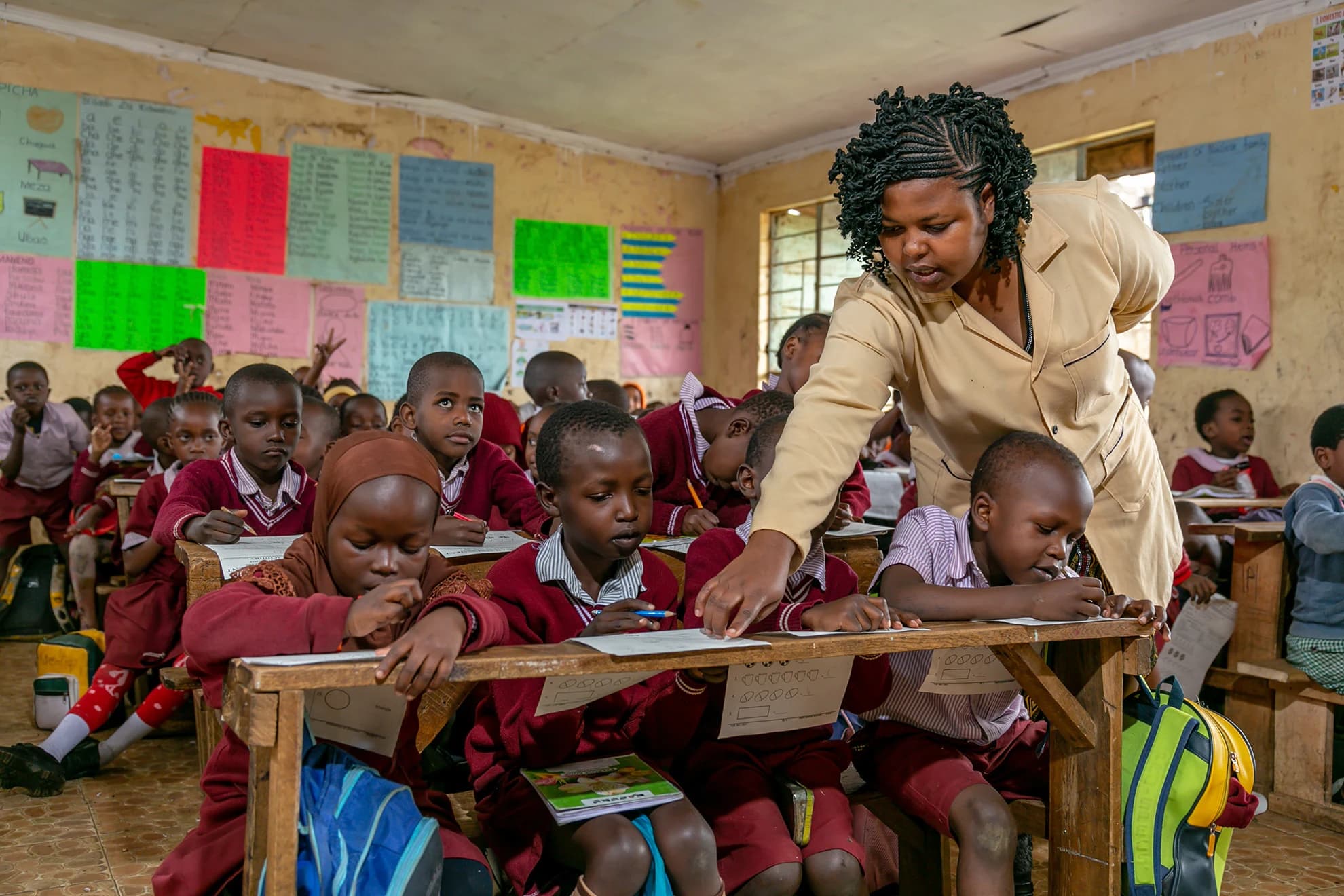
My greatest concern during this holiday season is the impression such conduct leaves on our children. Schools may have closed, but learning has not stopped. Children are observing how adults speak, how leaders disagree, how opponents are treated and how conflicts are resolved. The home, television, campaign trail and digital space have become extensions of the classroom.
What kind of citizens are we preparing our children to become when the very people entrusted with public leadership appear unable to disagree without resorting to abusive language?
When the political stage becomes a classroom
Children do not acquire values exclusively from textbooks, teachers or structured classroom instruction. They also learn through observation, imitation and the behaviour of influential adults.
Psychologist Albert Bandura's Social Learning Theory provides an important explanation. His work on observational learning demonstrates that children can acquire behaviours by watching and imitating others. This has significant implications for political communication. When children repeatedly watch prominent leaders humiliate opponents, use degrading expressions or celebrate verbal aggression, they may begin to perceive such behaviour as an acceptable way of asserting authority.
A learner who watches public figures ridicule opponents may reproduce similar behaviour in school, at home or among peers. We should therefore not underestimate the influence of political communication on the social development of young people. The children watching today are the leaders, professionals, parents and decision-makers of tomorrow. The examples we set now may become the standards they embrace later.
Kenya's experience should make us cautious
This concern is not merely an educator's personal observation. Kenya has documented challenges associated with inflammatory political communication, hate speech and online incitement.
The National Cohesion and Integration Commission (NCIC), in monitoring the 2022 General Election, worked with partners to identify hate speech, incitement and misinformation across social media platforms. Its 2022/2023 reporting highlighted the need for continuous monitoring of political communication, including coded expressions and the use of different languages.
The European Union Election Observation Mission also documented instances of inciteful language during its monitoring of the 2022 General Election. These findings show why language must never be dismissed as harmless political theatrics. Words can deepen divisions, undermine trust and create an atmosphere in which hostility becomes normalised.
We must distinguish between legitimate political criticism, offensive language and legally defined hate speech. Not every rude statement constitutes a criminal offence. Nevertheless, public figures have a moral and professional responsibility to communicate with restraint, regardless of whether their words cross a legal threshold.
Article 33 of Kenya's Constitution guarantees freedom of expression while excluding propaganda for war, incitement to violence, hate speech and advocacy of hatred. It also requires individuals to respect the rights and reputations of others. The National Cohesion and Integration Act similarly addresses threatening, abusive or insulting communication in circumstances where it is intended, or is likely, to stir up ethnic hatred.
These provisions remind political leaders and their supporters that freedom of expression must be exercised responsibly. Social media has further complicated the consequences of public communication. An utterance made at a roadside rally can be recorded, circulated and replayed thousands of times. Yesterday's rally becomes today's WhatsApp discussion and tomorrow's classroom conversation.
Leaders must appreciate the permanence of their digital footprints. Before speaking, they should consider whether their words are truthful, necessary, respectful and beneficial to national cohesion.
The call for responsible communication is not new. Religious teachings across different faith traditions consistently emphasise restraint, wisdom and respect in speech.
Proverbs 15:1 in the Bible reminds us that a gentle answer turns away wrath, while a harsh word stirs up anger. James 1:19 further encourages people to be quick to listen, slow to speak and slow to become angry. The Quran offers equally valuable guidance. Surah Al-Isra (17:53) encourages believers to speak in the best manner, while Surah Al-Baqarah (2:83) emphasises speaking kindly to people.
These teachings carry an important lesson for public leadership: disagreement should not strip people of their dignity. A leader who listens before responding demonstrates emotional maturity. One who exercises restraint even when provoked demonstrates strength of character. One does not have to share another person's political convictions to respect their humanity.
The CBE question: are we practising what we teach?
As educators, this debate touches the very foundation of our curriculum. The Kenya Institute of Curriculum Development's Basic Education Curriculum Framework identifies communication and collaboration, citizenship, self-efficacy, critical thinking and problem-solving among the core competencies learners are expected to develop.
Communication is not simply about speaking fluent English or Kiswahili, possessing an impressive vocabulary or mastering public speaking. It also involves conveying ideas appropriately, listening to others, appreciating different perspectives and interacting responsibly across different contexts. Through literature, our learners encounter characters whose words either unite communities or destroy relationships. They examine leadership, conflict, ambition, prejudice and the consequences of irresponsible decisions.
But what happens when the examples they encounter outside school contradict these lessons? We cannot expect learners to demonstrate tolerance in classroom debates when influential adults publicly portray disagreement as hostility. We cannot teach conflict resolution and then celebrate leaders who turn every disagreement into a verbal confrontation.
Education is a partnership between the school, the home and society. Political leaders are part of that society, and their conduct contributes to the environment in which children grow. We cannot preach civility in our classrooms and practise hostility in our public spaces.
What should responsible campaigning look like?
There is a better way of conducting political campaigns without compromising democratic competition. Political communication should focus on policies, development agendas, accountability, employment, education, healthcare and the economy rather than personal humiliation. Campaign strategists and speechwriters should be deliberate about the register, tone and vocabulary used in public communication.
Political opponents should be treated with dignity. An opponent is not an enemy. Today's political competitor may tomorrow be a partner in national development. Leaders should verify information before sharing it, avoid inflammatory allegations and take responsibility for the conduct of their digital campaign teams. Political parties should also invest in communication training for candidates, spokespersons and campaign teams. The ability to address a crowd should go hand in hand with emotional intelligence, conflict management and ethical communication.
The media and digital platforms have an equally important responsibility to avoid amplifying inflammatory content merely because it attracts attention and engagement.
There is an old saying that a fish rots from the head. While the responsibility for national civility belongs to every citizen, those occupying positions of influence must appreciate the weight of their example.
Leadership is not measured exclusively by the size of a crowd, the number of social media followers or the ability to command attention. It is also measured by the ability to disagree without humiliating others, correct without insulting and persuade without intimidating.
My appeal is to leaders at every level: national, county, political party, religious, institutional and community leadership. Let us be intentional about the language we use. Let courtesy become a leadership habit rather than a seasonal campaign slogan.
There is an African proverb that reminds us that the tongue has no bones, yet it is strong enough to break a heart. We should never underestimate the damage careless words can inflict on individuals, communities and the country.
Kenya needs campaigns that enlighten rather than inflame, challenge rather than humiliate, and persuade rather than provoke. After the campaigns, political positions may change, alliances may shift and opponents may reconcile. However, the memories of the language used will remain, particularly in the minds of the young people who watched and listened.
Let us not win political arguments at the expense of losing an entire generation's moral compass.
Our children are watching. Let our language give them something worth emulating.



Reader Discussion (0)
Sign in to comment