



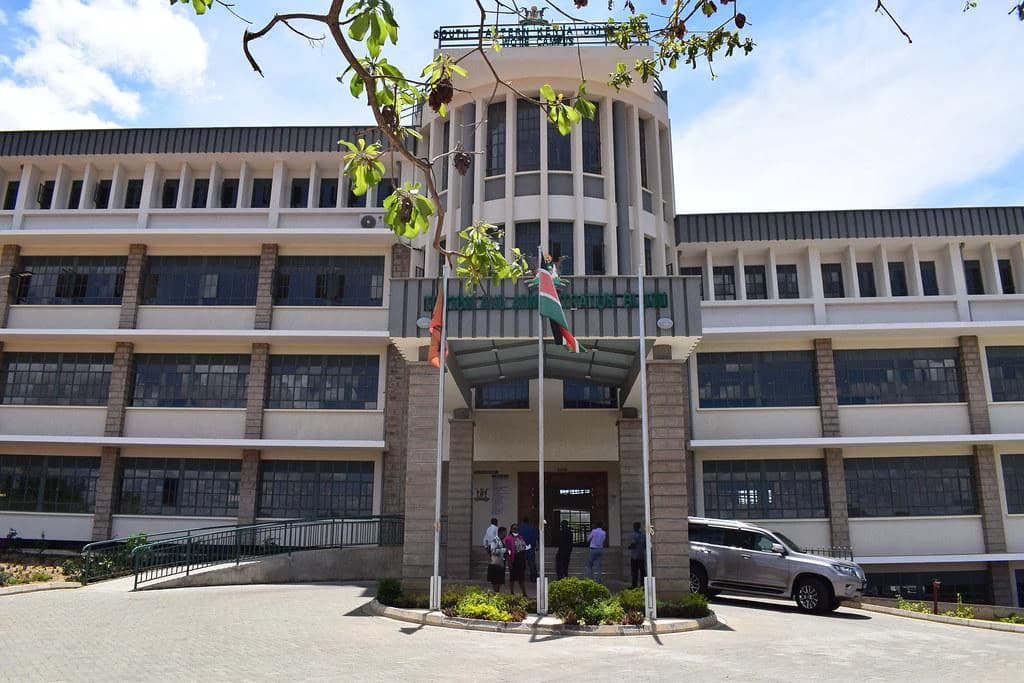





The University of Nairobi is facing mounting financial pressure after an audit revealed that its short-term liabilities substantially exceed its current assets, raising questions about how the institution will meet its obligations to staff, suppliers and statutory agencies.
Findings examined by Parliament on Thursday, October 22, 2026, showed that the university was grappling with debts estimated at Sh20 billion, with auditors raising serious concerns about its ability to continue operating without financial support.
The findings, drawn partly from the institution's 2021/2022 audit report, expose the financial strain facing one of Kenya's oldest and most prominent public universities as the government and university managers grapple with a funding crisis affecting institutions across the country.
During the financial year under review, the university recorded a deficit of Sh2.2 billion, pushing its accumulated deficit to Sh8.8 billion.
Its current liabilities stood at approximately Sh13.79 billion against current assets of Sh5.17 billion, leaving a negative working capital position of Sh8.62 billion.
The imbalance means the university faces significant difficulty meeting its short-term financial obligations using the assets readily available to it.
Auditors also reported that unremitted statutory deductions, including taxes and pension contributions, amounted to approximately Sh10.57 billion.
The report raised material uncertainty about the institution's ability to continue operating as a going concern without support from the government and other stakeholders.
The findings have placed renewed focus on the sustainability of university financing, the management of public resources and the measures needed to prevent financial distress from disrupting teaching, research and other essential services.
Sh220 billion asset base against mounting liabilities
University of Nairobi Vice-Chancellor Prof Ayub Gitau acknowledged the institution's financial difficulties but pointed to its substantial asset base, valued at more than Sh220 billion.
Gitau, who became the university's ninth Vice-Chancellor in 2026, told lawmakers that management was pursuing measures to improve revenue generation and strengthen the institution's financial position.
The proposed interventions include leasing university property, increasing student enrolment, attracting more research funding and revitalising commercial units to generate additional income.
The university is also exploring austerity measures to reduce expenditure and improve the management of its financial resources.
Gitau maintained that the institution's assets could provide opportunities for financial recovery if managed and utilised effectively.
The university's asset base provides an important part of the financial picture, but the value of long-term property and other assets does not automatically translate into cash available to settle immediate obligations.
The challenge for management is therefore to turn the institution's resources into sustainable revenue without undermining its academic mandate, research activities or long-term public value.
Leasing property and expanding commercial activities could provide additional income, while increased enrolment and research partnerships could strengthen revenue streams.
However, the effectiveness of these interventions will depend on their implementation, the costs involved and the amount of additional income they generate.
MPs demand clear recovery plan
The National Assembly's Public Investments Committee on Governance and Education raised concerns about how the university could continue meeting its obligations to employees, suppliers and other stakeholders amid the reported financial difficulties.
Committee Chairperson and Luanda MP Dick Maungu questioned the institution's ability to sustain its operations while facing such significant financial pressure.
Lawmakers stressed that the proposed recovery plan should be supported by verifiable financial projections, clear implementation timelines and measurable targets.
Such a framework would allow Parliament to assess whether the university's interventions are reducing its liabilities, improving cash flow and preventing further accumulation of debt.
The scrutiny also raises questions about the university's outstanding statutory obligations, including taxes and pension contributions, which have implications beyond its own balance sheet.
Failure to remit statutory deductions can affect employees' financial interests and expose institutions to additional liabilities, penalties and legal complications.
The committee's examination of the university's finances comes amid wider discussions on how public universities can strengthen financial accountability and restore sustainable operations.
Financial crisis extends beyond Nairobi
The University of Nairobi's financial difficulties reflect a wider challenge confronting Kenya's public university sector.
A broader audit reportedly found that 21 public universities had combined negative working capital of approximately Sh42.55 billion during the 2023/2024 financial year.
Education Cabinet Secretary Julius Migos Ogamba has previously stated that 23 of Kenya's 35 public universities were effectively insolvent, with combined statutory debts amounting to Sh75 billion.
Ogamba has also placed the funding gap associated with university financing arrangements at approximately Sh29 billion.
The figures point to mounting pressure on institutions expected to finance teaching, research, staffing, infrastructure and student services while meeting their statutory and operational obligations.
Public universities rely on a combination of government support, student-related income, research grants, partnerships and other revenue-generating activities.
When available funding falls short of expenditure, institutions can accumulate unpaid bills, delay remittances and struggle to maintain essential services.
The financial position of each university may differ, but the sector-wide figures have intensified calls for a sustainable funding framework that matches institutional needs with available resources and strengthens financial accountability.
What the crisis means for students, staff and businesses
The financial health of public universities matters beyond university management offices.
Institutions such as the University of Nairobi support livelihoods across a broad economic network that includes lecturers, non-teaching employees, landlords, food vendors, transport operators, bookshops, suppliers and other businesses serving students and staff.
If financial difficulties lead to delayed payments, reduced spending or interruptions in university activities, the effects can spread to households and enterprises that depend on the institution for income.
Students and their families also have a direct interest in the university's recovery.
A financially stable institution is better placed to sustain teaching, research facilities, student support services and the broader learning environment.
However, the audit findings do not, by themselves, establish that teaching has been disrupted or that specific services have been cut.
The immediate concern is whether management can prevent the reported financial pressures from escalating into operational problems.
The university's recovery measures will therefore need to demonstrate tangible improvements in revenue, cash flow, statutory compliance and the settlement of outstanding obligations.
Government funding and accountability in focus
The unfolding crisis places renewed attention on the relationship between public university financing, institutional accountability and long-term sustainability.
Additional government support could help address some immediate pressures, but any intervention would need to be considered alongside the scale of outstanding liabilities, competing demands on public resources and measures to prevent the recurrence of similar problems.
A sustainable response would require clarity on the causes of the accumulated debts, the responsibilities of university management and government, and the financial reforms needed to place institutions on a more stable footing.
Parliament's scrutiny could help establish whether recovery proposals are realistic, whether public resources are being used effectively and whether universities are adopting stronger financial controls.
For the University of Nairobi, the immediate task is to translate its substantial asset base and proposed revenue measures into improved financial performance.
For the wider university sector, the challenge is to establish a funding and accountability framework capable of supporting quality higher education without allowing institutional debts to continue accumulating.
The central question is no longer simply how much public universities owe, but how they can restore financial stability while protecting the students, employees and communities whose livelihoods and future opportunities depend on them.



Reader Discussion (0)
Sign in to comment