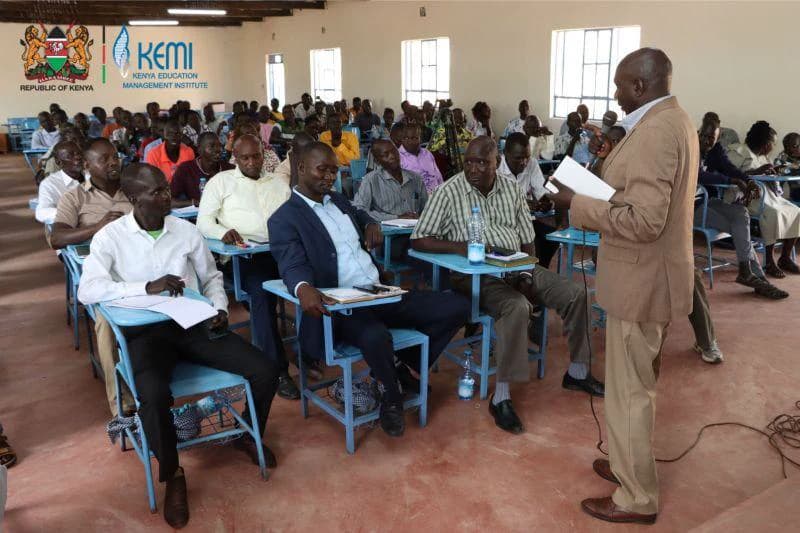

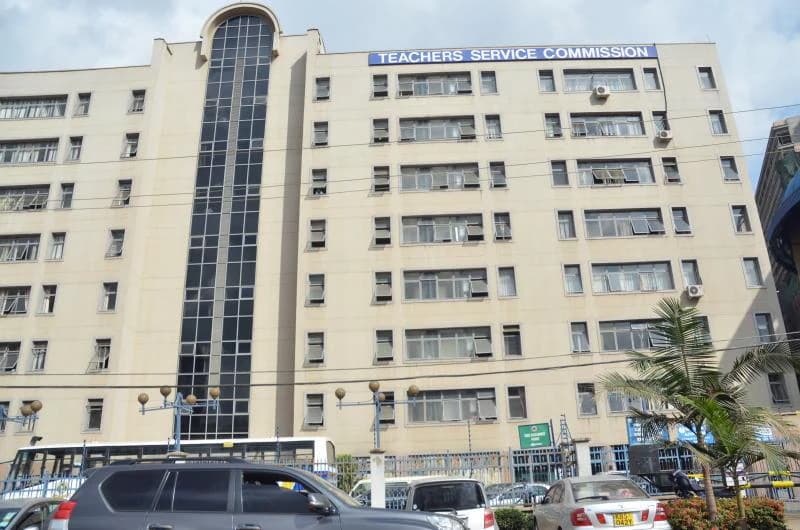







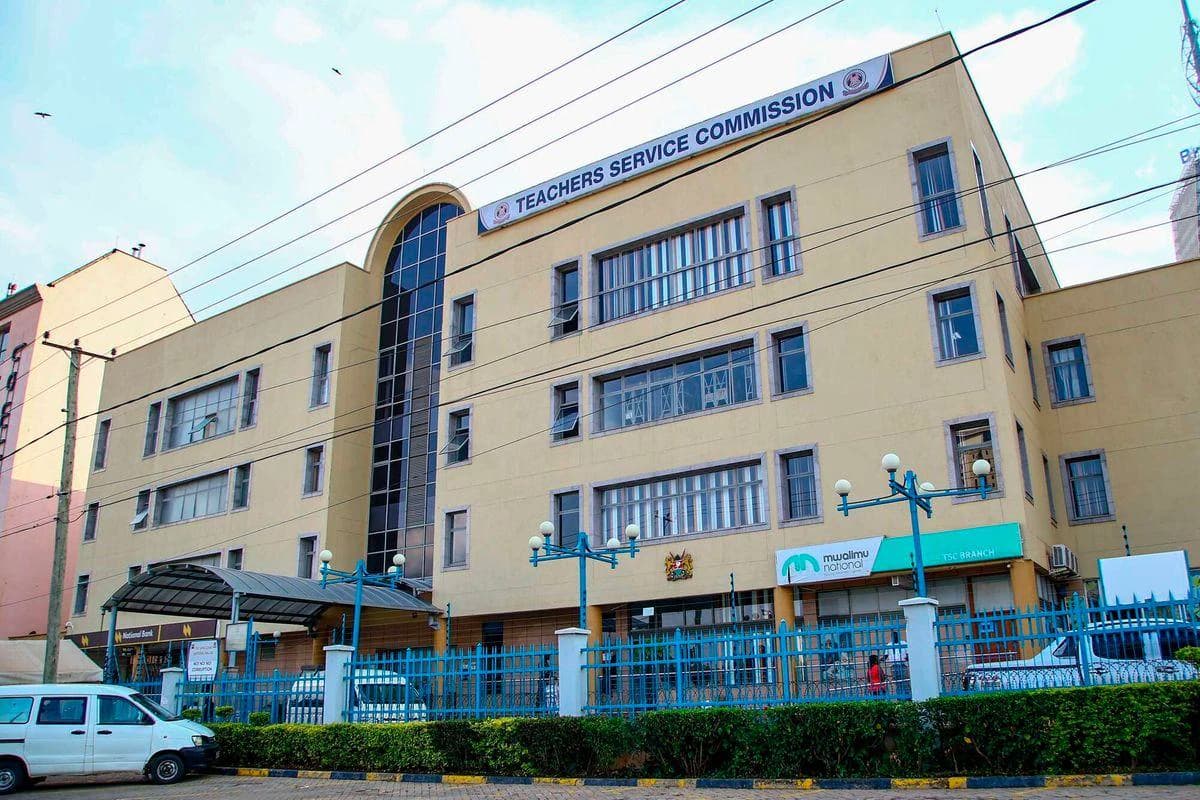
Thousands of Junior School intern teachers are preparing for a major financial breakthrough as the Teachers Service Commission (TSC) advances plans to transition them from temporary internship contracts to permanent and pensionable (P&P) employment beginning January 2027.
The transition could transform the financial circumstances of thousands of educators who have spent nearly two years teaching in public schools while earning a monthly stipend of Sh20,000, translating to approximately Sh17,000 after deductions.
Under the new employment arrangement, diploma-qualified teachers entering Job Group C1 could earn a gross monthly salary package of approximately Sh42,361, while graduate teachers joining Job Group C2 could receive approximately Sh55,554 outside major urban centres.
The development is particularly significant for teachers who have continued supporting Junior School learning programmes, implementing Competency-Based Education (CBE) and undertaking classroom responsibilities despite their relatively low internship earnings.
Several applicants have already received SMS invitations from TSC informing them of upcoming interviews and document verification exercises. The exercise is expected to determine those who will secure permanent appointments.
For thousands of young educators, the coming weeks could mark the end of financial uncertainty associated with temporary employment and the beginning of more stable professional careers.
The transition will see teachers absorbed into the established TSC salary structure according to their academic qualifications.
Diploma-qualified teachers will enter Job Group C1, equivalent to T-Scale 6, while graduate teachers will be placed in Job Group C2, equivalent to T-Scale 7.
The salary rates that took effect on July 1, 2026, provide the following basic monthly earnings and allowances:
Grade
Basic salary
Commuter allowance
C1 – Diploma
Sh32,561
Sh4,000
C2 – Graduate
Sh40,954
Sh5,000
C3 – Graduate progression
Sh49,239
Sh6,000
House allowances vary according to the geographical classification of the teacher's station.
For teachers working outside Nairobi and the designated Cluster 2 towns, the estimated gross monthly packages will be:
Diploma teachers at C1: Sh42,361.
Graduate teachers at C2: Sh55,554.
Graduate teachers progressing to C3: Sh71,739.
In Nairobi, a C1 teacher could receive approximately Sh46,561, while a C2 graduate teacher could earn Sh62,454.
Cluster 2 includes Mombasa, Kisumu, Nakuru, Nyeri, Eldoret, Thika, Kisii, Malindi, Kakamega and Kitale.
The figures represent gross earnings before PAYE, Housing Levy, NSSF, SHIF and other applicable deductions. Actual take-home salaries will therefore be lower.
Three years could bring another salary increase
The permanent employment arrangement will also introduce a more structured career progression pathway.
Diploma teachers entering C1 are expected to progress to C2 after three years, while graduate teachers joining at C2 are expected to advance to C3 after three years under the applicable career progression arrangements.
At C3, a graduate teacher working outside Nairobi and Cluster 2 towns could earn approximately Sh71,739 in gross monthly pay.
Teachers posted to designated hardship areas will also qualify for additional hardship allowances. The applicable rates include Sh8,200 for C1 and Sh10,900 for C2.
Annual leave allowances are provided separately at Sh4,000 for C1 and Sh6,000 for C2.
More importantly, permanent and pensionable employment provides long-term job security and access to pension benefits under the applicable public service arrangements.
TSC interviews and document verification enter crucial stage
The latest development follows the recruitment exercise that opened on August 18, 2026, and closed on August 31, 2026.
TSC has outlined a roadmap that will guide the selection, verification and eventual deployment of successful candidates.
The first stage involves sub-county-level selection, scrutiny of academic and professional documents, completion of employment requirements and preparation of offer letters.
The exercise is expected to take approximately ten days, with TSC boards overseeing the process.
Applicants who are dissatisfied with the outcome will have an opportunity to raise complaints during the county-level complaints window scheduled for December 7 to December 11, 2026.
Recruitment documents and merit lists will subsequently be forwarded to TSC headquarters between December 14 and December 22, 2026.
Successful candidates are expected to report to their respective schools on January 4, 2027, under their new employment terms.
The dates are particularly important because teachers recruited on January 1, 2025, will complete their mandatory two-year internship on December 31, 2026.
Why serving interns have an advantage in recruitment
Although the recruitment exercise was open to eligible unemployed teachers, the selection criteria give considerable weight to professional experience.
The scoring framework carries 100 marks, with experience accounting for up to 70 marks.
Applicants who have continuously served as TSC interns within the respective sub-county for at least 12 months are awarded the maximum 70 marks. Those with less than 12 months receive 50 marks.
Other considerations include:
Academic and professional qualifications, carrying up to three marks.
Age, carrying up to seven marks.
Length of time since qualifying as a teacher, carrying up to 20 marks.
This arrangement places serving interns in a strong competitive position, particularly those who have completed at least one year of continuous service.
Where applicants obtain equal scores, the guidelines provide for tie-breaking based on the length of time since graduation, followed by the quality of academic and professional certificates.
Preference is also provided to applicants from the respective sub-county before consideration of candidates from the wider county, subject to the applicable recruitment conditions.
At least five per cent of the available positions are reserved for teachers with disabilities, who are assessed using a separate scoring framework.
Documents that could determine who secures the job
With interview invitations already being communicated through SMS, candidates have been urged to prepare all the required documents before appearing before recruitment panels.
The initial verification stage will establish the applicants' identities, academic qualifications, professional registration and eligibility.
Candidates are expected to present their original National Identity Cards alongside photocopies, valid TSC registration certificates, KCSE and KCPE certificates, and relevant documentation for any examination resits.
They must also provide their original university degree or diploma certificates, official certified academic transcripts, primary and secondary school leaving certificates and evidence of continuous internship service.
Applicants whose names differ across academic and identification documents must provide sworn affidavits explaining the discrepancies.
Teachers with disabilities should present their National Council for Persons with Disabilities identification cards where applicable.
The official university graduation booklet will also be required to verify graduation details, while applicants who have lost their original examination certificates must obtain formal certification letters from KNEC.
Sub-County Directors will certify photocopies against original documents during the verification exercise.
Second phase will require medical and statutory documents
After the initial verification, successful candidates will be required to complete additional documentation to facilitate their entry into the permanent TSC workforce.
These requirements include a completed GP69 medical examination form, valid KRA PIN certificate, evidence of active registration with the Social Health Authority (SHA), two recent colour passport-size photographs and proof of NSSF registration.
Applicants will also need to provide bank or official pay-point details to facilitate monthly salary payments.
Application for Employment forms will be issued to successful applicants appearing on the merit list after county-level verification.
The County Director will subsequently confirm that the selected candidates have fulfilled the stipulated requirements before offer letters are processed.
TSC warns against fake certificates
The Commission has maintained a strict position on the authenticity of academic and professional documents.
Applicants who present forged certificates or deliberately provide misleading information risk disqualification and possible deregistration.
Any employment offer obtained through fraudulent information may be revoked.
Candidates have therefore been advised to ensure that all their documents are genuine, consistent and verifiable before attending interviews.
Applicants have a right to challenge unfair selection
The recruitment guidelines also establish a formal complaints mechanism for candidates who believe that the exercise has been conducted unfairly.
An applicant who is dissatisfied must submit a written complaint to the County Director and notify TSC headquarters through dirstaffing@tsc.go.ke within seven days of the selection process.
The County Director is expected to investigate the complaint within seven days and communicate the action taken to headquarters.
Where the applicant remains dissatisfied, an appeal may be submitted to the Director of Staffing at TSC headquarters within seven days of the County Director's decision.
An Appeals Committee is expected to investigate and take appropriate action within 14 days.
Applicants should retain copies of their complaints and supporting documents throughout the process.
What teachers should do before reporting for interviews
The interview stage is an important opportunity for applicants to demonstrate that they meet all the recruitment requirements.
Teachers should confirm that their TSC registration is active, obtain official academic transcripts and ensure that every required certificate is available.
Those with missing certificates should begin the KNEC certification process immediately.
Internship agreement letters and other evidence of continuous service should also be organised because experience carries the highest number of marks in the selection exercise.
Candidates should additionally prepare their medical examination forms, KRA PIN certificates, SHA and NSSF registration details, photographs and banking information.
They must also pay close attention to SMS notifications because the messages contain specific interview venues, dates and reporting times.
Missing an interview invitation or arriving without essential documents could jeopardise an otherwise strong application.
The anticipated transition of Junior School interns into permanent and pensionable employment represents a major milestone in Kenya's education sector.
For nearly two years, these teachers have contributed to classroom instruction, learner assessment and curriculum implementation while operating under temporary employment arrangements.
Their expected absorption into the permanent workforce will address an important aspect of teacher welfare while strengthening the staffing framework supporting the country's evolving education system.
The difference in earnings is substantial. A diploma teacher moving from an estimated Sh17,000 take-home internship stipend to a gross monthly package of Sh42,361 will experience a significant improvement in remuneration.
For a graduate teacher, the projected starting gross package of Sh55,554 offers an even greater financial opportunity.
However, the transition is about more than salaries. Permanent employment provides an opportunity to build a long-term teaching career, qualify for future salary progression and enjoy greater employment security.
If the announced recruitment timetable is maintained, January 4, 2027, will mark a new beginning for thousands of Junior School educators who have spent years waiting for a more secure place in the public teaching service.
For the interns, the message is clear: the next few weeks could determine whether years of classroom service translate into permanent careers.


Reader Discussion (0)
Sign in to comment