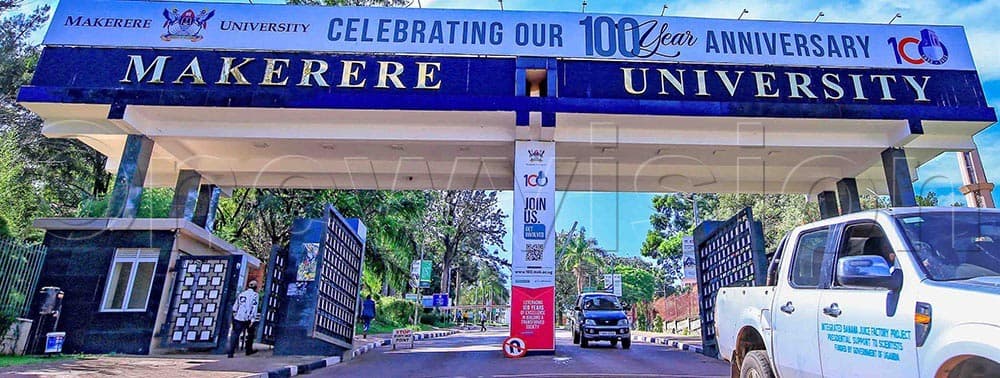
Lecturers at Makerere University in Uganda have raised concern over a promotion system they say is placing financial expectations ahead of conventional measures of academic excellence.
At the centre of the dispute is an allegation that lecturers seeking promotion to associate professor and full professor must show they can mobilise research projects worth at least US$100,000, equivalent to about Shs405.45 million. Some academics fear that career advancement is becoming dependent on the ability to attract large research grants rather than the quality of scholarship, teaching, publications and contribution to knowledge.
Some members of the academic community have accused the administration of effectively putting promotions "on sale". They argue that talented scholars could be locked out of senior positions because they lack the financial networks and international connections needed to secure large research projects.
Vice Chancellor Barnabas Nawangwe has defended the emphasis on resource mobilisation, saying the ability to attract research funding and demonstrate research productivity is a legitimate consideration in academic advancement. He confirmed that evidence of research and resource mobilisation forms part of the prerequisites for promotion and said such expectations are consistent with the standards of reputable research-oriented universities.(Education News Kenya — https://educationnews.co.ke/news/makerere-lecturers-protest-reported-us-100-000-research-funding-requirement-for-promotion-to-professor)
Nawangwe also observed that some European universities require academics to demonstrate their ability to attract research funding as part of the expectations for retaining their positions. His stand reflects growing global competition among universities for international research grants, strategic partnerships and better placement in academic rankings.
The dispute raises questions about the fairness of linking academic progression to the capacity to raise large sums of money. Promotion has traditionally rested on scholarly publications, teaching experience, research contributions, postgraduate supervision, professional recognition and service to the university.
Research funding is essential for scientific discovery, laboratory infrastructure, postgraduate scholarships and innovation. Critics, however, argue that it should complement other indicators of academic excellence and not overshadow them.
A major concern is that funding opportunities are not evenly distributed across disciplines. Lecturers in medicine, engineering, technology and applied sciences may have access to different funding opportunities from colleagues in the humanities, languages, history and other fields. Critics say imposing a uniform financial expectation without considering these differences could disadvantage equally qualified academics whose disciplines attract limited international funding.
There is also concern that lecturers could end up prioritising grant-chasing at the expense of classroom teaching, student mentorship and independent scholarly inquiry. Attaining professorship represents years of intellectual investment, research, mentorship and professional contribution, and critics say it should remain a recognition of scholarly distinction and not become a contest decided mainly by financial mobilisation.
Makerere has previously faced disagreements over promotions. In August 2024, its Staff Tribunal ruled in favour of Associate Professor Jude Ssempebwa, who had challenged the university's failure to promote him to full professor. The tribunal directed the university to promote him retrospectively to July 2017, pay the salary differences and award him Shs120 million in general damages. The ruling underlined the importance of transparent promotion procedures and of universities honouring established academic criteria.
In July 2026, Makerere reported 65 academic promotions, including eight associate professors elevated to full professor and 25 senior lecturers promoted to associate professor. The university also announced additional recruitment to strengthen its workforce.
The developments offer a lesson for Kenyan public universities, which face limited research funding, institutional financing challenges and demands for greater academic productivity. Institutions such as the University of Nairobi, Kenyatta University, Moi University, Egerton University, Maseno University and Jomo Kenyatta University of Agriculture and Technology must continue examining how their promotion frameworks recognise research excellence without creating unnecessary barriers for deserving staff.
Kenyan universities should encourage lecturers to attract international grants, build research partnerships and develop innovative projects. They must equally invest in research infrastructure, grant-writing support, mentorship and institutional collaboration. It would be unfair to demand that individual academics mobilise millions in funding while failing to provide the equipment, administrative support and environment needed to compete successfully.
Research funding is an important measure of institutional competitiveness, but money alone cannot determine the intellectual worth of an academic. A professor should be recognised for advancing knowledge, producing credible research, mentoring students, strengthening institutions and contributing solutions to society's challenges. The ability to attract grants should strengthen an academic's profile, not become the price of admission to the highest ranks of the university.
The question African universities must confront is whether they are nurturing scholars who transform society through knowledge or increasingly rewarding academics by the amount of money they can bring into institutional accounts.









Reader Discussion (0)
Sign in to comment