


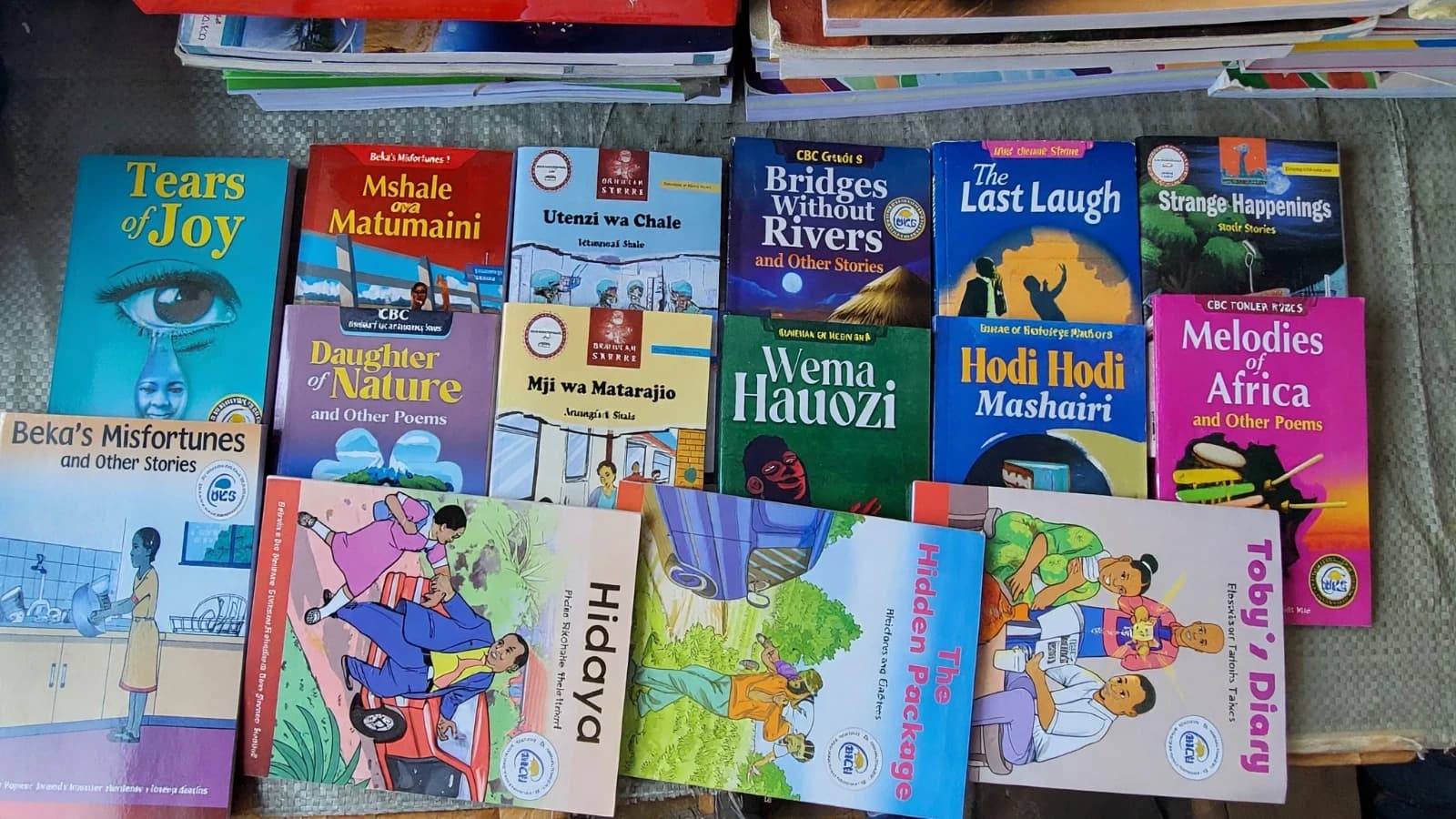





Authors who want their storybooks used in Kenyan schools need more than an engaging narrative. A manuscript intended for classroom use may have to meet curriculum, editorial, educational and regulatory requirements before it can be marketed as an approved learning resource.
The key issue is the difference between publishing a storybook for the general market and submitting a literary work for evaluation and approval for school use. The two are not necessarily the same process, and authors should establish the applicable requirements before investing heavily in printing, distribution and marketing.
The role of KICD and the Ministry of Education
The Kenya Institute of Curriculum Development (KICD) is the institution responsible for evaluating and approving curriculum support materials under the applicable procedures. The Ministry of Education provides policy direction and oversees the wider education system.
Authors should first establish whether their manuscripts fall under complementary print curriculum support materials, language readers, literary texts or another recognised category. The classification determines the submission guidelines, evaluation criteria and approval route. Submitting a manuscript to the Ministry does not automatically amount to approval, and a publisher's acceptance of a manuscript does not give it official status for school use.
Which storybooks require evaluation?
Books written for general entertainment and commercial sale may be published without necessarily following the same approval process as materials intended for formal classroom use. Authors who wish to supply books to schools as approved curriculum support materials must establish the requirements governing their category.
Children's storybooks designed to promote reading fluency, comprehension, vocabulary, creativity, values and moral reasoning may qualify for consideration as complementary reading materials, depending on their content and intended application. Language readers for particular grades may be assessed under requirements specific to the relevant learning area. Novels, plays and short-story collections intended for Senior School may fall under literary-text submission and evaluation procedures. Authors should consult the current KICD guidelines rather than assume one approval route applies to every type of storybook.
What makes a storybook suitable for school use?
A storybook for educational use must be age-appropriate, well written, educationally relevant and technically sound. It should meet the following requirements:
Language: The vocabulary, sentence structure, dialogue and reading difficulty must suit the target learners. A story for young children should not be burdened with complicated language or themes beyond their developmental level.
- Purpose: The narrative should have a clear aim, such as encouraging imagination, developing comprehension, nurturing creativity, exploring relationships or reinforcing values like honesty, responsibility, respect, cooperation and environmental stewardship. These objectives should emerge naturally from the story rather than through excessive moralising.
- Cultural representation: Characters, settings and situations should reflect the diversity of Kenyan society without reinforcing stereotypes or portraying communities unfairly, while remaining sensitive to learners' age and social context.
- Accuracy: Authors must check spelling, grammar, continuity, character development and consistency in names, places and events. Any scientific, historical, geographical or other factual information should be verified.
- Illustrations and design: Images should be relevant, clear and age-appropriate, and the font, spacing, layout and print quality should make the book accessible to its readers.
- Copyright: Photographs, illustrations, quotations and other protected material should not be reproduced without permission or another valid legal basis.
How the submission and approval process works
The precise requirements vary by category, but authors and publishers should expect several key stages. The first is identifying the correct category of publication and obtaining the applicable submission guidelines. The second is preparing the manuscript and supporting documents in the prescribed format. Where the process requires submission through an eligible publisher, independent authors should establish the relevant conditions before proceeding.
The manuscript is then submitted for administrative checks and evaluation. Reviewers assess it against the applicable requirements, which may include curriculum relevance, literary quality, language, pedagogy, illustrations, suitability for the intended learners and production standards. The publisher should obtain the formal evaluation outcome and follow any prescribed procedures for addressing shortcomings or appealing a decision, where permitted.
Only after the required approval has been confirmed should the book be represented as officially approved for the relevant educational purpose. Authors and publishers should also verify whether the title appears on the appropriate official list and whether further requirements apply to its supply to schools.
What does assent mean for authors?
The word "assent" should be used carefully. It may refer to a particular administrative authorisation in a specific directive or procedure, but it is not automatically interchangeable with manuscript evaluation, curriculum approval, official listing or procurement authorisation.
If the Ministry of Education has issued a circular requiring assent for a particular class of publication, authors should obtain that document and establish who must apply, which office grants the assent, what supporting documents are required and whether the requirement applies in addition to KICD evaluation. Without the relevant directive or form, it would be misleading to claim that every storybook author must obtain a separate Ministry assent certificate.
Approval does not guarantee sales
Authors must also distinguish regulatory approval from commercial rights and market demand. A publishing agreement should clearly set out copyright ownership, royalty rates, payment schedules, responsibility for revisions, attribution and the rights granted to the publisher. Authors should understand who bears the costs of editing, illustration, evaluation, printing and distribution.
Approval does not, by itself, guarantee government procurement, school adoption or sales. Publishers must still comply with applicable procurement and supply requirements, while schools should verify a book's approval status before treating it as an authorised curriculum resource.
Where authors should seek guidance
Authors should consult KICD for the current requirements applicable to their category of storybook. The official website is https://kicd.ac.ke/, and its curriculum materials section at https://kicd.ac.ke/cbc-materials/ provides access to relevant resources and approved-materials information. The KICD September 2026 complementary print materials guidelines and the applicable literary-text submission procedures are important starting points for authors considering school use.
The bottom line
The safest approach for storybook authors is to classify the manuscript correctly, study the relevant submission guidelines, prepare a high-quality, age-appropriate narrative and verify the formal approval requirements before advertising the work as an officially approved school resource.
A compelling story may win readers, but compliance with the applicable evaluation and approval procedures determines whether it can be presented as approved educational material. Understanding the distinction between publication, evaluation, assent and approval can save authors time, money and avoidable disputes with publishers or education authorities.



Reader Discussion (0)
Sign in to comment