The journey through the education system, from the lowest level of learning to the highest academic achievement, should be one of opportunity, growth and continuous development. It should not become a suffocating experience where unnecessarily difficult progression thresholds prevent learners and employees from advancing to the next level. An education system should be designed to open doors, nurture talent and unlock potential, not erect barriers that frustrate those who are determined to learn and improve their lives.
A learner beginning at the lowest level of education should be given a fair opportunity to progress through the system. Assessment should identify learning gaps, guide improvement and provide the necessary support rather than become an instrument for unnecessarily denying learners opportunities to advance. The same philosophy should extend to teachers, support staff and other employees within the education sector.
One of the concerns emerging in the education sector is the plight of Early Childhood Development Education (ECDE) teachers whose initial educational qualifications were limited to primary school education. Some of these teachers may find it extremely difficult to advance academically, particularly when the existing entry requirements for diploma programmes demand qualifications they do not possess. This raises a fundamental question: should one's initial academic qualifications permanently determine how far they can progress?
Some ECDE teachers entered the profession under different educational and recruitment circumstances. They have gained years of experience working with young learners, developed practical skills and demonstrated commitment to education. Their initial academic limitations should not automatically become permanent barriers to further learning. An ECDE teacher who only attained primary school education may not qualify for direct admission into a diploma programme requiring KCSE qualifications. This reality exposes a gap in the progression framework that deserves urgent attention.(Education News Kenya — https://educationnews.co.ke/news/educational-progression-should-not-be-a-barrier-give-every-learner-and-worker-a-chance-to-rise)
The answer should not be to lower academic standards but to establish realistic and accessible pathways through which these teachers can attain the required qualifications. The government, county governments, teacher-training institutions and relevant examination bodies should consider structured bridging programmes, adult education opportunities, proficiency assessments and recognition of prior learning. These pathways should enable teachers to progressively acquire secondary-level qualifications, join recognised certificate programmes and eventually qualify for diploma training.
The requirements for teacher-training diploma programmes differ depending on the level of teaching. For the pre-primary and primary pathway, Kenya introduced a merged Diploma in Teacher Education, Pre-Primary and Primary (DTE PP&P), bringing together the previous ECDE and primary teacher education programmes. The previously published direct-entry requirement for the Diploma in Early Childhood Teacher Education was a KCSE mean grade of C (plain), with special consideration for eligible candidates with disabilities under prescribed conditions. For primary teacher education, the commonly published direct-entry requirement has also been KCSE mean grade C (plain), subject to the applicable subject requirements. For secondary teacher education, the general entry requirement is KCSE mean grade C+ (plus), together with the prescribed grades in the teaching subjects and other relevant subjects.
These requirements show why teachers who entered the profession with lower academic qualifications need deliberate upgrading opportunities. They cannot simply be expected to jump from primary school education into diploma training without an accessible progression route. The government must therefore clarify the available pathways for serving ECDE teachers, particularly those recruited under earlier qualification frameworks.
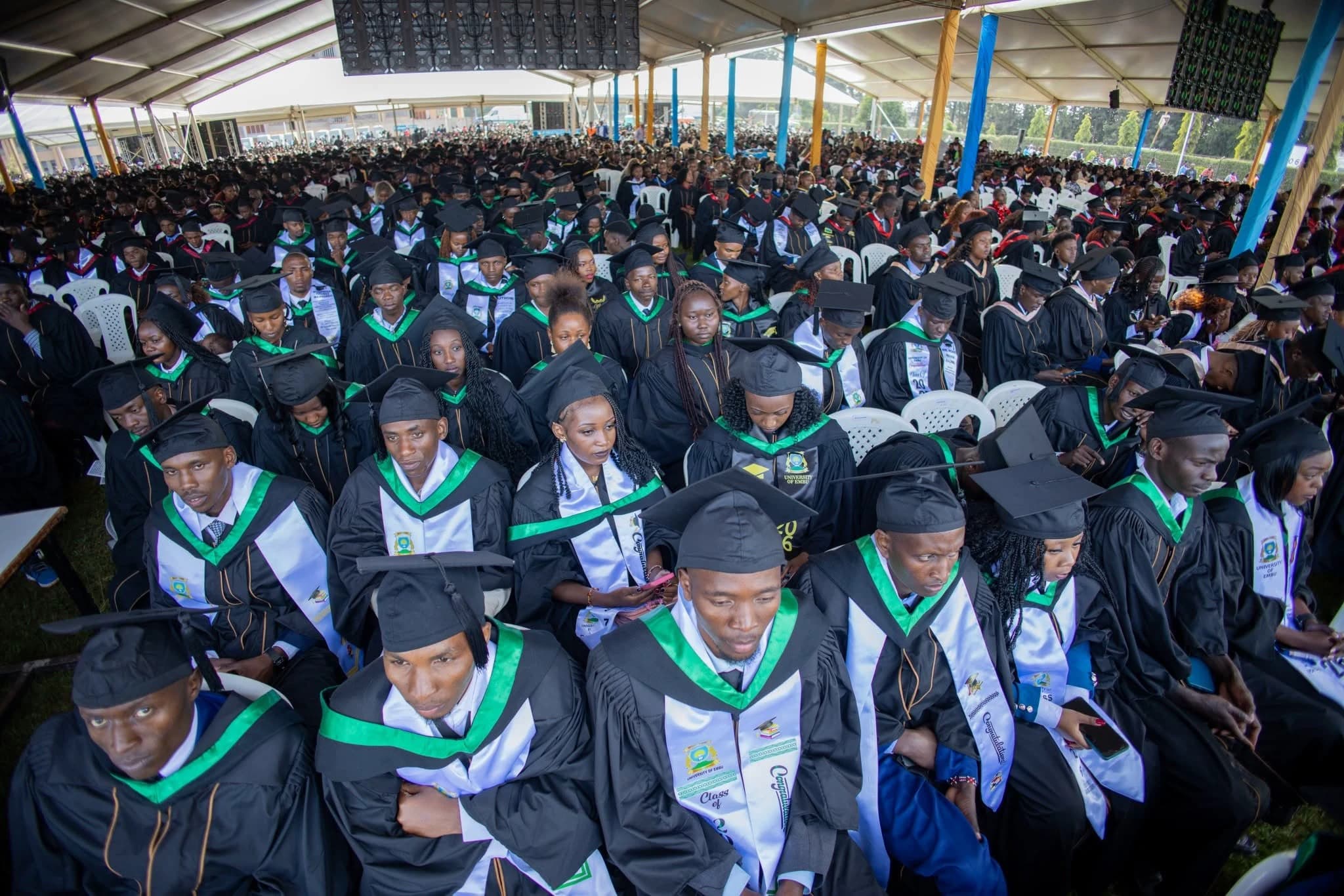
An ECDE teacher should have the opportunity to advance academically, even to PhD level, provided they meet the relevant academic and professional requirements at every stage. The progression pathway should not end at a certificate or diploma. A teacher should be able to pursue a degree, a master's qualification and eventually a doctorate if they have the ability, determination and resources to do so.
Such opportunities would not only benefit individual teachers but also strengthen the quality of early childhood education. Children at the foundational stage deserve teachers who are adequately trained, professionally supported and continuously exposed to new knowledge and teaching approaches. Investing in the academic growth of ECDE teachers is therefore an investment in the future of the entire education system.
The same philosophy should extend to support staff and other employees within the education sector. A support staff member who has the ambition, determination and thirst for knowledge should not be denied an opportunity to pursue higher education and advance professionally. Someone who starts as a support staff member should not be condemned to remain at that level throughout their working life. Where someone begins their educational or professional journey should never determine how far they can go.
The education sector must recognise that intellectual ability, talent and the desire to acquire knowledge are not exclusive to individuals who begin their careers or education at the highest levels. Clear pathways should be established to enable qualified employees to improve their academic credentials, acquire professional skills and compete for appropriate career opportunities.
Progression requirements are important because academic and professional standards must be maintained. However, such requirements should be reasonable, transparent and supportive. There is a difference between maintaining standards and creating unnecessary barriers. A system that demands higher qualifications without providing realistic opportunities for those who started with lower qualifications risks shutting out people who genuinely want to learn.
The government should therefore invest in flexible learning arrangements, affordable training, adult education, bridging programmes and accessible examination opportunities. Recognition of prior learning and professional experience should also be explored within the applicable national qualifications framework. The objective should be to ensure that nobody is permanently locked out of academic advancement simply because of their starting point.
The government, county governments, the Ministry of Education, the Kenya National Examinations Council (KNEC), the Teachers Service Commission (TSC) and teacher-training institutions should work together to establish practical progression pathways for ECDE teachers and other education-sector employees. Particular attention should be given to teachers whose initial qualifications were limited to primary education. The government should explain how these teachers can acquire secondary-level qualifications, access recognised teacher-training programmes and progressively advance to diploma and degree levels. It should also ensure that support staff and other employees are not forgotten in policies promoting lifelong learning and professional development.
Education should be an instrument of liberation, empowerment and social mobility. It should give people the confidence to dream beyond their current circumstances and the opportunity to transform those dreams into reality.
The lowest level of entry should not determine the highest level of achievement. An ECDE teacher should be allowed to dream beyond a certificate or diploma. A support staff member should be free to pursue higher academic qualifications. A learner who begins at the lowest level should be given a fair opportunity to progress through the education system.
We must build an education system that opens doors rather than closes them, nurtures ambition rather than suffocates it, and gives every determined individual a fair chance to rise as high as their abilities, qualifications and hard work can take them. The question should not be how low someone started, but how far the education system is willing to support them to go. After all, one's starting point should never become one's finishing line.


Reader Discussion (0)
Sign in to comment