Kenya takes global leadership role in push to expand School Feeding Programmes
By Jeff Kirui
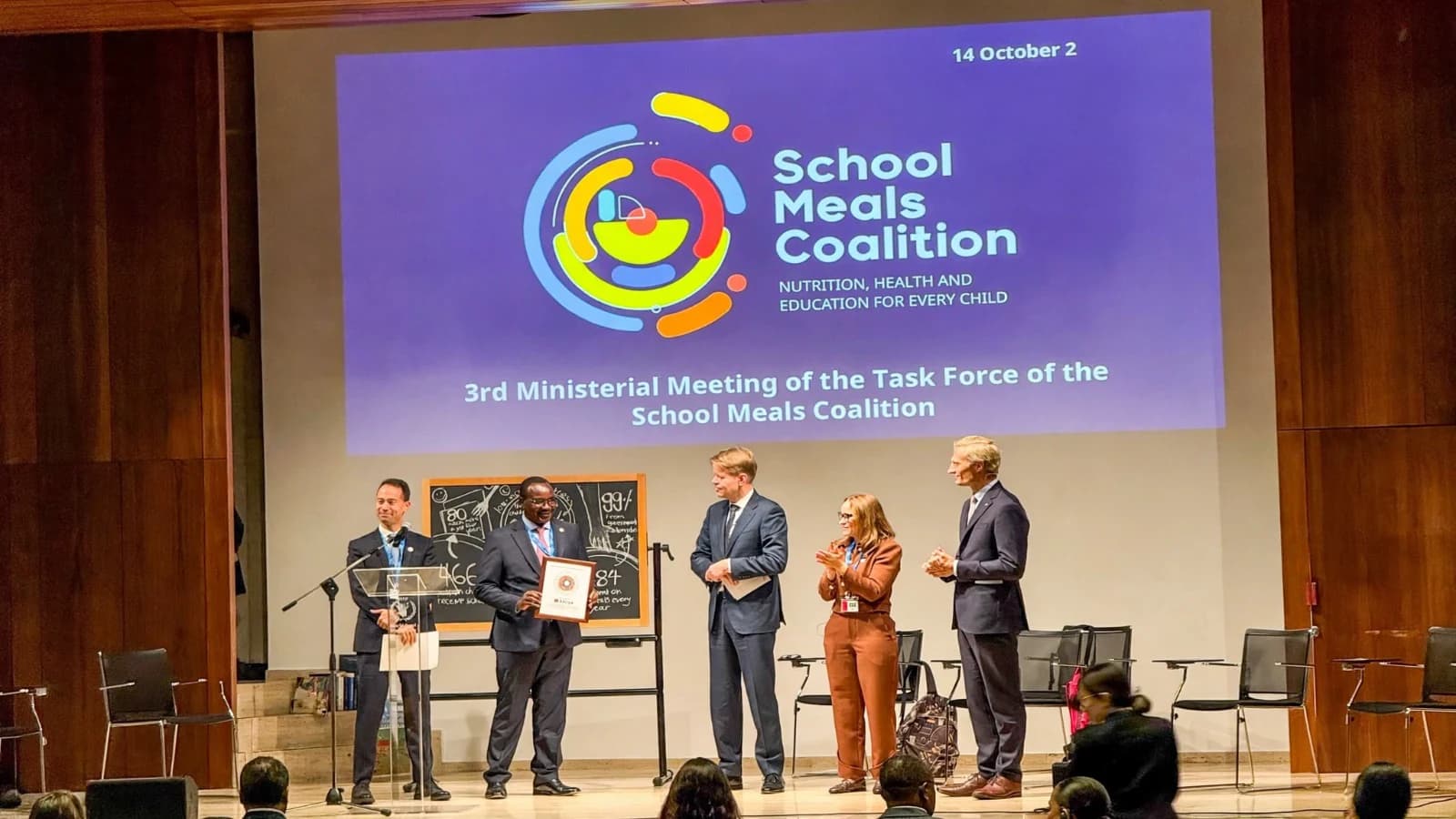
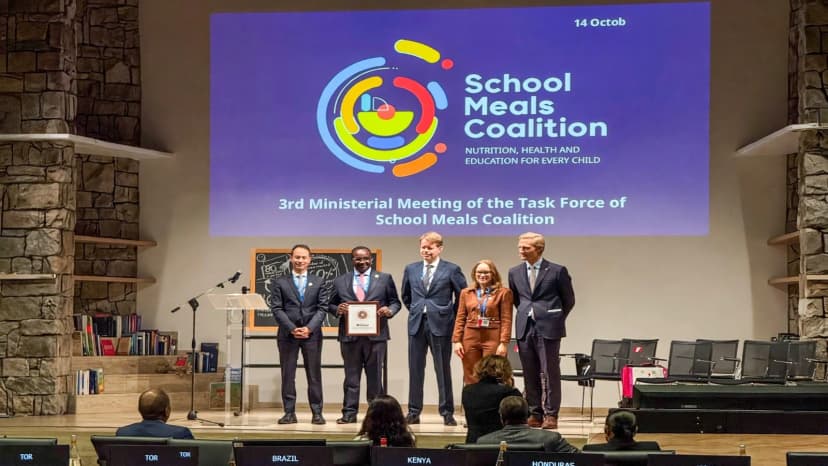
CS Julius Ogamba during the formal unveiling of Kenya as a co-chair at the Third Ministerial Meeting of the Taskforce of the School Meals Coalition in Rome, Italy-Photo|Courtesy
Kenya has been appointed the fourth co-chair of the Global School Meals Coalition, placing the country at the centre of international efforts to ensure learners have access to nutritious meals.
Education Cabinet Secretary Julius Migos Ogamba announced the appointment during the third Ministerial Session of the coalition at the headquarters of the United Nations World Food Programme (WFP) in Rome, Italy, on Wednesday, October 14, 2026. Kenya joins Brazil, Finland and France in guiding initiatives aimed at strengthening school feeding systems worldwide.
The new role comes as the government seeks to expand its school meals programme, improve nutrition among learners and address challenges that keep millions of children from accessing food at school. Ogamba said Kenya would use its position to champion sustainable financing, stronger partnerships and greater recognition of African experiences in developing national school feeding programmes.
He noted that governments needed to explore innovative funding models to sustain school meals initiatives amid competing demands on public resources.(Education News Kenya — https://educationnews.co.ke/news/kenya-takes-global-leadership-role-in-push-to-expand-school-feeding-programmes)
Among the proposals Kenya is pursuing is the use of carbon financing linked to its clean cooking programme to support school feeding.
The government is also working with the WFP on a proposed debt-for-food conversion arrangement that would redirect savings from debt servicing towards food security and long-term resilience. The initiatives are intended to provide more predictable funding for school meals rather than relying solely on conventional budget allocations.
School feeding programmes are increasingly viewed as an investment that extends beyond education, helping to improve child nutrition, support attendance and retention, and create markets for locally produced food. Kenya's home-grown school meals model also offers opportunities for small-scale farmers by linking agricultural production to food supplies for schools. However, expanding coverage will require sustained government funding, effective food distribution systems and coordination among public institutions and development partners.
The coalition brings together governments and development partners committed to ensuring children receive nutritious meals in school. Kenya hosted a ministerial task force meeting in Nairobi in 2024, when participating countries identified priorities including reliable financing, stronger national programmes and improved monitoring of results. Kenya's co-chairmanship is expected to strengthen cooperation among coalition members while promoting approaches that can make school feeding programmes more sustainable, particularly in countries facing food insecurity and financial constraints.
The appointment comes as Kenya pursues a wider expansion of its school feeding initiative, with the government targeting 10 million learners by 2030. The programme currently reaches about 3.2 million learners, according to recent reports.
You can also follow our social media pages on Twitter: Education News KE and Facebook: Education News Newspaper for timely updates.
>>> Click here to stay up-to-date with trending regional stories
>>> Click here to read more informed opinions on the country's education landscape
>>> Click here to stay ahead with the latest national news.









Reader Discussion (0)
Sign in to comment