






The Government has launched a multi-stakeholder task team to investigate the rising cases of school unrest, arson and violence, amid growing concerns over learner safety and school management.
Education Cabinet Secretary Julius Migos Ogamba inaugurated the Multi-Stakeholder Task Team on Unrest in Schools on Tuesday, November 24, 2026, at the Centre for Mathematics, Science and Technology Education in Africa (CEMASTEA).
The task team was established through Gazette Notice No. 16733 dated October 23, 2026, and supplemented by Gazette Notice No. 16968 of October 30, 2026. Its mandate is organised around six thematic areas aimed at addressing the causes of school unrest and strengthening institutional accountability.
The team, chaired by Prof. Peter Mulwa Mbithi, is expected to recommend practical and sustainable measures to prevent recurring school disturbances, arson and destruction of property.
The incidents of unrest were reported nationally during the second term of 2026, highlighting the urgency of addressing the crisis.
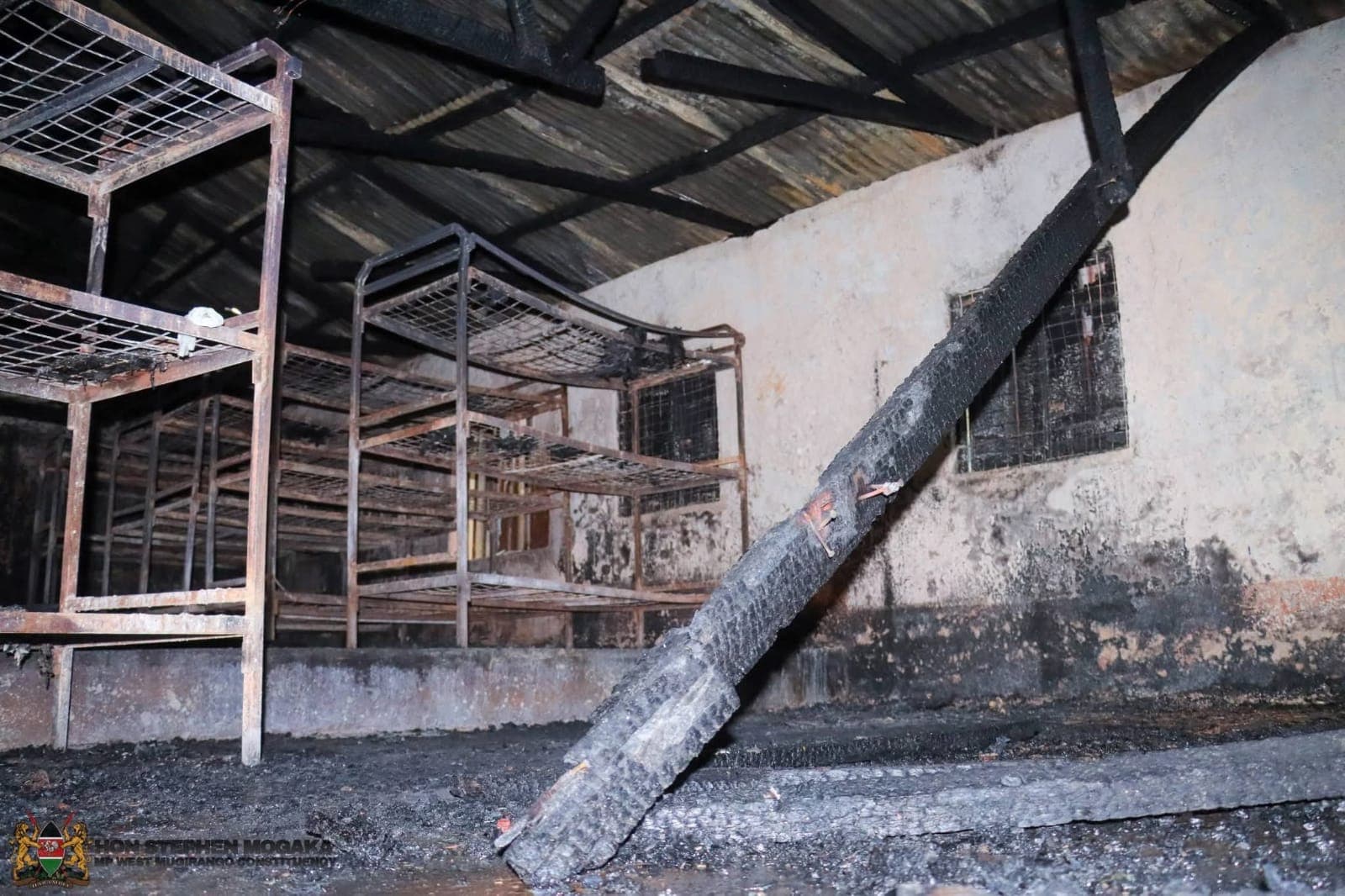
The 2024 Hillside Endarasha Academy tragedy and the May 2026 Utumishi Girls Academy fire as reminders of the need to strengthen safety measures in learning institutions.
The CS noted that previous inquiries, including the Sagini, Macharia, Wangai and Koech investigations, had made recommendations on preventing school unrest, but implementation remained a major challenge.
He challenged the task team to establish why previous recommendations had not been fully implemented and develop clear mechanisms to ensure accountability.
The review will cover school safety standards, boarding school management, infrastructure, fire prevention, emergency preparedness and institutional governance.
It will also examine learner discipline, guidance and counselling, bullying, substance abuse, peer pressure, gender based violence and the influence of social media and smartphones on student behaviour.
Ogamba said the recommendations should promote positive discipline, protect learners' rights and strengthen mentorship and psychosocial support.
The team will also assess the cost of education, including school fees, Government capitation, household contributions and school uniform policies, to identify financial pressures affecting learners and institutions.
It is further expected to propose policy, legal and administrative reforms to strengthen school governance and clarify the responsibilities of school heads, Boards of Management, teachers, parents and education officials.
Principal Secretary for Basic Education John Ololtuaa said every recommendation must have an identifiable implementing institution, timeline, resource allocation and measurable indicators.
He emphasised the need for a practical roadmap that would enable the Government to monitor progress and hold responsible institutions accountable.
Speaking during the inauguration, Prof. Mbithi said the task team would investigate why recommendations from previous inquiries had not been implemented.
The PS said the team was committed to producing a practical, measurable and implementable report that would help bring school unrest to an end.
The team is expected to engage learners, parents, teachers, school administrators and affected communities across all 47 counties.
Its final report will include an assessment of the causes of unrest, proposed policy reforms, a costed implementation framework and mechanisms for monitoring implementation.
The task team has 90 working days from the date of gazettement to complete its assignment and submit the final report by March 2, 2027.
The formation of the task team comes against the backdrop of widespread school disturbances recorded during the second term of 2026.
A Ministry of Education report dated June 22, 2026, documented a total of 330 incidents involving school fires, arson, student unrest and precautionary closures between April 27 and June 14.
Of these, 124 involved student agitation and disturbances, 95 were actual fire incidents, 77 were precautionary school closures or releases, while 34 involved attempted or threatened arson.
Precautionary closures rose sharply from 14 cases recorded between April 27 and June 6 to 63 between June 7 and June 14.
Nyanza recorded the highest number of incidents at 108, representing 32.7 per cent of the national total. The region experienced a sharp increase from 20 cases in the first reporting period to 88 in the second.
Central region followed with 53 incidents, while Rift Valley recorded 51.
Other regions included Eastern with 42 cases, Western with 29, Coast with 27, Nairobi with 19 and North Eastern with one incident.

Reader Discussion (0)
Sign in to comment