
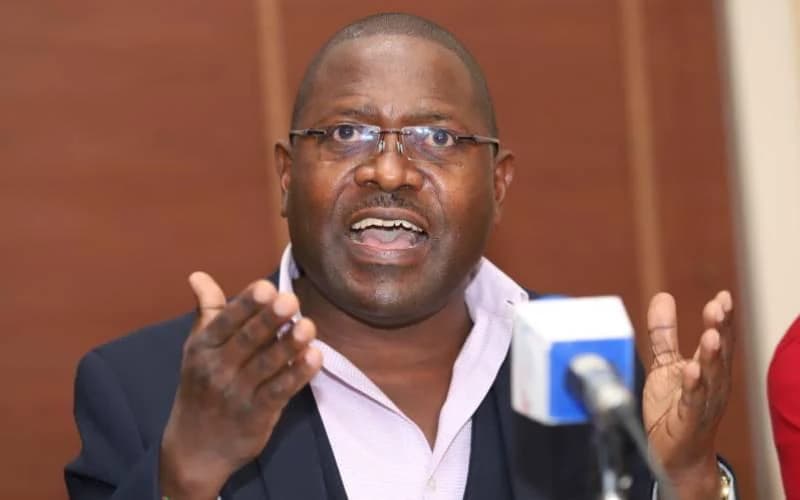



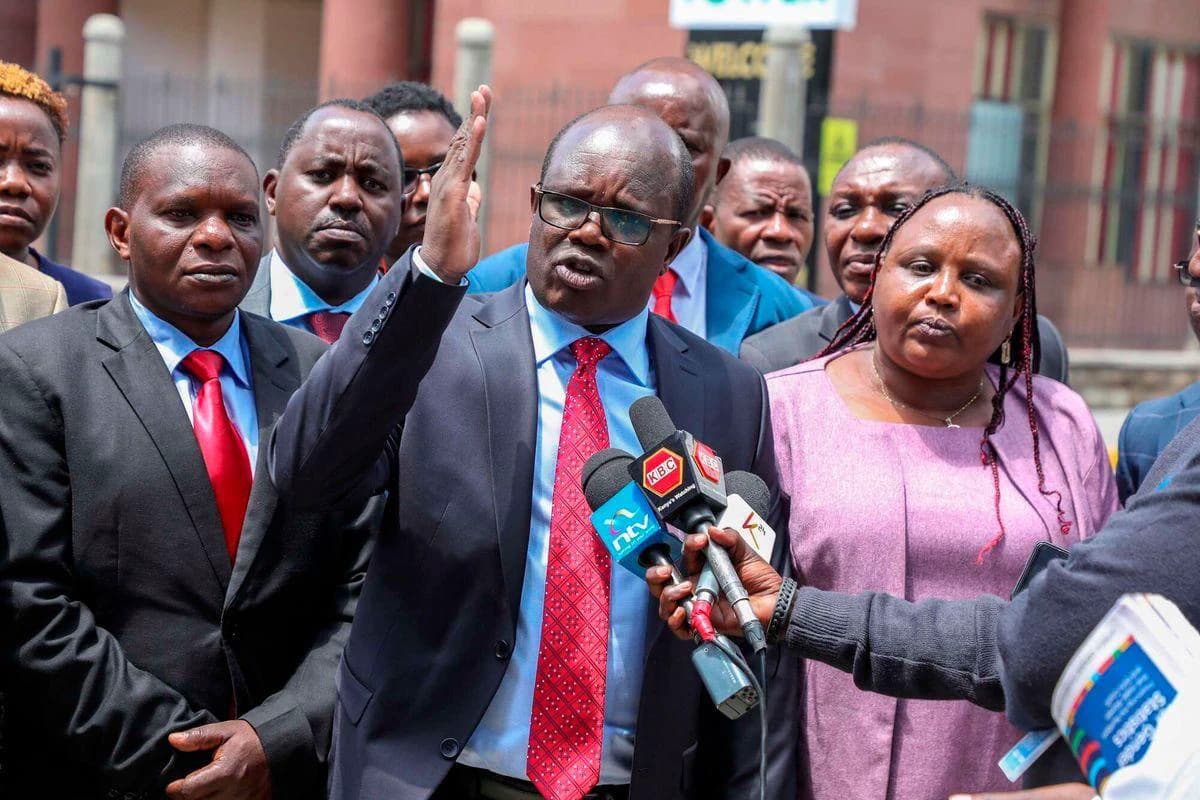




In a joint submission presented to the National Assembly's departmental committees on Education and Labour on Wednesday, November 4, 2026, the unions argued that the government's current approach to financing universities threatens the sustainability of the agreements reached following weeks of industrial action.
The unions want Parliament to establish a clear distinction between institutional funding for university operations and the government's responsibility to finance employment obligations arising from collective bargaining agreements.
Their submission, dated November 2, follows the signing of a return-to-work formula on October 30, 2026, which ended industrial action by university academic staff.
The unions maintain that although the government committed Sh20 billion towards implementing the four-year CBAs, fundamental questions remain over funding arrangements for subsequent years and responsibility for outstanding employment obligations.
Unions challenge university funding model
At the centre of the dispute is the Student-Centred Funding Model (SCFM), which the unions argue is unsuitable as the principal mechanism for financing negotiated employment obligations.
According to their submission, the government has increasingly expected public universities to meet recurrent expenditure, including staff remuneration, through institutional revenues linked to student enrolment, fee collections and other internally generated income.
The unions warn that such an arrangement exposes university employees to financial uncertainty because institutional revenue varies considerably between universities.
They argue that universities cannot guarantee timely salary payments and implementation of negotiated benefits when the availability of funds depends on student enrolment, household incomes, fee collection and other factors beyond employees' control.
In their submission, the unions state: "Public universities cannot be expected to deliver quality teaching, research, innovation, community service and other national functions while operating under an inadequate funding framework."
They further argue that public universities require a funding system capable of supporting their statutory mandates without transferring the financial risks associated with government funding decisions to employees.
The unions have questioned whether the government has established a sufficiently reliable financing mechanism for the full implementation of the 2025–2029 agreements.
They also challenge the practice of requiring universities to absorb additional financial obligations without corresponding allocations from the National Treasury.
The submission raises concerns about parliamentary oversight, noting that university representatives are not always directly involved in budget deliberations determining the resources available to their institutions.
The unions want lawmakers to examine whether the existing financing arrangements adequately protect public universities from accumulating unpaid employment obligations.
Sh20 billion commitment under scrutiny
The unions acknowledge that the government made a Sh20 billion commitment towards implementation of the 2025–2029 CBAs during negotiations that culminated in the October 30 return-to-work agreement.
Under the arrangement, Sh6.7 billion is to be released during the 2026/2027 financial year, with a further Sh6.7 billion in 2027/2028 and Sh6.6 billion in 2028/2029.
The agreement provides that the first Sh1 billion tranche will be financed through Supplementary Estimates No. 1 for the 2026/2027 financial year.
However, the unions insist that the allocation must be supported by a transparent and enforceable financing framework rather than depending on future administrative decisions.
They want Parliament to exercise its budgetary and oversight powers to ensure the agreed funds are appropriated and released within the stipulated timelines.
The unions also seek a clear framework for settling outstanding employment obligations beyond those expressly covered by the negotiated CBAs.
Their submission notes that public universities have reported outstanding funding claims amounting to approximately Sh100 billion, although the unions say the claims require verification and reconciliation.
The figure should therefore not be interpreted as an independently audited debt or as an additional amount already approved for payment.
The unions want Parliament to require the relevant government institutions to establish the actual liabilities, verify the claims and develop a transparent mechanism for settling legitimate obligations.
They argue that unresolved funding shortfalls could weaken university finances and compromise the implementation of the new agreements.
Proposed law raises fresh concerns
The unions have also raised objections to provisions of the Tertiary Education, Placement and Funding Bill, 2026, which proposes establishing a new Tertiary Education Funding Authority and a central placement and funding framework.
They argue that the proposed legislation places considerable emphasis on student placement, scholarships and loans without adequately defining the government's responsibility to finance public universities as institutions.
According to the unions, this could create a situation in which universities are required to deliver teaching, research, innovation and other public services without a guaranteed mechanism for meeting their recurrent expenditure.
They want the Bill amended to expressly recognise institutional financing as a separate obligation from financial support provided directly to students.
In particular, the unions propose a new clause protecting remuneration and employment obligations of public university employees.
The proposed provision states: "Nothing in this Act shall transfer to the Authority responsibility for financing the salaries, allowances, pensions, gratuities or other employment emoluments of staff."
The unions argue that salaries, pensions and other employment benefits should remain obligations of the government and public universities under the applicable legal and collective bargaining frameworks.
They further propose that the Cabinet Secretary responsible for education, working with the National Treasury, should ensure adequate and timely budgetary provision for employee remuneration.
Another proposed provision would require the government to provide predictable, adequate and timely financing for institutional and operational functions, including teaching, research, clinical services, laboratories, libraries, information and communications technology, maintenance and other recurrent expenditure.
The unions are particularly concerned about the possibility of repealing existing statutory funding provisions without replacing them with an equally strong legal guarantee.
They have cited provisions of the Universities Act establishing the Universities Fund and defining its role in financing public universities.
Their position is that any legislative changes should preserve the principle of predictable parliamentary funding and public accountability.
They also want the proposed law to protect existing employment rights, collective bargaining agreements, pension liabilities and other obligations during the transition to a new funding framework.
Parliament asked to strengthen oversight
The unions have presented several proposals aimed at strengthening parliamentary oversight of public university financing.
They want Parliament to facilitate the appropriation of adequate resources and ensure that the National Treasury and Ministry of Education meet their financial commitments under the 2025–2029 CBAs.
The unions also want lawmakers to establish clear mechanisms for verifying outstanding university liabilities and determining how legitimate obligations will be settled.
They propose that the relevant government institutions be required to account for the financing of university employees separately from student scholarships and loans.
The submission further calls for an examination of whether the current funding arrangements are consistent with the government's constitutional and statutory responsibilities towards public universities.
The unions contend that the absence of clear funding obligations has contributed to recurring industrial disputes and uncertainty over negotiated employment benefits.
They have warned against treating the October 30 settlement as a permanent solution to the sector's financial problems.
The submission states: "The issues before this Committee go beyond the conclusion of a single round of collective bargaining."
The unions argue that the dispute exposes broader weaknesses in the country's approach to financing public higher education.
They say that unless these weaknesses are addressed through legislation, budgetary reforms and effective oversight, similar disagreements could arise during the implementation of future CBAs.
The unions' latest demands come just days after the signing of the return-to-work formula that ended the nationwide university lecturers' strike.
The industrial action began on October 2, 2026, following disagreements over negotiations and implementation of the 2025–2029 CBAs.
The dispute affected teaching, research and other academic activities across public universities, prompting intervention by senior government officials.
The return-to-work agreement was signed following negotiations involving representatives of the Ministry of Education, the Inter-Public Universities Councils Consultative Forum and university trade unions.
Under the agreement, employees were expected to resume their duties while the parties continued working on outstanding matters.
The settlement also provides safeguards against victimisation of employees who participated in the industrial action, including withdrawal of disciplinary measures linked to the strike.
It further provides for the restoration of employment benefits and protection of contract employees against adverse treatment arising from participation in the strike.
On remuneration, the agreement provides for annual basic salary adjustments of 3.5 per cent and an automatic annual increment of five per cent, alongside revised allowances.
However, the parties agreed that some outstanding issues would remain subject to further negotiations, with a target completion date of February 28, 2027.
The unions have consequently asked Parliament to ensure that the settlement is implemented in full and that pending negotiations proceed within the agreed timelines.
They maintain that a return to normal academic operations should not obscure the financial challenges facing universities or the government's responsibility to honour negotiated employment obligations.
The joint submission concludes by urging Parliament to address the structural financing challenges that have contributed to repeated industrial disputes in public universities.
The unions argue that stable funding is essential not only for employees' welfare but also for maintaining teaching standards, research capacity, institutional development and the quality of university education.
They say universities should not be forced to choose between paying employees and financing essential academic activities.
The unions have also emphasised that the government must establish a sustainable framework that enables public universities to fulfil their national development responsibilities.
Their recommendations place Parliament at the centre of resolving the dispute through legislation, budgetary allocations and oversight of the relevant government institutions.
The unions insist that a lasting settlement requires more than the release of money for the current CBAs.
They want a financing framework that prevents the accumulation of fresh salary arrears, protects employment rights and ensures that universities can meet their obligations without relying excessively on uncertain institutional revenues.
The submission was signed by UASU Secretary-General Dr Constantine Wasonga, KUSU Secretary-General Dr Charles Mukhwaya and KUDHEIHA national trustee Bro Odoyo Genga.
The unions maintain that Parliament's response will be critical in determining whether the October 30 agreement marks the beginning of lasting industrial stability or merely another temporary settlement in Kenya's public university sector.
Reader Discussion (0)
Sign in to comment