









Kenya is strengthening its preparations for the introduction and expansion of Chinese language education in senior schools following the renewal of a strategic partnership between the Teachers Service Commission (TSC), the University of Nairobi (UoN) and two Chinese education institutions.
The renewed four-party agreement, signed in Beijing, seeks to establish a sustainable pipeline of locally trained and professionally qualified Chinese language teachers to support the growing demand for Mandarin under Competency-Based Education (CBE).
The partnership brings together UoN, TSC, Tianjin Normal University and China's Centre for Language Education and Cooperation (CLEC), combining teacher preparation, international academic collaboration and professional development.
The agreement was formalised on November 14, 2026, during the World Chinese Language Conference in Beijing. UoN Vice-Chancellor Ayub N. Gitau and TSC Regional Director Lilian Mwangi represented the Kenyan institutions during the signing.
The renewal was followed by an official Kenyan educators' mission to China between November 16 and 22, during which a delegation led by UoN Deputy Vice-Chancellor for Finance, Planning and Development Josiah Aduda held further discussions with Chinese education officials.
The delegation met CLEC Deputy Director General Yu Tianqi and World Chinese Language Teaching Society President Zhong Yinghua at CLEC headquarters. Their discussions centred on expanding Mandarin instruction in Kenyan schools, strengthening the Confucius Institute at UoN and improving the country's capacity to prepare its own Chinese language educators.
The renewed partnership comes as Kenya introduces Chinese among the four foreign language options available to Grade 10 learners under the senior school curriculum.
More than 30 senior secondary schools are reportedly participating in the initial implementation of the subject, with a broader rollout anticipated as the CBE senior school structure develops.
The expansion, however, presents a significant human-resource challenge for the education sector: ensuring that schools have teachers with the necessary linguistic competence and professional qualifications.
Recognising this emerging demand, UoN has incorporated Chinese as a teaching subject in its Bachelor of Education (Arts) and Postgraduate Diploma in Education programmes. The move is expected to strengthen the supply of Kenyan educators who can teach Mandarin while meeting the professional standards required for registration and licensing by TSC.
One of the most significant components of the agreement is the development of local teaching capacity through international scholarship arrangements.
Under the 2+2 and 1+1 academic pathways involving Tianjin Normal University, Kenyan student-teachers divide their training between UoN and China. The arrangement combines professional teacher preparation with practical exposure to Mandarin, enabling trainees to acquire language proficiency in an environment where Chinese is the dominant language.
Nearly 100 CLEC-sponsored Kenyan trainees are currently enrolled in the university's undergraduate and postgraduate education programmes and are expected to graduate in 2027. Their anticipated completion of training could provide an important pool of potential candidates for future TSC recruitment, although graduation alone does not guarantee automatic employment.
During the international policy engagements in Beijing, Gitau highlighted the importance of developing local expertise instead of depending exclusively on visiting Chinese instructors.
The strategy places Kenyan teachers at the centre of the country's long-term Mandarin education programme. Beyond acquiring language proficiency, locally trained teachers are expected to understand the Kenyan classroom environment, curriculum requirements and the professional responsibilities associated with teaching in public schools.
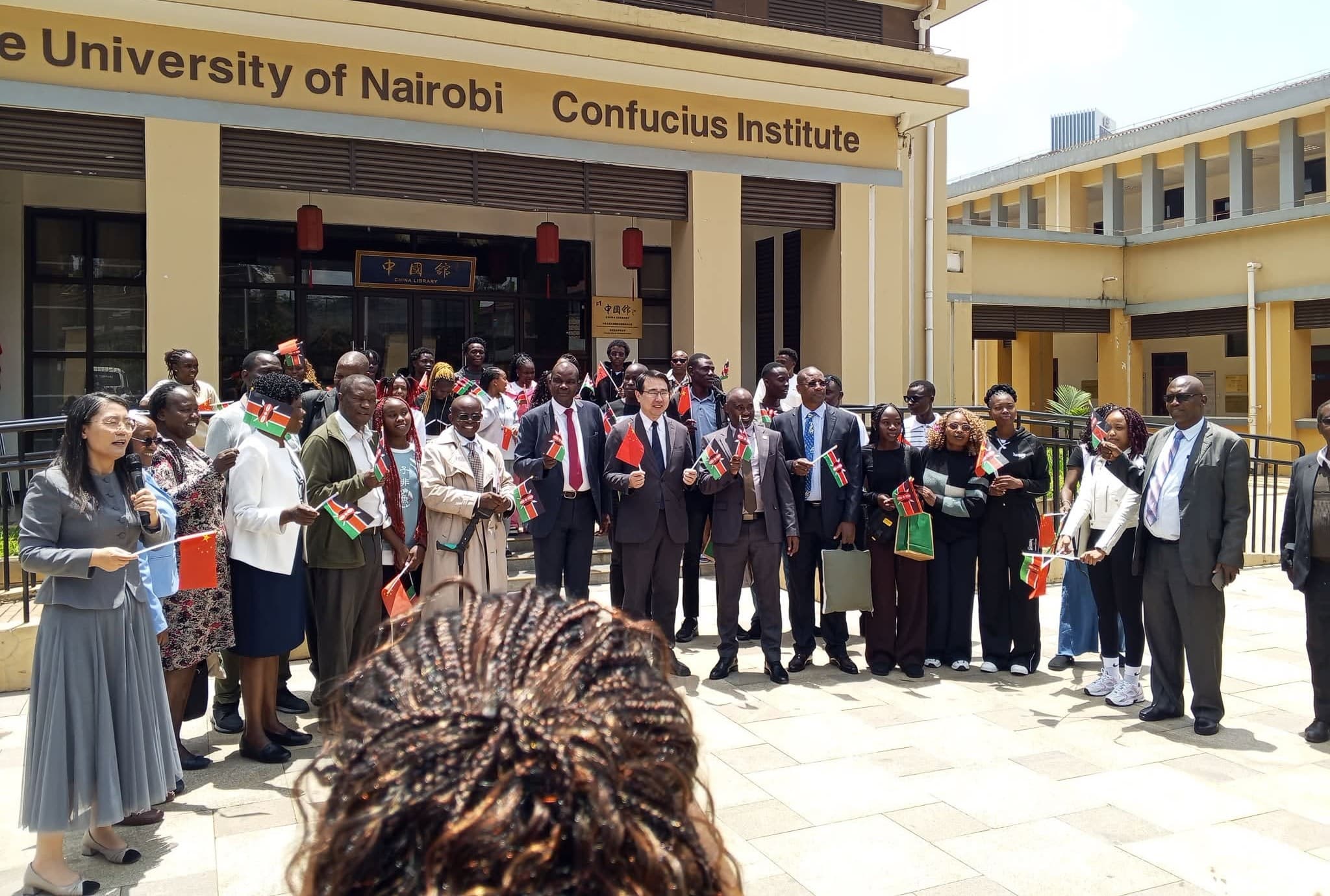
Strengthening the Confucius Institute at UoN is also expected to support the wider collaboration through language training, academic exchange and cultural engagement.
The growing emphasis on Chinese language education reflects Kenya's expanding economic and diplomatic engagement with China.
As cooperation in trade, infrastructure, technology, tourism and investment continues to develop, proficiency in Mandarin could become an additional competitive advantage for Kenyan students entering the employment market. Learners who pursue the subject may eventually find opportunities in international business, diplomacy, tourism, translation, education and other professions requiring cross-cultural communication.
However, the success of the initiative will depend on more than signing international agreements. Schools will require adequate teachers, learning resources, appropriate assessment arrangements and sustained government support.
The renewed TSC-UoN partnership therefore marks an important step towards building local capacity for a changing education landscape.
For Kenya, the bigger ambition is to ensure that the introduction of foreign languages under CBE translates into meaningful learning opportunities rather than remaining a curriculum provision that schools lack the personnel to implement.



Reader Discussion (0)
Sign in to comment