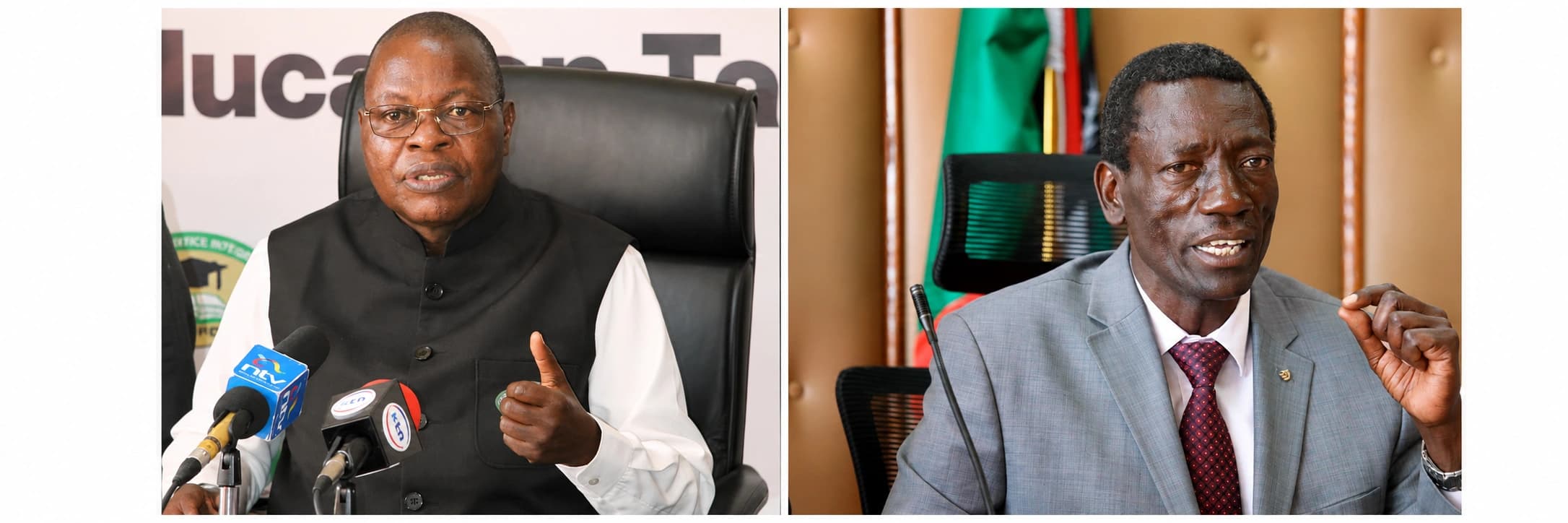





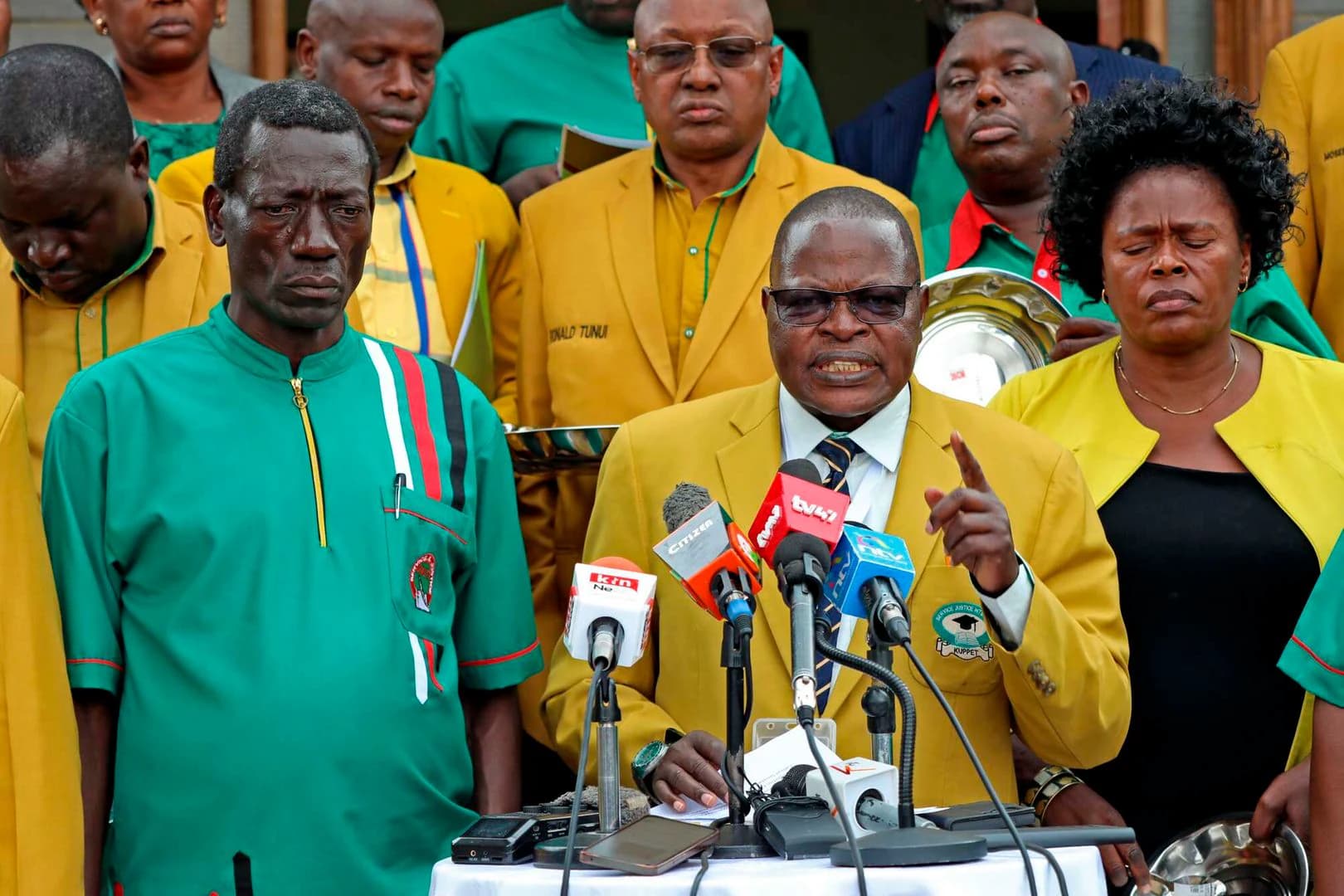



The escalating disagreement between the Kenya National Union of Teachers (KNUT) and the Kenya Union of Post-Primary Education Teachers (KUPPET) over the administration of Junior Secondary Schools (JSS) raises a question that Kenya cannot afford to ignore: is the struggle genuinely about improving academic standards, or has it become an increasingly consequential contest over institutional power, billions of shillings in public funding, administrative positions, professional influence and control of education resources?
Beneath the competing arguments about who should administer JSS lies a substantial financial question. Who controls the money allocated to junior school? Who determines how it is spent? Who manages its infrastructure, laboratories, equipment and learning materials? Who supervises procurement? And who is ultimately accountable when public investment fails to translate into better learning?
These are not peripheral questions. They go to the heart of the disagreement.
Junior Secondary School is a major public investment involving millions of learners, government capitation, teacher deployment, classrooms, laboratories, digital equipment, instructional materials and institutional infrastructure. Its administration consequently carries financial responsibilities and institutional influence that cannot be separated from the debate over its future governance.
However, the most important stakeholder in this contest is the learner.
The introduction of JSS under the Competency-Based Education framework was intended to strengthen learning, nurture competencies and prepare children for senior school. It was never meant to create another institutional battlefield between professional organisations.
The ultimate test of every administrative proposal must be whether it delivers better education and ensures that public resources reach the classroom.
Following the money from the Treasury to schools
The financial magnitude of JSS makes the governance question particularly important.
The National Treasury’s FY 2026/2027 budget summary provides for KSh30.9186 billion under Junior Secondary School capitation. This is a substantial allocation that demands rigorous financial accountability, transparent disbursement and demonstrable educational returns.
It is important to distinguish a budget allocation from actual releases and expenditure. The KSh30.9186 billion is the budgeted provision, not proof that the entire amount has already reached schools or been spent.
Nevertheless, it illustrates the scale of public resources whose management requires close scrutiny.
The money must be traced through the entire financing chain: from the National Treasury’s budgetary provision, through the Ministry of Education’s releases, into the designated school accounts, through approved procurement and expenditure, and finally into the learning environment.
At every stage, there must be documentary evidence showing how much was allocated, how much was released, how much reached individual institutions, what was purchased, who supplied it and whether the intended learners benefited.
The question should not merely be how much money the government has allocated to JSS. It should be how much has actually translated into textbooks, laboratory materials, practical learning equipment, stationery, functional facilities and improved classroom instruction.
The Ministry of Education’s January 6, 2026, capitation circular provides a practical illustration of how JSS funding is structured.
For Term One of 2026, the Ministry announced KSh4,193.07 per learner, alongside a basic allocation of KSh92,490.33 for each school.
The allocation was divided into operational and tuition-related expenditure.
The operational component included KSh1,600 per learner for repairs, maintenance and improvement of physical facilities; KSh130 for administration; KSh350 for co-curricular activities; KSh140 for local transport and travel; and KSh77.71 for medical and insurance expenses.
The tuition component covered KSh50 for capacity building through SMASSE, KSh795.67 for textbooks and supplementary readers through KICD, KSh119.25 for laboratory materials, KSh300 for CBC practical materials, KSh130.05 for assessment and KSh500.39 for stationery and writing materials.
The breakdown demonstrates that JSS funding is not an undifferentiated pool of money. It is divided into specific expenditure categories, some of which are paid directly to schools while others are handled through centralised procurement.
For example, KSh250 for co-curricular activities, KSh50 for capacity building and KSh795.67 for textbooks and supplementary readers were designated for centralised procurement in the Term One breakdown.
Consequently, the full KSh4,193.07 should not be interpreted as cash deposited into an individual school’s bank account. Part of the allocation was intended to finance educational inputs centrally.
This distinction is fundamental to understanding the financial contest surrounding JSS. The school administrator does not necessarily receive or directly control every shilling attributed to each learner.
The Ministry must therefore disclose both the money transferred to schools and the value of educational materials and services procured centrally.
The public deserves to know whether the centrally procured items were delivered, in what quantities, to which schools and at what cost.
A textbook allocation is not proof that a textbook reached the learner. A laboratory allocation is not proof that a laboratory has the necessary materials.
The financial trail must end with evidence of delivery and actual educational use.
The Ministry’s August 19, 2026, Term Three circular provides another important illustration.
It announced KSh1,501.64 per learner and a basic allocation of KSh38,216.97 per school.
The per-learner breakdown included KSh640 for repairs and maintenance, KSh78 for administration, KSh140 for co-curricular activities, KSh96 for local transport and travel and KSh45 for medical and insurance expenses.
The tuition component included KSh20 for SMASSE capacity building, KSh224 for textbooks and supplementary readers, KSh81 for laboratory materials, KSh144 for CBC practical materials, KSh77.64 for assessment and KSh200 for stationery.
There is an important accounting distinction in this circular.
The KSh1,501.64 represents the amount distributed to schools under the listed vote heads, while another KSh244 was earmarked for centralised procurement, comprising KSh224 for textbooks and KSh20 for capacity building.
The combined value of the listed per-learner vote heads was therefore KSh1,745.64, although not all of it was paid directly into school accounts.
This distinction matters because public discussions about school funding frequently confuse money allocated, money transferred and the value of centrally procured supplies.
It is also important not to compare one term’s allocation with another as though the figures were annual entitlements. Term-specific disbursements must be examined alongside the applicable annual funding framework and the actual enrolment figures.
The Ministry should publish a consolidated annual statement showing the total allocation per learner, term-by-term releases, centralised procurement and outstanding balances.
Without such reconciliation, parents, teachers and the public cannot establish whether every allocated shilling has been accounted for.
School accounts, procurement and shared infrastructure
The question of administrative control becomes even more significant when examined through the banking arrangements prescribed for JSS.
The Ministry’s August 2026 circular requires junior schools to operate separate accounts for tuition, operations and infrastructure.
The tuition account is specifically restricted to teaching and learning materials, with payments made through cheques and no authorised transfers to other expenditure categories.
The operations account holds government subsidies other than tuition funding, while infrastructure allocations under repairs, maintenance and improvement are transferred to the infrastructure account, subject to the required approvals.
Each account must maintain a separate cashbook, and schools are required to display the amounts received on their notice boards.
These requirements establish a financial architecture in which different categories of public money have identifiable purposes.
They also expose why the JSS governance debate is so consequential.
Who has the authority to supervise these accounts? Who approves expenditure? Who ensures that procurement follows the law? Who reconciles bank statements with cashbooks and delivery records? Who investigates discrepancies?
The Ministry’s circular places responsibility for the application and utilisation of funds on the head of institution as the accounting officer, while requiring Boards of Management to ensure prudent financial management.
This makes the debate over independent JSS leadership more than a question of professional titles.
It is also a question about who exercises financial oversight and how institutional accountability is organised.
However, separate accounts do not automatically require a completely separate school administration. Equally, one overall institutional head does not eliminate the need for distinct financial records and clearly assigned responsibilities for JSS.
The distinction between institutional leadership and financial accountability must be maintained.
Perhaps the most important accountability requirement in the August 2026 circular is the acknowledgement of funds received.
Heads of institutions are required to issue official school receipts to the Principal Secretary for tuition and operations funding, with copies to the relevant education directors.
Schools must also maintain individual student lists showing admission numbers, full names and the amounts awarded. These lists are attached to payment vouchers, and students are to receive official school receipts for the allocation.
Acknowledgement is required within two weeks of receiving the funds. Institutions that fail to submit the required acknowledgement risk suspension from the programme, while recovery is to be instituted where actual enrolment is lower than the figures used in calculating the disbursement.
This is a significant accountability mechanism.
It means that the financial trail should not end when the Ministry announces a disbursement or when a school receives money.
There must be evidence connecting the allocation to the registered learner population and the expenditure undertaken.
The public should be able to establish how the Ministry verified enrolment, how much each school qualified for, what was credited to its accounts, what was retained for centralised procurement and what was ultimately delivered.
The transition from NEMIS-based records to KEMIS also makes accurate learner registration increasingly important. The August circular directs schools to complete their KEMIS data because subsequent disbursements would be based on the system.
A credible funding system must ensure that money follows genuine learners rather than inflated, outdated or unverified enrolment figures.
The next stage of the financial trail is procurement.
A school may receive money for laboratory materials, practical learning, stationery and maintenance, but the allocation alone does not demonstrate that the intended goods or services were purchased.
There must be a complete procurement record showing the approved requirement, budget provision, procurement method, supplier, contract or purchase order, invoice, payment evidence and confirmation of delivery.
Where books are procured centrally, the Ministry should publish the suppliers, quantities, prices, distribution schedules and school-level delivery records.
Where laboratories are funded through school accounts, the public should be able to establish what equipment and consumables were purchased and whether they are available for learners.
Where maintenance funds are allocated, schools should demonstrate the actual repairs undertaken.
The same scrutiny should apply to stationery, assessment materials, digital learning resources and co-curricular expenditure.
The question is not whether an expenditure voucher exists. It is whether the expenditure produced the intended educational result.
A laboratory purchase that never reaches the school, a textbook allocation without actual delivery or maintenance expenditure that leaves facilities deteriorating would represent a failure of public investment.
However, such failures should not be presumed without documentary evidence. They must be established through procurement records, school accounts, inspection reports and independent audits.
JSS infrastructure is another important financial dimension of the controversy.
Many junior schools operate within existing primary-school compounds. They share land, classrooms, sanitation facilities, security arrangements and other infrastructure, even as their academic requirements become increasingly specialised.
The government must establish clear arrangements for the use, maintenance and future development of these assets.
If JSS is administered independently, how will shared facilities be managed? Who will pay for electricity, water, security and repairs? How will ownership and maintenance responsibilities be recorded? Will separate management create unnecessary duplication?
If comprehensive-school administration is retained, how will the Ministry ensure that JSS receives its fair share of infrastructure investment?
These questions cannot be resolved through union declarations alone.
They require clear institutional agreements, asset registers, expenditure records and enforceable accountability.
The purpose of separating financial responsibilities should be to protect educational resources, not to create competing claims over the same school compound.
Leadership costs, teacher progression and a comprehensive audit
The KUPPET proposal for distinct JSS leadership must be examined against the full cost of implementation.
Creating independent leadership and management structures could require additional personnel, remuneration, office facilities, operational expenditure, procurement arrangements and financial reporting systems.
The government must establish the actual incremental cost rather than assume that additional administration is either prohibitively expensive or automatically affordable.
The relevant calculation should include the number of proposed leadership positions, applicable salary scales, allowances, administrative support, infrastructure requirements and recurring operational expenditure.
That cost should then be compared with the measurable academic benefits expected from independent administration.
KNUT’s comprehensive-school model also requires scrutiny. If one administration is retained, the government must demonstrate that the arrangement can adequately supervise JSS, protect its resources and meet its specialised academic requirements without creating administrative bottlenecks.
A cheaper administrative arrangement is not necessarily better if it compromises teaching quality. An expensive one is not necessarily justified if the additional expenditure produces no meaningful improvement in learning.
The country needs an evidence-based cost-benefit assessment.
The JSS controversy also has implications for teacher deployment, union representation and career progression.
KNUT and KUPPET have legitimate responsibilities to defend their members. However, union representation should not become a mechanism for determining who owns an institution or controls its resources.
Teachers must retain their lawful freedom of association, while the Teachers Service Commission must establish transparent rules on deployment, professional recognition, promotion and leadership appointments.
There is also a long-term concern about the relative progression of primary and JSS teachers.
If JSS teachers advance into administrative positions faster while primary school teachers remain within a comparatively restricted progression structure, the emerging comprehensive-school system could develop an imbalance in leadership opportunities.
Primary school teachers could gradually find their prospects of becoming heads of comprehensive institutions increasingly restricted, not because they lack qualifications or leadership competence, but because different professional pathways advance at different rates.
This should not be allowed to happen.
The solution is a fair and harmonised progression framework that recognises qualifications, experience, performance and leadership ability across basic education.
Professional advancement must not become another instrument of institutional competition.
If the JSS governance debate is genuinely about accountability and better management, then both unions should support a comprehensive financial audit of junior school funding.
Such an exercise should establish:
- The total amount budgeted for JSS in each financial year.
- The actual Treasury releases to the Ministry of Education.
- The amounts disbursed to each school, by term and vote head.
- The verified enrolment figures used to calculate allocations.
- The amounts retained for centralised procurement.
- The suppliers contracted to provide textbooks, laboratory materials and other learning resources.
- The quantities, prices and delivery dates of centrally procured goods.
- The actual expenditure recorded in tuition, operations and infrastructure accounts.
- The value and condition of infrastructure and equipment acquired.
- Any unspent balances, recoveries, irregular expenditure or unresolved discrepancies.
- The educational outcomes achieved against the money invested.
The findings should be published in a format accessible to school communities, parents, teachers and the public.
This would move the debate from speculation about financial control to verifiable evidence about financial management.
It would also help establish whether the existing comprehensive-school arrangements are protecting JSS resources or whether a different administrative model would provide stronger accountability.
The audit should not begin with an assumption of wrongdoing. It should begin with the constitutional principle that public money must be accounted for.
The disagreement between KNUT and KUPPET reflects two different institutional visions.
KNUT supports comprehensive-school administration, emphasising coordination, shared resources and administrative efficiency.
KUPPET advocates distinct JSS administration, emphasising specialised leadership, professional recognition and institutional autonomy.
Both positions must be judged against the same financial and educational standards.
Does the proposed arrangement protect capitation? Does it improve procurement? Does it ensure that textbooks and laboratory materials reach learners? Does it improve infrastructure? Does it strengthen teacher supervision? Does it reduce waste? Does it produce better academic outcomes?
These questions matter far more than which organisation gains greater influence over the administrative structure.
A practical alternative could retain one overall institutional head while establishing a clearly empowered JSS leadership team, protected funding allocations, separate financial records and clearly defined responsibilities for instructional supervision and resource management.




Reader Discussion (0)
Sign in to comment