






The debate surrounding President William Ruto’s proposed comprehensive school model is exposing fundamental questions about the future of basic education in Kenya. What appears to be an administrative proposal to bring Early Childhood Development Education (ECDE), primary and junior school under one institutional structure has evolved into a wider contest over governance, professional identity, teacher career progression, leadership opportunities and the protection of learners’ interests.
At the centre of the disagreement is a critical question: should integrating different levels of basic education automatically mean placing them under one administrative leadership structure? While supporters argue that a comprehensive model could improve coordination, promote continuity and reduce administrative duplication, opponents warn that integration without carefully defined responsibilities could weaken institutional autonomy and create new inequalities among teachers.
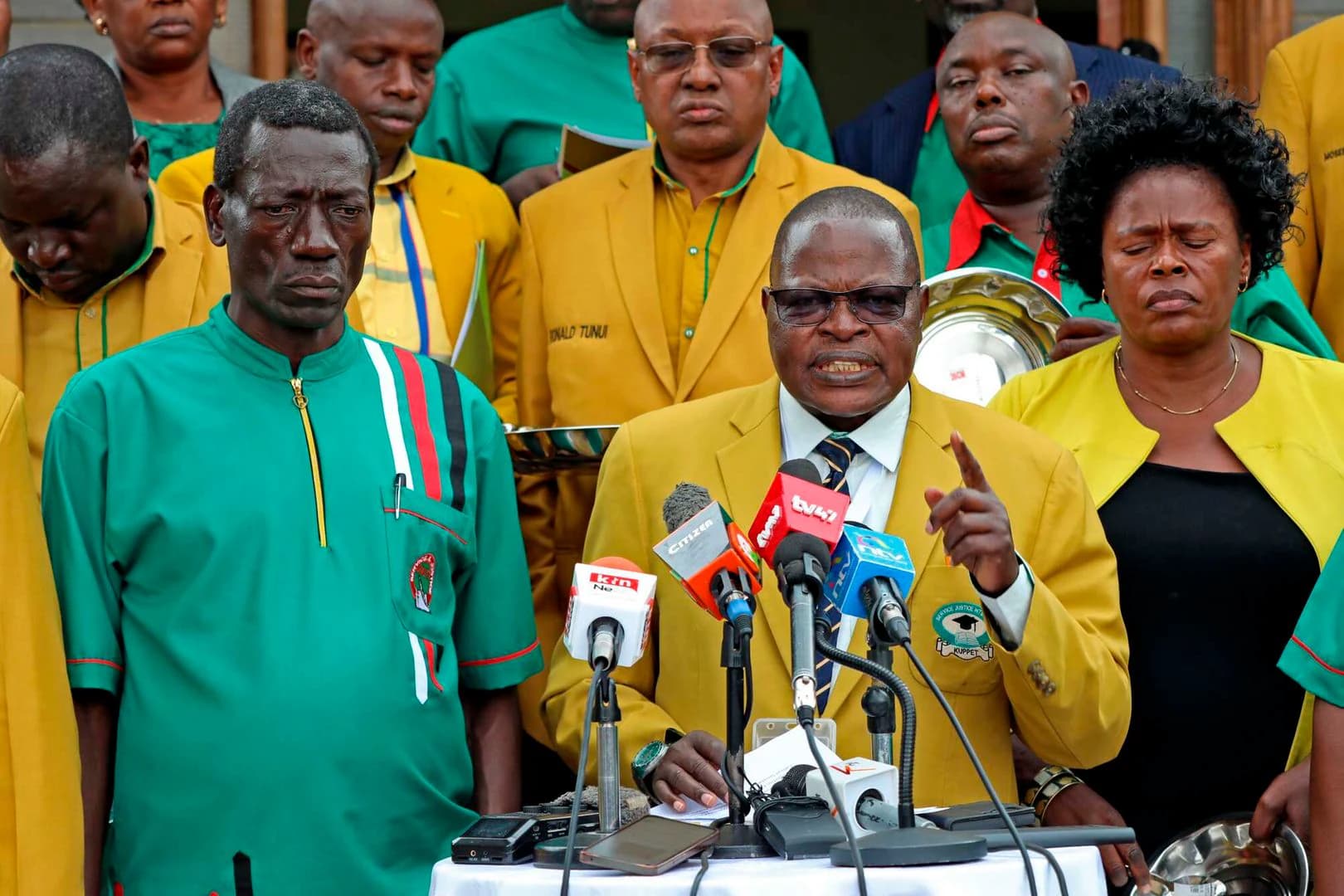
The Kenya Union of Post-Primary Education Teachers (KUPPET) has emerged as one of the strongest critics of the proposed arrangement, particularly over the position of junior school within the new structure. The union maintains that curriculum integration should not be confused with administrative consolidation, arguing that junior school has distinct instructional demands, staffing requirements and professional responsibilities that deserve appropriate recognition.
This position has brought KUPPET into disagreement with the Kenya National Union of Teachers (KNUT), which has supported a comprehensive school arrangement covering learners from ECDE through Grade 9. The contrasting positions have turned the proposal into a major policy debate, with both unions advancing arguments about how best to organise schools under the Competency-Based Education system.
However, beneath the disagreement over institutional management lies another issue that deserves equal attention: the possibility that the proposed structure, combined with existing differences in teacher career progression, could gradually disadvantage primary school teachers in the competition for senior leadership positions.
Junior school autonomy and competing union positions
KUPPET’s opposition is largely anchored in its concern that junior school could lose its distinct institutional identity if it is placed under a unified administrative structure without sufficient consideration of its unique curriculum and professional requirements.
The transition from primary to junior school is not merely a change in grade levels. It introduces different subject demands, teaching approaches, assessment expectations and levels of specialisation. Teachers handling junior school learners require appropriate professional preparation, while administrators must understand the instructional demands of the level they supervise.
For KUPPET, therefore, the question is not simply whether junior school should share facilities with primary schools. Institutions can share laboratories, libraries, playing fields, classrooms and other resources without necessarily surrendering their distinct administrative responsibilities. The more important consideration is whether the proposed arrangement will strengthen accountability, instructional supervision and the quality of learning.
The union’s argument also raises questions about the legal and policy framework governing basic education. Any significant restructuring must be considered against the Constitution, the Basic Education Act and the responsibilities assigned to the institutions overseeing the education sector. Administrative changes should not be introduced without clearly establishing the authority, responsibilities and accountability of the different levels of school management.
Yet the autonomy debate cannot be isolated from the professional interests of primary school teachers. If junior school retains a distinct identity and enjoys more favourable career progression, the government must also explain how primary school teachers will retain fair opportunities for promotion and leadership. Otherwise, reforms intended to improve institutional organisation could unintentionally create a professional hierarchy within the same basic education system.
KNUT’s support for the comprehensive school model is informed by the argument that learners should experience a coordinated progression from early childhood through primary and junior school. A unified structure could, in principle, improve continuity, strengthen resource sharing and reduce administrative fragmentation between different learning levels.
From this perspective, placing the different levels within one institutional arrangement could make it easier for school managers and teachers to coordinate learning programmes, monitor learners’ progress and address challenges affecting transitions.
KUPPET, however, approaches the proposal from the standpoint of professional specialisation and institutional autonomy. Its concern is that administrative integration could weaken junior school’s distinct requirements or create an arrangement that fails to recognise the different responsibilities of teachers working at various levels.
The disagreement is therefore about the balance between integration and specialisation. KNUT sees administrative coordination as an opportunity to strengthen the education system, while KUPPET wants safeguards to prevent junior school from being absorbed into a structure that may not adequately recognise its professional and instructional needs.
Both arguments deserve serious consideration. A comprehensive model could offer administrative advantages, but those advantages must be weighed against the possibility of unequal career opportunities, unclear leadership responsibilities and weakened accountability.
The government should not approach the matter as a contest over which union has greater influence. Instead, it must examine whether the proposed model can accommodate the professional realities of teachers across the different levels while delivering better learning outcomes.
Career progression and access to school leadership
Perhaps the most consequential issue emerging from the proposed restructuring is the future of headship and career progression for teachers serving in primary and junior schools.
The Teachers Service Commission must examine whether the existing and proposed career progression arrangements could create an imbalance in access to senior administrative positions. If junior school teachers continue advancing through the career structure at a faster rate than their primary school counterparts, the consequences could extend far beyond individual promotions.
Primary school teachers have accumulated years of experience in foundational literacy, numeracy, early learning development, classroom management and the administration of primary-level institutions. They have played a central role in building the foundations upon which the subsequent stages of education depend.
Their experience should not become professionally irrelevant because of structural changes or differences in the speed at which teachers move through job groups.
If the current progression pattern continues, junior school teachers could increasingly occupy the senior job groups from which headteachers and other school administrators are drawn. Primary school teachers, meanwhile, could find themselves progressing more slowly despite having the experience and institutional knowledge required to manage primary schools.
This could gradually narrow their chances of competing for headship positions, particularly if appointments are influenced heavily by job-group ranking rather than a balanced assessment of experience, qualifications, leadership competence and the needs of the institution.
The long-term implication is deeply troubling. If the trend continues without corrective measures, Kenya could eventually reach a situation in which no primary school teacher is realistically positioned to become a headteacher because junior school teachers have progressed faster through the career structure.
Such an outcome would represent a serious professional imbalance. It would mean that teachers who have spent much of their careers serving primary schools could gradually be pushed out of the leadership pipeline, not necessarily because they lack the competence to lead, but because the progression framework has favoured another category.
The problem could become even greater under a comprehensive school model. Where primary and junior school operate within one administrative structure, disparities in career progression could translate into disparities in access to leadership. One category of teachers might enjoy a structural advantage in securing senior positions, while another gradually loses influence over the management of institutions it has served for decades.
This is why the career progression question must be addressed before the comprehensive school model is implemented. The government and TSC must establish equitable promotion pathways that recognise the experience, qualifications and professional contributions of teachers across both primary and junior school.
A comprehensive school should not become a system in which one category of teachers advances at the expense of another. Nor should administrative integration become an indirect mechanism for determining which teachers are considered suitable for leadership.
President Ruto’s directive for the Ministry of Education to engage education stakeholders and develop proposals for amendments to the Basic Education Act has brought the debate into a critical policy phase.
The proposed review offers an opportunity to address structural challenges that have emerged under Competency-Based Education. However, the process must be guided by evidence, meaningful consultation and a careful assessment of the practical consequences for schools, teachers and learners.
Any proposed amendments should clearly define the responsibilities of school heads, deputies, teachers and education administrators. They should also explain how different levels of basic education will be managed, supervised and funded within a comprehensive arrangement.
The Kenya Comprehensive School Heads Association (KECSHA) and other education stakeholders have a legitimate interest in the discussions because the proposed changes could directly affect school leadership, staffing, resource allocation and accountability.
KUPPET’s engagement with parliamentary education structures further demonstrates that the dispute has moved beyond union statements into the legislative arena. Parliament must scrutinise the proposals carefully, particularly where they touch on the mandate of TSC, the management of public schools and the professional rights of teachers.
The legislative process should not simply legitimise an administrative decision already taken. It should provide an opportunity to identify weaknesses, examine competing proposals and develop a framework that protects the interests of all stakeholders.
Funding, staffing and learners’ interests
Even the most carefully designed administrative model will fail if it is not supported by adequate funding, appropriate staffing and sufficient learning infrastructure.
A comprehensive school arrangement must explain how capitation will be allocated where ECDE, primary and junior school operate within one institution. Funding should reflect the actual cost of delivering education at each level rather than create the impression that administrative integration automatically reduces expenditure.
Junior school requires appropriate laboratories, learning materials, specialist teachers and facilities that support practical learning. Primary schools equally need adequate classrooms, textbooks, sanitation facilities and resources for foundational literacy and numeracy.
Sharing an administration should not become an excuse for diverting resources from one level to another or concealing funding gaps. Each level must receive the support necessary to deliver its curriculum effectively.
Staffing arrangements must also be clearly defined. Schools need appropriate teacher numbers, professional development opportunities and effective instructional supervision. The responsibilities of heads, deputies and heads of departments must be established to avoid overlapping authority and unnecessary institutional conflict.
Equally important, the government must ensure that teachers from different education levels are not subjected to unequal career opportunities simply because of the administrative structure under which they serve.
The success of comprehensive schools will depend not only on how efficiently they are managed, but also on whether the teachers working within them are motivated, fairly treated and adequately supported.
Ultimately, the debate should be judged by its impact on learners rather than the administrative power gained by a particular institution or the professional advantage secured by one category of teachers.
Learners need stable school leadership, adequately staffed classrooms, effective instructional supervision, sufficient learning resources and smooth transitions between education levels. They should not become casualties of disagreements over administrative control, union influence or career progression.
The government must appreciate that teacher welfare and learner welfare are closely connected. A system that creates frustration, professional exclusion and unequal opportunities risks undermining staff morale and weakening the institutional environment in which learning takes place.
If primary school teachers progressively lose access to headship while junior school teachers advance more rapidly through the career structure, the consequences could eventually affect the entire management of basic education. Leadership opportunities would become increasingly concentrated within one professional category, even though both categories contribute to the success of the same education system.
That would be an even greater problem than the present disagreement between KNUT and KUPPET. It would turn a reform intended to promote integration into a source of professional division and institutional inequality.
Kenya must therefore avoid building a comprehensive school system that is comprehensive in administration but unequal in opportunity. The reforms must protect the professional dignity of teachers, recognise experience across all education levels and ensure that qualified primary school teachers retain a realistic pathway to school leadership.
The government, TSC, unions and Parliament must resolve these questions before implementing a new governance structure. They must establish clear leadership criteria, equitable career progression pathways, adequate funding and accountability mechanisms that put teaching and learning first.
The real test of comprehensive schools will not be whether ECDE, primary and junior school share one administrative structure. It will be whether that structure produces better-managed institutions, motivated teachers, fair professional opportunities and improved learning outcomes.
Kenya does not need an education reform that merely brings schools together on paper while creating new divisions among the teachers responsible for educating its children. It needs a system in which professional fairness strengthens school leadership and every administrative decision serves the learner. No union should win at the expense of learners, no category of teachers should be shut out of leadership, and no reform should be considered successful unless it improves the quality and equity of education.

Reader Discussion (0)
Sign in to comment