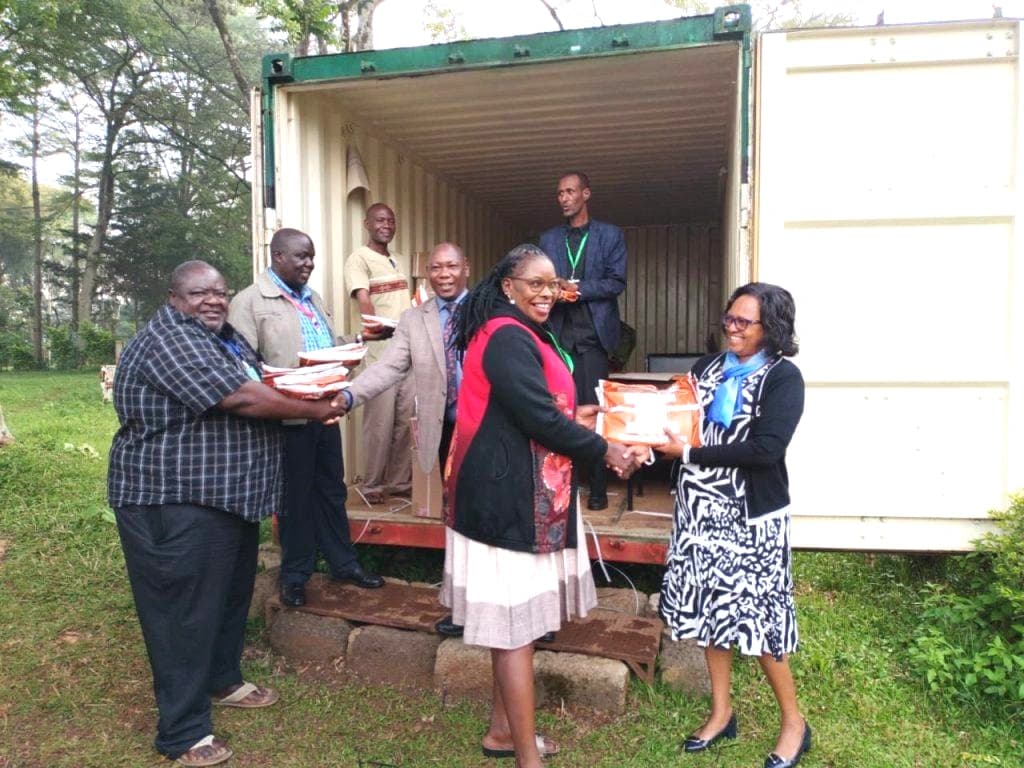
The Kenya National Examinations Council (KNEC) has tightened security around national examinations, placing examination centre managers under greater pressure to control access to school compounds, secure examination materials and ensure that only authorised personnel participate in the administration of national assessments.
The measures seek to minimise opportunities for examination leakage, impersonation, collusion and other forms of malpractice by restricting unnecessary movement around examination centres and strengthening accountability among officials entrusted with the exercise.
The restrictions have implications for teachers not assigned examination duties, Board of Management members, parents, school support staff and other visitors, who cannot automatically claim access to restricted examination areas simply because they are associated with a school.
At the centre of the arrangements are headteachers and principals serving as examination centre managers. They are responsible for overseeing examination administration, maintaining order and ensuring compliance with the applicable KNEC instructions.
Other authorised personnel may include designated deputy principals, supervisors, invigilators, security officers and officials assigned specific examination duties. Laboratory assistants and relevant subject teachers may be required during practical examinations, while gatekeepers and cooks may be permitted where their duties are recognised under the applicable regulations.
Education officials undertaking authorised inspection or examination duties may also access centres in accordance with established procedures.
The guiding principle is that access must be based on official authorisation and assigned responsibilities rather than an individual's position, influence or relationship with the institution.
Who should be in the examination compound?
The question of who is permitted inside examination compounds has become central to the enforcement of examination security, particularly as schools prepare to administer the Kenya Primary School Education Assessment (KPSEA), Kenya Junior School Education Assessment (KJSEA) and Kenya Certificate of Secondary Education (KCSE) examinations.
Centre managers must distinguish between personnel required to administer examinations and those whose duties are unrelated to the exercise.
Board of Management members, parents, school directors, bursars, accounts clerks, secretaries, grounds staff and other employees should not assume unrestricted access to examination areas. Their presence in restricted sections must be supported by the applicable KNEC instructions or specific official authorisation.
This does not necessarily mean that every such individual is prohibited from entering every part of the wider school compound. The rules governing the general school premises may differ from those governing the examination centre and the secure area where examination materials are stored.
The distinction is important because examination security requires controlled access to sensitive areas without creating the impression that all school activities must cease whenever national examinations are underway.
Centre managers are therefore expected to communicate the restrictions clearly, identify authorised personnel and ensure that visitors do not interfere with examination operations.
Smart padlocks and enhanced security
KNEC has introduced smart padlocks on examination storage containers as part of efforts to strengthen the security of examination materials. The technology is intended to improve control over access to containers and provide additional accountability concerning when they are opened and secured.
The security arrangements also include the deployment of officers to guard examination materials and centres. The precise requirements for security personnel depend on the examination category and the applicable official instructions.
These measures complement established procedures for collecting, storing, distributing and handling examination papers. Their effectiveness depends on the cooperation of school administrators, examination officials and security agencies.
The use of technology alone cannot eliminate malpractice. Secure containers must be supported by proper supervision, adherence to collection schedules, accurate documentation and strict enforcement of access rules.
Stricter control of examination papers
Examination papers must be collected and handled according to the timetables and procedures prescribed for each assessment. Centre managers and authorised officials are expected to observe reporting times, attend mandatory briefings and ensure that examination materials remain under the control of designated personnel.
Arrangements may differ between KPSEA, KJSEA and KCSE, particularly regarding collection schedules, security deployment and the management of practical examinations. School administrators must therefore rely on the latest KNEC circulars rather than assume that procedures applicable to one examination automatically apply to another.
Accountability is particularly important where examination materials are stored at designated centres before distribution. Unauthorised access, careless handling or failure to follow prescribed procedures can undermine public confidence in the credibility of the entire exercise.
CBE expands the role of assessment
The tightening of examination security comes as Kenya continues to transition to Competency-Based Education (CBE), which places greater emphasis on learners' demonstrated competencies alongside national assessments.
Under the CBE framework, school-based assessments contribute to evaluating learners' progress, while national assessments provide additional evidence of achievement and help inform educational progression.
For Grade 9 learners, KJSEA forms part of the assessment framework used to inform placement into senior school pathways. The approach is intended to recognise learners' abilities, interests and potential rather than relying exclusively on performance in a single final examination.
This broader assessment model makes it essential to maintain integrity throughout the process, from school-based assessments to national examinations. Credible results depend on reliable assessment practices, properly trained personnel and consistent application of the rules.
The test for school administrators
The effectiveness of the new security arrangements will depend on how consistently they are implemented across examination centres. Headteachers and principals must balance their wider administrative responsibilities with the need to maintain strict examination discipline.
Teachers and non-teaching staff also need clear guidance on their roles, permitted areas and circumstances under which access may be granted. Uncertainty over the rules can create unnecessary confrontations, while selective enforcement can undermine the credibility of the process.
KNEC's challenge is to ensure that tighter controls protect examination integrity without unnecessarily disrupting legitimate school operations or disadvantaging candidates.
Ultimately, examination security is not merely about smart padlocks, security officers or restricting visitors. It depends on disciplined administration, clear lines of responsibility and a shared commitment to ensuring that every candidate is assessed fairly.
As Kenya strengthens the administration of its national examinations, the fundamental rule remains clear: entry into restricted examination areas must be justified by official authorisation and a legitimate examination-related responsibility.




Reader Discussion (0)
Sign in to comment