With about 20 million learners enrolled in Kenya's education and training institutions, teachers are urged to stay alert to the Ebola threat and report any unusual illness among learners rather than assume someone else will notice.
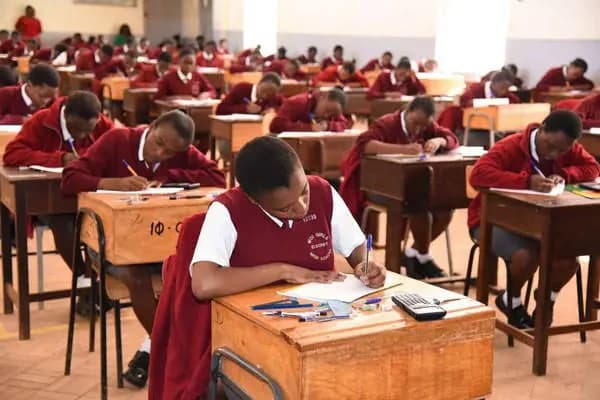
According to the 2026 Economic Survey, Kenya had roughly 20 million learners and students in formal education in 2025. Pre-primary enrolment stood at 3.121 million, while primary and Junior School together accounted for 11.936 million, including 3.701 million learners in the three Junior School grades under the Competency-Based Education system. Secondary schools had 3.339 million learners, universities had 722,500 students, while TVET institutions and Teacher Training Colleges had 890,100.
Kenya's projected population for 2025 was about 53.3 million, meaning the education and training system accounted for roughly 38 per cent of the country's population, with virtually every learner connected to a household and community beyond the institution.
Teachers are not doctors or epidemiologists, but as adults who spend the most time with learners, they are well placed to notice changes in a learner's health. A learner who suddenly develops fever, severe weakness, headache, muscle or joint pain, vomiting, diarrhoea, abdominal pain or unexplained bleeding should not be ignored. These symptoms do not by themselves confirm Ebola, but unusual illness should prompt vigilance, reporting and medical referral. The guiding principle: observe, report, refer, and do not diagnose.
A single sick learner does not signal an outbreak. Still, teachers should watch for patterns, such as several learners falling acutely ill within a short period or an unusual rise in absenteeism. A learner who becomes seriously ill during lessons should receive appropriate attention rather than being left to struggle through the school day.
Schools are also being urged to reinforce everyday hygiene practices, including regular handwashing, clean toilets, cleaning of frequently touched surfaces and discouraging learners from sharing personal items that could spread infection. Teachers have further been advised to protect themselves by avoiding unnecessary contact with blood, vomit, diarrhoea or other bodily fluids, and to leave such cases to trained personnel following recommended protective procedures.
Health officials have also cautioned against misinformation, with teachers urged to rely on information from authorised health and education authorities rather than rumours circulating on social media, and to avoid declaring that a learner has Ebola before qualified health professionals confirm a diagnosis. Stigma has also been flagged as a concern, with calls for learners not to be bullied, labelled or isolated over suspected illness.
School leaders have been asked to prepare in advance by ensuring teachers know who should receive reports of suspected illness, how to manage an acutely ill learner while awaiting professional help, how parents are contacted, which health facility receives referrals, how county health authorities are engaged, and who is responsible for cleaning and infection-control procedures. The same preparedness is expected in universities, TVET institutions and Teacher Training Colleges.
With 130,659 basic-learning institutions recorded in 2025, including 48,190 pre-primary schools, 39,339 primary schools, 32,079 Junior Schools and 11,051 secondary schools, the education sector is being positioned as an important layer of early recognition, prevention and rapid reporting in Kenya's wider Ebola response, alongside the health system's role in diagnosis and treatment.


Reader Discussion (0)
Sign in to comment