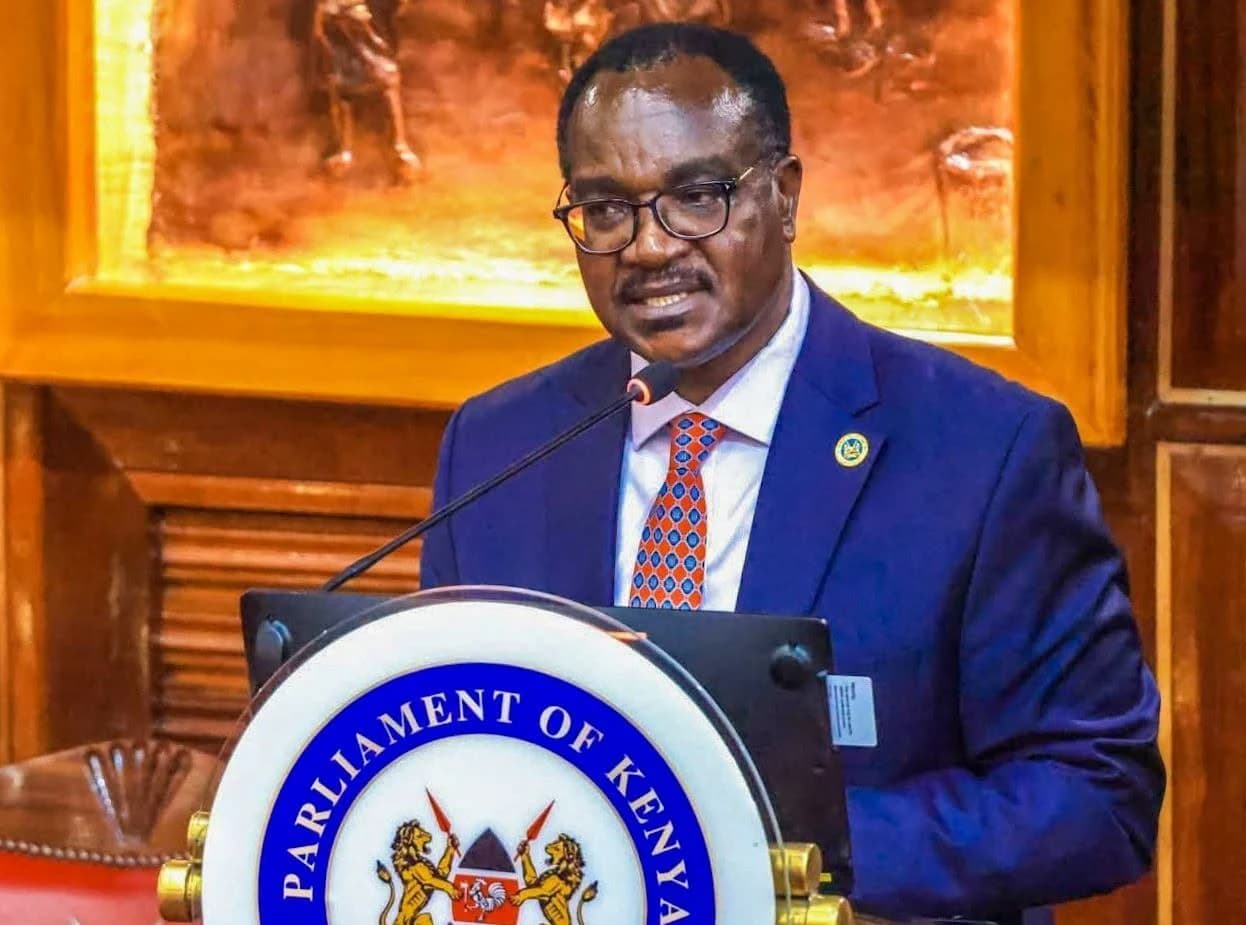
Education Cabinet Secretary Julius Migos Ogamba has outlined measures being taken by the Government to tackle teenage pregnancies, teacher shortages, religious discrimination and infrastructure gaps in schools.
Appearing before the Senate, Ogamba responded to questions from senators on a range of issues affecting the education sector, including the welfare of teenage mothers, religious attire in schools and the staffing of Junior Secondary Schools.
Senator Catherine Mumma pressed the Ministry on how it monitors teenage pregnancies among learners, whether it has data on affected learners and alleged perpetrators, and the measures in place to facilitate the return of teenage mothers to school. Ogamba said the Ministry relies on school heads, teachers and other stakeholders to monitor teenage pregnancies and implement the National Guidelines for School Re-entry. However, he acknowledged that the Ministry still faces challenges in collecting comprehensive data on teenage pregnancies and perpetrators due to the absence of a central information management system.
"The Ministry identified poverty, inadequate parental guidance, substance abuse, negative peer influence and limited community awareness as some of the factors contributing to teenage pregnancies," Ogamba said.
On religious rights in schools, Senator Shakila Abdalla sought clarification on the Ministry's position on religious attire, particularly the wearing of the hijab, following the case of Samira Ali Ramadhan of St Mary's Lwak Girls High School. Ogamba maintained that learners should not be subjected to discrimination on the basis of their faith. He said investigations into the case found that the learner had been discouraged from wearing the hijab, contrary to the Ministry's policy on religious attire, and that the findings had been forwarded to the Teachers Service Commission for appropriate action.
The CS also addressed concerns over the shortage of teachers in Junior Secondary Schools, with Senator Joyce Korir seeking an update on the payment and absorption of JSS teacher interns. Ogamba said the interns continue to receive their monthly stipends and remain in service in accordance with court orders. He further disclosed that Treasury had allocated funds to facilitate the recruitment of 20,000 JSS teachers on permanent and pensionable terms from January 2027, adding that the Ministry is still pursuing the absorption of the remaining 24,000 interns.
Senator Boni Khalwale also sought information on the distribution of school administrators in public secondary schools. According to Ogamba, the country had 506 Chief Principals, 1,224 Senior Principals and 7,017 Principals as of May 2026.
Senator Prof Tom Ojienda questioned the revocation of the Kenya Institute of Management's accreditation by the Technical and Vocational Education and Training Authority. Ogamba said the decision followed compliance assessments, inspections and audits, but noted that the matter is currently before the High Court.
On the establishment of the Education Standards and Quality Assurance Council, Senator Veronica Maina sought an update on its operationalisation. The Ministry said draft regulations are undergoing review following a court directive, while quality assurance activities continue under the existing directorate.
Meanwhile, concerns over teacher distribution and infrastructure in Kilifi County were raised by Senator Stewart Madzayo. Ogamba said teacher deployment is determined by learner enrolment, staffing requirements and available resources, adding that Kilifi had benefited from 615 Grade 9 classrooms constructed at a cost of Sh615 million, alongside investments in laboratories, classrooms and sanitation facilities.
"Kilifi has so far benefited from 615 Grade 9 classrooms for Sh615 million, in addition to laboratories, classrooms and sanitation facilities. Further investments are expected under the Secondary Education Equity and Quality Improvement Programme (SEEQIP) and the Kenya Primary Education Equity in Learning Programme (KPEEL)," Ogamba said.


Reader Discussion (0)
Sign in to comment