

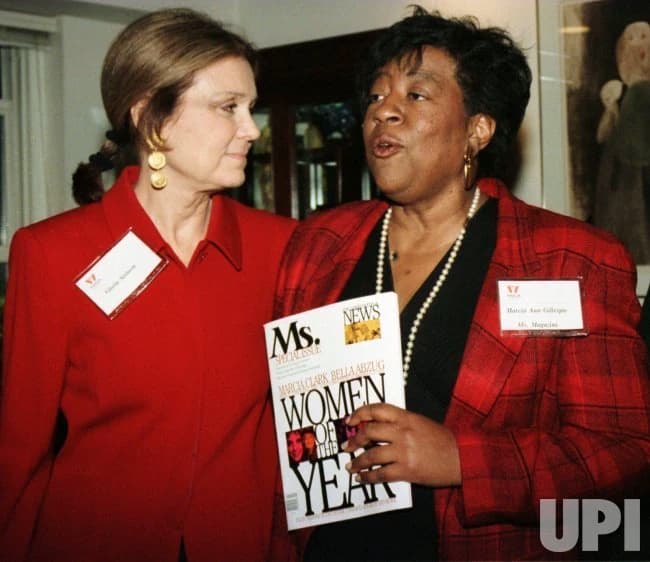







The death of Marcia Ann Gillespie at the age of 82 marks the passing of a remarkable woman whose influence on journalism extended far beyond the pages of the magazines she edited.
She was not merely a journalist who occupied influential editorial offices. She was a pioneer who understood that the media has the power to determine whose stories are told, whose experiences matter and whose faces deserve to be seen.
Gillespie spent much of her professional life challenging the marginalisation of Black women in American media. At a time when mainstream publications rarely reflected their experiences, aspirations and complexities, she helped build platforms that placed Black women at the centre of the conversation.
Her greatest contribution was perhaps her work at ESSENCE magazine, where she became editor-in-chief in 1971, at the remarkably young age of 26. It was an extraordinary appointment, but she proved equal to the responsibility.
She helped shape a publication that would become an important cultural institution for Black women in America.
Changing whose stories mattered
Founded in 1970, ESSENCE emerged at a time when Black women had limited representation in mainstream fashion, beauty and lifestyle publications.
Their lives were often ignored, their beauty standards dismissed and their achievements insufficiently celebrated. Gillespie understood that this absence was not accidental. It reflected a broader problem of exclusion in the media industry.
Under her editorial leadership, ESSENCE became more than a magazine. It became a platform for affirming Black identity, celebrating Black womanhood and discussing issues affecting Black families and communities.
It offered readers something that mainstream publications had largely denied them: the opportunity to see their lives reflected in stories told with understanding and respect.
Gillespie’s achievement was not simply about putting Black women on magazine covers. It was about changing the editorial conversation.
She helped demonstrate that Black women were not a narrow demographic or a peripheral audience. They were readers, professionals, mothers, thinkers, consumers and leaders whose experiences deserved serious journalistic attention.
Her influence would subsequently extend to Ms., the influential feminist publication launched as a standalone magazine in 1972 by Gloria Steinem and fellow founders.
Gillespie joined the publication in 1980 and later became its editor-in-chief, becoming the first Black woman to lead it.
This was another significant milestone. The feminist movement had often been criticised for failing to adequately incorporate the experiences of Black women and other women from marginalised communities.
Gillespie brought a different perspective to the editorial leadership of a publication central to American feminist discourse.
Her presence was a reminder that women’s liberation could not be discussed meaningfully without acknowledging the different realities women experienced because of race, class and social circumstances.
Building institutions that could endure
She also understood the importance of institutional survival. In 1998, she helped organise a group of women investors who acquired Ms., helping secure its future.
This demonstrated that her commitment to journalism went beyond writing and editing. She was interested in building sustainable institutions that could continue serving generations of readers.
Gillespie’s career offers important lessons for African journalism, particularly in Kenya, where questions of representation, ownership and editorial independence remain relevant.
For decades, African societies have often depended on foreign media organisations to interpret their experiences for international audiences. Sometimes, the resulting narratives have been incomplete, stereotypical or disproportionately focused on poverty, conflict and political instability.
The lesson from Gillespie is that communities must participate actively in telling their own stories.
They need publications, broadcasters and digital platforms that understand their cultures, document their achievements, interrogate their challenges and preserve their histories.
Her example is equally relevant to the representation of women in Kenyan media.
Although women have made considerable progress in journalism, leadership and public life, representation is not simply about the number of women appearing on television or occupying editorial positions.
It is also about who makes editorial decisions, whose voices are prioritised and whether women’s experiences are treated as important subjects of public interest.
A legacy of opportunity and representation
Gillespie also reminds us that mentorship is an essential part of leadership.
Institutions become stronger when experienced professionals deliberately create opportunities for younger journalists to grow, experiment and eventually take charge.
A successful editor should not only produce good publications but also help develop the people who will sustain the profession.
At 26, Gillespie was entrusted with leading a publication in its formative years. Her subsequent career demonstrated what can happen when talent is accompanied by opportunity, courage and a clear sense of purpose.
Her death should therefore be understood not merely as the loss of an accomplished journalist but as the passing of a woman who helped change representation in American publishing.
She leaves behind an enduring lesson: when people are consistently excluded from the stories that define society, one of the most powerful responses is to create platforms where they can tell those stories themselves.
Marcia Ann Gillespie did precisely that. She opened editorial doors, challenged established assumptions and helped generations of Black women find their place in the media landscape.
Her legacy will live on in the publications she shaped, the journalists she inspired and the readers who discovered that their lives were worthy of being documented, celebrated and taken seriously.
She did not simply edit magazines. She helped change who mattered in the pages of history.
Ashford is a teacher of English and Literature and comments on education and social affairs.




Reader Discussion (0)
Sign in to comment