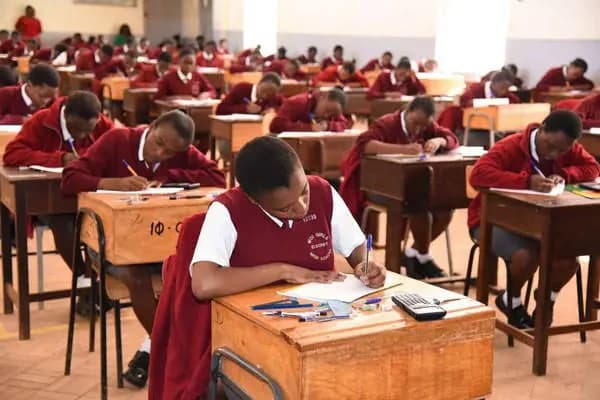
National examinations are an important part of every education system. They provide a structured way of assessing what learners have understood after spending a considerable period in school.
In Kenya, national examinations such as the KPSEA, the Kenya Junior School Education Assessment and the Kenya Certificate of Secondary Education have traditionally played a significant role in determining educational progression. They help education authorities, schools, parents and learners establish whether the prescribed curriculum has been covered and whether learners have acquired the expected knowledge and competencies. However, the growing obsession with examination results raises an important question: are examinations measuring the quality of education, or are they gradually becoming the definition of education itself?
An examination is essentially a monitoring and evaluation tool. It provides policymakers with information about how schools are implementing the curriculum and whether learners are attaining particular learning outcomes. Properly used, examination results can reveal areas where learners are performing well and subjects or skills that require additional attention. They can also help governments identify inequalities in educational provision and determine where additional resources, teacher support or curriculum interventions are necessary.
The problem begins when examination results are treated as the only reliable measure of educational quality. Over time, society can easily develop the perception that a school with excellent examination results must necessarily provide excellent education, while a school with modest results must be offering poor education. This assumption is dangerous because education is much broader than what can be captured in a two- or three-hour examination.
A learner is not simply an examination candidate. Education is supposed to develop the whole person. It should nurture intellectual ability, creativity, communication skills, problem-solving capacity, emotional maturity, discipline, teamwork, leadership, ethical judgment and responsible citizenship. A school may produce impressive examination results while doing little to develop these other dimensions of a learner's life. Conversely, a school may have learners whose examination performance is average but who develop remarkable talents, confidence, resilience, practical skills and a strong sense of social responsibility.
The danger of examination obsession becomes even greater when admission to prestigious secondary schools, colleges and universities is heavily associated with examination performance. Parents understandably want their children to succeed, and schools want to demonstrate strong academic outcomes. Consequently, the pressure to perform can become overwhelming. Schools may devote disproportionate amounts of time to drilling learners on past examination questions, predicting likely questions and training them to reproduce expected answers. In such an environment, learning can gradually become secondary to scoring marks.
Teachers can also find themselves under tremendous pressure. Instead of being encouraged to inspire curiosity and independent thinking, they may be judged almost entirely by the examination results of their learners. This can undermine professional creativity. A teacher who wants to introduce innovative teaching methods, practical projects, debates, experiments, educational trips or artistic activities may feel compelled to abandon them when they appear to take time away from examination preparation.
This narrow approach also undermines the broader purpose of the teaching profession. A teacher is not merely a person who prepares learners to pass examinations. Teachers are mentors, role models, counsellors, facilitators and custodians of knowledge and values. Their responsibility extends beyond academic performance to helping young people understand themselves, relate positively with others and become responsible members of society.
The situation is particularly relevant in the context of Kenya's Competency-Based Curriculum. The CBC seeks to move education beyond the traditional emphasis on memorisation towards the development of competencies. Communication and collaboration, critical thinking and problem-solving, creativity and imagination, citizenship, digital literacy and self-efficacy are among the capabilities that education should nurture. If schools and society continue to judge learners and institutions almost exclusively through examination scores, the broader objectives of competency-based education risk being compromised.
There is therefore a need to redefine what constitutes a successful school. Examination performance should remain an important indicator, but it should be considered alongside other measures. Schools should be assessed on the development of learners' talents, character, creativity, practical abilities, participation in sports and the arts, innovation, leadership and community engagement. The wellbeing and safety of learners should also form part of the conversation about educational quality.
Parents equally have an important role to play. They should encourage children to work hard academically without making examination marks the sole source of their identity or self-worth. A child who performs poorly in one examination is not necessarily a failure. Likewise, a learner who obtains excellent marks is not automatically guaranteed success in life. Academic achievement is valuable, but it is only one component of a meaningful education.
Kenya must therefore resist the temptation to create an examination-driven education culture. National examinations should serve education rather than education serving examinations. They should provide useful evidence about learning, identify gaps and guide policy, but they should never become the destination of the entire educational journey.
Ultimately, the purpose of education is to transmit knowledge, skills, values and experiences from one generation to another while preparing young people to participate meaningfully in society. Examinations can tell us what a learner remembers or can demonstrate under particular conditions, but they cannot fully measure wisdom, integrity, creativity, compassion, leadership or the ability to solve real-life problems.
A truly successful education system must therefore produce more than examination winners. It must produce thoughtful citizens, innovative thinkers, skilled professionals, responsible leaders and compassionate human beings. When examinations become the whole purpose of education, schools may produce impressive grades while failing to produce well-rounded individuals. The challenge for Kenya is to restore balance, to value examination success without allowing it to overshadow the larger and more important mission of education.
Ashford Kimani is a teacher of English and Literature and writes on education and youth affairs.


Reader Discussion (0)
Sign in to comment