







The Tertiary Education Placement and Funding Bill, 2026, is a proposed Kenyan legislation that, if passed into law, will create a unified legal framework to handle placement into tertiary institutions besides financing higher and technical education.
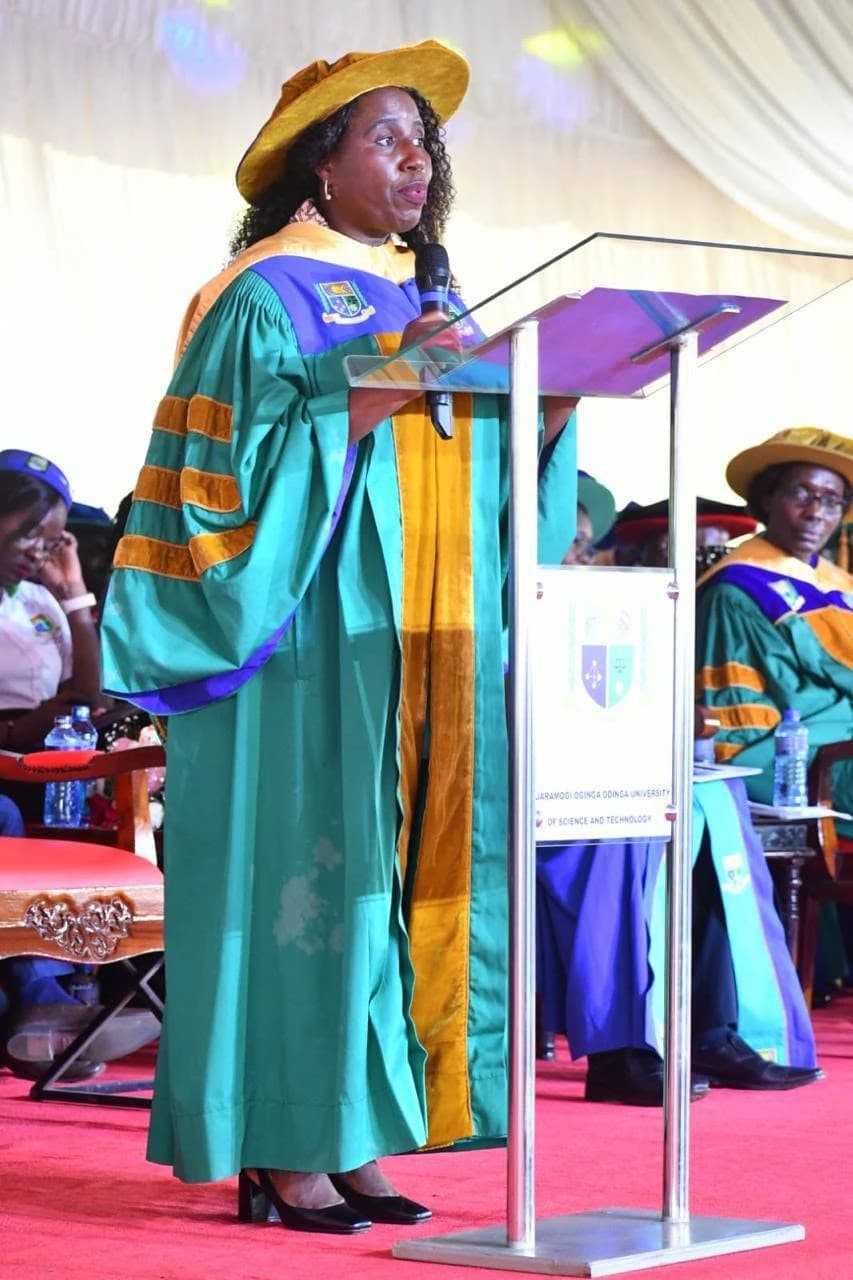
Addressing stakeholders at the first-ever National Conference for Women and Girls in Science, Technology, Engineering and Mathematics (STEM) in Higher Education, Principal Secretary for Higher Education Dr Beatrice Inyangala said the Bill was currently on the floor of Parliament and expressed optimism that it would be passed soon.
She said the proposed Sh5 billion allocation would support research among learners in technical, tertiary and higher education institutions across the country once the Bill becomes law.
She said that with such investment, they would support girls and women pursuing STEM courses to move their innovations into the market.
Dr Inyangala, however, acknowledged that given the demand for STEM expertise in the labour market, it was important to bring on board the private sector and angel investors to channel their resources towards incubating STEM innovations to the commercialisation stage.
“I am glad because several financial institutions, including Equity, Family and KCB foundations, have come on board and the latter has already pumped Ksh 10 million to support women with good ideas in STEM and we are pursuing this partnership further to have our young people move their ideas into realities,” she said.
Bridging the gender gap in STEM education
She stated that despite university enrolment approaching gender parity, with 46 per cent female and 54 per cent male participation, there was a worrying trend, as out of the 322,000 female students, only 35 per cent (112,000) were pursuing STEM courses.
PS Inyangala said that through her initiative, together with the State Department for Higher Education, they were seriously addressing the matter.
Through collaboration and support from universities, they have identified and brought together girls pursuing STEM education to meet women innovators who have excelled in the male-dominated space so that they can motivate and offer guidance to young learners in both junior and senior schools.
She hinted that the conference was the first of its kind and that they would traverse all the country’s 47 counties to drum up support for STEM education.
Besides bringing learners together to bond, understand and appreciate what is perceived as a difficult concept, they have plans to increase female participation in STEM from 35 per cent to 50 per cent, with the numbers expected to grow progressively.
The PS highlighted that the world was changing very fast, with technology transforming jobs, most of which were increasingly aligned with STEM and linked to information technology.
She added that it was time for the country to empower more girls through STEM to adapt to the changing labour market so that they could easily secure employment and contribute positively to economic growth.
Preparing young women for the future of work
In her opening remarks on the theme, Beyond Borders: Advancing STEM, the Future of Work and Graduate Employability in a Changing World, Dr Ada Peter from Nigeria, CEO and founder of Ribara, said the national conference on STEM for women and girls would have its full impact in the next 10 to 15 years, when the innovators would be commercialising their expertise.
“This conference is tailored to nurture our young girls, give them the opportunity to interact and hear from our women innovators that all is possible despite their gender identities and to demystify the myths that sciences are for boys while arts is for girls,” she noted.
She advised young learners to overcome barriers beyond borders by seeing the problem, owning it, looking beyond borders, venturing into it and evolving in response to the problem (SOLVE).
She encouraged young STEM learners to start small, noting that they would be recognised in the future as their contributions would become enormous over the years.
Masinde Muliro University of Science and Technology (MMUST) Vice-Chancellor Prof Solomon Shibairo acknowledged the STEM conference, adding that the institution had been empowering girls, with its medical school set to graduate 19 doctors, 11 of whom are women.
He called on men to come out and support girls in STEM, noting that their contribution to national development would grow immensely.


Reader Discussion (0)
Sign in to comment