





The debate over the recognition of teachers who upgraded from Primary Teacher Education (P1) certificates to diploma qualifications exposes a much deeper problem within Kenya’s teaching profession: the disconnect between academic advancement and professional recognition.
This is not merely a dispute about Grade B5 or C1. It is a question about the value of qualifications, the economic burden of professional development and the responsibility of an employer to provide a transparent career structure for employees who continually improve their competencies.
A teacher’s academic journey does not necessarily end with a diploma. Many proceed to bachelor’s degrees, master’s qualifications and doctoral studies, hoping to strengthen their professional standing, expand their expertise and qualify for greater responsibilities.
Each academic milestone comes at a cost. The teacher pays tuition, examination fees, research expenses and other charges, while the family absorbs the consequences of reduced disposable income and limited time together.
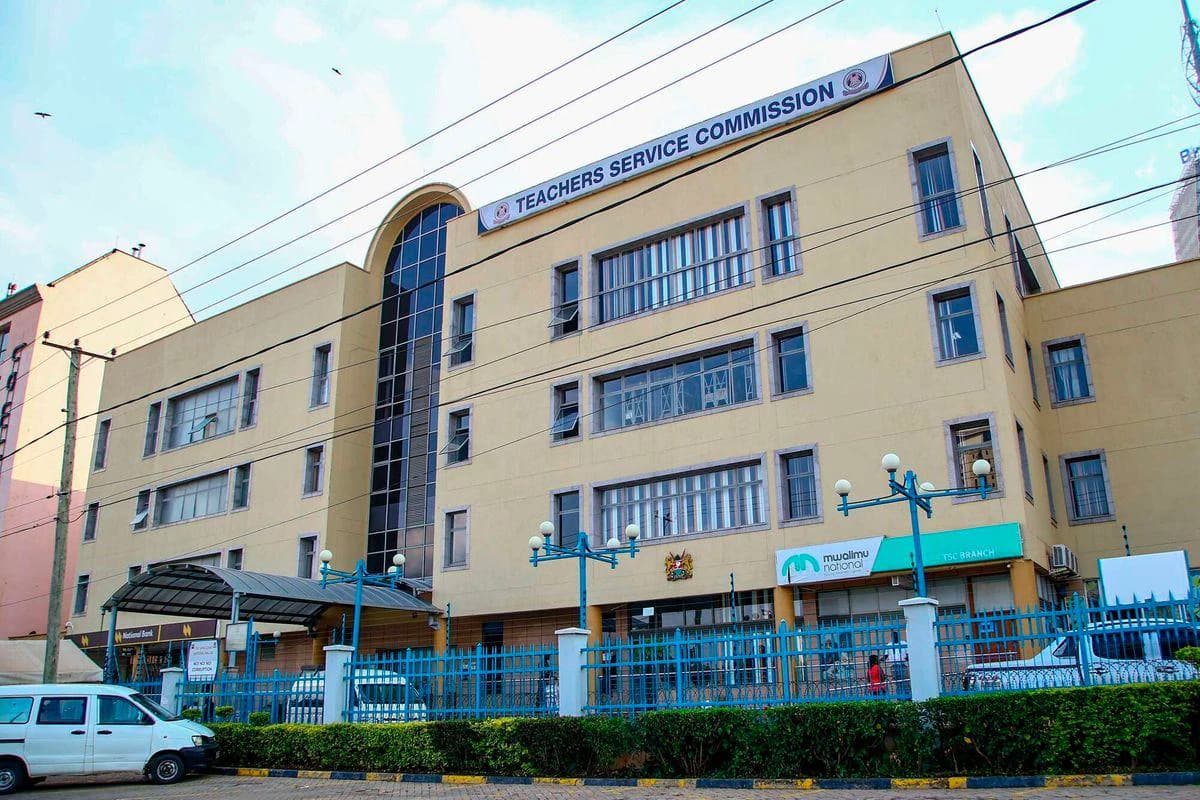
TSC must, therefore, confront a fundamental contradiction: it cannot champion professional development while leaving teachers uncertain about how the qualifications they acquire are recognised within the teaching service.
The diploma: When professional upgrading becomes a financial commitment
The P1-to-diploma upgrading programme illustrates the sacrifices teachers make to improve their academic qualifications.
The first cohort undertook training between 2021 and 2022, followed by the second between 2022 and 2023. The programme involved approximately 1,500 training hours, including 300 hours of teaching practicum, alongside the prescribed academic and professional requirements.
Indicative fees during the upgrading period ranged from approximately Sh65,000 to Sh68,000 in public teacher training colleges and Sh79,000 to Sh84,000 in private institutions. Examination fees, teaching practice, accommodation, transport and learning materials increased the overall expenditure.
For some participants, the total investment approached or exceeded Sh100,000.
For a teacher earning a modest salary while supporting a family, this was not a minor expenditure. Some relied on savings, others sought assistance from relatives, while many turned to SACCOs, banks and other lending institutions.
The consequences extended beyond graduation. Teachers continued servicing education-related loans even after completing the programme.
The central issue is not whether financial sacrifice automatically entitles someone to promotion. Rather, it is whether the commission has established a credible recognition framework for qualifications acquired through a professional development initiative.
If an employer encourages upgrading, it must explain what the resulting qualification means for recruitment, placement, professional standing and subsequent career progression.
A bachelor’s degree: Years of investment that must count
Progressing from diploma level to a bachelor’s degree introduces another substantial financial commitment.
A Bachelor of Education programme ordinarily takes four academic years, although the duration may vary depending on the institution, mode of study and applicable exemptions.
Published institutional fee schedules illustrate the financial demands. The University of Nairobi’s cited fee schedule places annual tuition at approximately Sh216,000, translating to about Sh864,000 over four years before additional expenses. Zetech University’s published 2026 schedule indicates approximately Sh496,200 for its four-year programme, including tuition and administrative charges.
These differences demonstrate that the cost of academic advancement depends significantly on the institution and programme.
For serving teachers, however, the financial question goes beyond tuition. There are examination charges, learning materials, internet connectivity, research expenses, transport and accommodation.
A teacher pursuing a degree must balance these costs against children’s school fees, rent, household expenditure and other financial responsibilities.
The professional recognition question becomes even more important here. A teacher who has progressed academically should know how the degree is reflected in the professional record, whether it opens additional career pathways and how it is considered under the applicable promotion and deployment policies.
A degree should not be reduced to another certificate added to an employment file without clarity about its professional relevance.
A master’s degree: The cost of specialisation and career advancement
A master’s qualification demands an even greater commitment to academic specialisation, research and professional development.
Many Master of Education programmes take approximately two academic years, although institutional arrangements vary.
The financial implications are significant. The Open University of Kenya’s cited fee schedule places its Master of Education in Educational Leadership and Policy at approximately Sh187,500 for two academic years. Kenyatta University’s published 2026/2027 programme information lists annual fees of approximately Sh127,908 for its Master of Education programme.
These figures exclude some of the additional costs associated with postgraduate research, transport, accommodation and other academic requirements.
A master’s student must also manage research proposals, assignments, examinations, data collection, thesis preparation and supervision.
For a serving teacher, this often means sacrificing evenings, weekends and school holidays. The demands can become particularly difficult for those with young children and significant household responsibilities.
Yet master’s qualifications can develop specialised expertise in educational leadership, curriculum studies, research, psychology, policy and administration.
TSC should explain how such qualifications are recognised, particularly when they are relevant to specialised professional responsibilities, leadership opportunities and institutional development.
The commission should not treat postgraduate achievement as an isolated academic accomplishment while failing to communicate its relevance to the teacher’s career.
A PhD: When academic ambition requires family-wide sacrifice
Doctoral studies represent one of the most demanding stages of academic advancement.
A PhD in Education commonly takes approximately three years under structured full-time arrangements, although research requirements and supervision challenges can extend the period.
The financial commitment varies across universities. Published examples include approximately Sh337,500 for the Open University of Kenya’s three-year PhD in Educational Leadership and Policy, approximately Sh281,398 annually for several education-related doctoral programmes at Kenyatta University, and Sh750,000 over three years for a PhD in Education at Mount Kenya University.
These are institutional examples, not a uniform national fee structure. Research travel, data collection, software, thesis preparation and examination expenses can increase the total cost.
But the real burden of doctoral studies cannot be measured through tuition alone.
A doctoral candidate must devote considerable time to literature reviews, research design, data analysis, academic writing and dissertation defence. For a serving teacher, these responsibilities must be balanced against classroom duties and family obligations.
A spouse may have to assume additional household responsibilities. Children may receive less parental attention, while family savings and investment plans are postponed to accommodate academic expenditure.
In many households, the PhD becomes a family project rather than an individual’s undertaking.
It is, therefore, reasonable to demand that qualifications of this level have clearly defined professional recognition, particularly in research, teacher education, curriculum development, policy formulation and institutional leadership.
The question is not whether every PhD holder should automatically become a senior administrator. It is whether the teaching service has a transparent framework for identifying and utilising advanced academic expertise.
The family pays a price that does not appear on university receipts
One dimension of teacher professional development that rarely receives adequate attention is its impact on family welfare.
Tuition payments compete with children’s school fees, household shopping, rent, medical expenses, mortgage repayments and other essential obligations.
Teachers who borrow to finance their studies must service those loans from the same salaries used to support their families.
The time commitment is equally consequential. Evening lectures, weekend classes, examinations and research assignments reduce the time available for parenting, marriage and family activities.
Some households postpone investments, reduce expenditure and reorganise their financial priorities to accommodate a teacher’s academic ambitions.
These sacrifices are rarely captured in institutional fee schedules, yet they form part of the actual cost of professional advancement.
TSC and the Ministry of Education should recognise that academic development takes place within real households, where teachers have financial obligations and responsibilities that cannot be suspended until graduation.
A professional development policy that ignores these realities risks placing the entire cost of improving the education system on individual teachers and their families.
The B5–C1 controversy exposes the recognition gap
The concerns surrounding P1 teachers who upgraded to diploma qualifications bring the wider debate into sharper focus.
Reports that some upgraded diploma holders are being considered for recruitment at Grade B5, while fresh diploma graduates enter at Grade C1 under applicable arrangements, have raised questions about the consistency of qualification recognition.
TSC must explain the regulatory basis for these different outcomes.
The distinction between an initial entry qualification and an additional qualification acquired during service may have implications for recruitment and career progression. However, teachers deserve a clear explanation of how the distinction operates and how their upgraded diplomas are recognised.
This is not a demand for automatic promotion. Nor should academic qualifications be confused with professional registration, teaching experience or the requirements of a particular position.
The issue is institutional consistency.
If a diploma is recognised as a relevant entry qualification for one recruitment pathway, the commission should clearly explain the professional status and implications of an equivalent qualification obtained through an approved upgrading pathway.
The same principle applies to bachelor’s, master’s and doctoral qualifications. Teachers should not have to rely on assumptions or informal interpretations to understand how their academic achievements count.
TSC must move from encouraging qualifications to recognising them
The commission needs a coherent framework that connects academic advancement to professional recognition.
Such a framework should distinguish between minimum entry qualifications, additional academic achievements, professional specialisation and qualifications relevant to leadership, research and teacher education.
It should also clarify how qualifications are reflected in teachers’ records and considered in recruitment, deployment and promotion, in accordance with applicable regulations.
KNUT and other teachers’ unions must press for a definitive position, particularly on the circumstances of teachers who upgraded from P1 to diploma level.
The Ministry of Education should also address the accessibility and financing of teacher education. Professional development should not depend exclusively on a teacher’s ability to exhaust personal savings or secure loans from lending institutions.
There is a strong case for more accessible financing arrangements, transparent qualification recognition and career pathways that encourage teachers to acquire relevant expertise.
The real measure of professional development is recognition
Kenya needs teachers who continually improve their academic knowledge, professional competencies and capacity to respond to educational change.
But the responsibility for achieving this objective cannot rest entirely on teachers’ personal finances and family sacrifices.
A teacher who progresses from P1 to diploma level, obtains a bachelor’s degree, advances to a master’s qualification and eventually earns a PhD has made a substantial investment in professional growth.
These qualifications do not automatically guarantee promotion or a particular salary grade. Nevertheless, their professional relevance must be clearly established and consistently applied.
TSC should not leave teachers guessing whether their additional qualifications count, how they count or what opportunities they create.
The commission must recognise the distinction between encouraging academic advancement and providing a credible institutional framework through which that advancement is valued.
A teacher’s academic journey should not become an endless cycle of tuition payments, borrowing and family sacrifice without a clear understanding of the professional recognition attached to each qualification.
The ultimate measure of a credible teacher development policy is not the number of certificates teachers accumulate. It is whether the education system meaningfully recognises the knowledge, competencies and expertise those qualifications represent.
TSC must, therefore, provide clarity on qualification recognition, address inconsistencies in grading and establish transparent pathways for professional progression.
Teachers should not be asked to invest in becoming more qualified while being left uncertain about whether the system values the qualifications they acquire.



Reader Discussion (0)
Sign in to comment