




An institution can have qualified personnel, elaborate organisational structures, clearly defined responsibilities and ambitious performance targets, yet struggle to achieve its objectives because of one often-overlooked weakness: poor communication.
Sometimes, the problem is not a lack of professional competence but the inability to communicate in a manner that inspires cooperation, builds confidence and brings people together.
Emotional intelligence is an essential ingredient in effective leadership, team building and institutional management. Among its most practical expressions is communication.
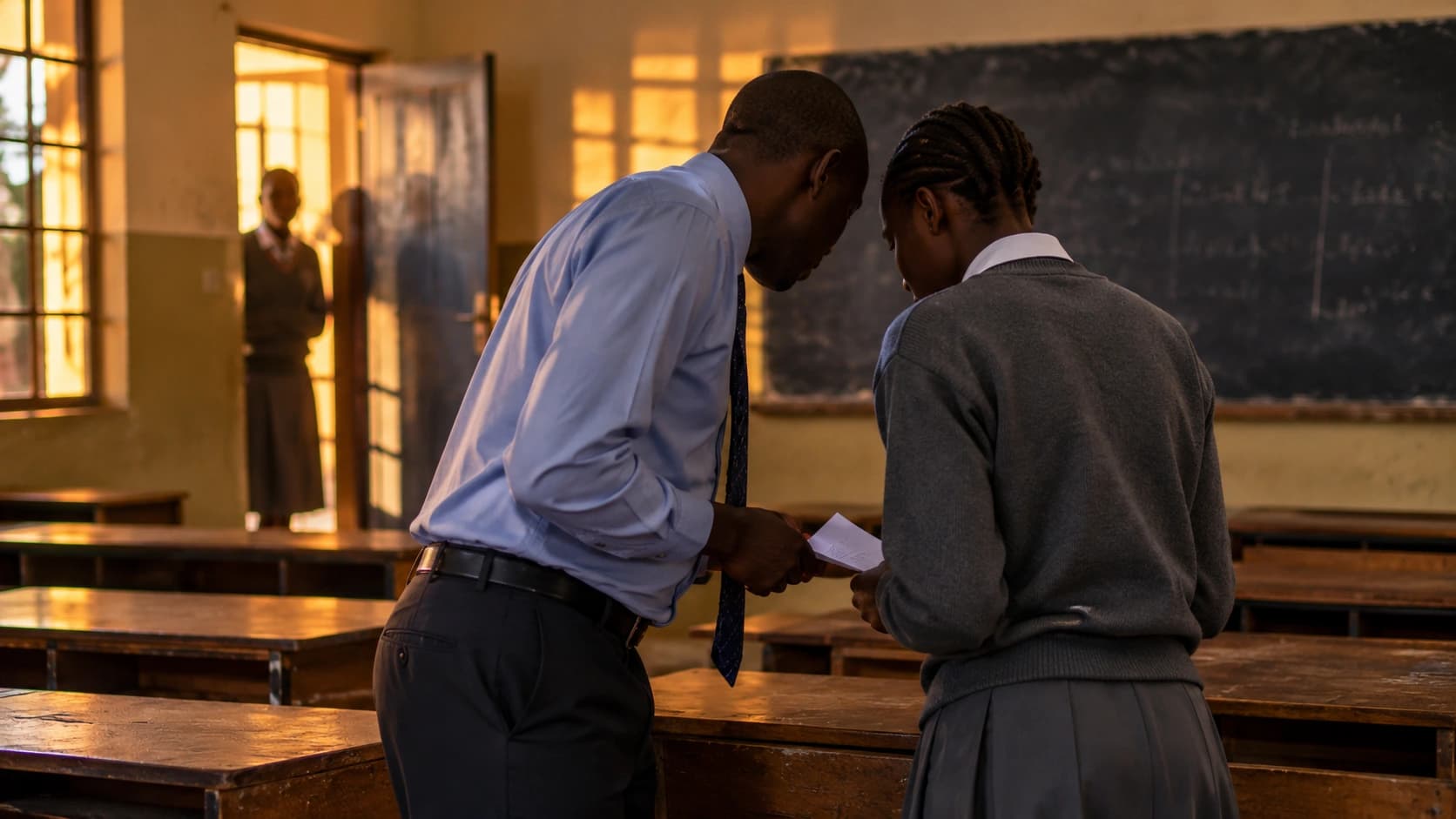
Whether one is a principal, deputy principal, head of department (HOD), subject head, class teacher or an individual entrusted with a particular responsibility, the manner in which one communicates can determine how people respond to instructions, embrace responsibilities and work towards common goals.
Leadership is not simply about occupying an office, issuing instructions or exercising authority. It is about influencing people, managing relationships and creating an environment in which everyone understands their contribution to the institution’s wider mission.
Communication is the bridge between leadership intentions and collective action.
One important consideration is the choice of register. Language must respond to the situation, audience and purpose of communication.
A conversation with a colleague seeking professional guidance should not sound like a disciplinary summons. An official communication to staff should not carry the informality of a casual WhatsApp exchange.
Equally, correcting a learner requires a different approach from addressing a fellow professional during a departmental meeting.
An emotionally intelligent leader understands when to be formal, persuasive, assertive, diplomatic or empathetic.
This is not pretence or double standards; it is communication competence. The objective is to convey a message without unnecessarily diminishing the dignity of its recipient.
There is a significant difference between being firm and being disrespectful. A leader can communicate high expectations without humiliating colleagues. One can correct an error without attacking someone’s personality.
Professional accountability does not require hostility, just as kindness should never be mistaken for weakness.
Communication goes beyond spoken words
Communication also goes beyond spoken words. Facial expressions, gestures, posture, eye contact, silence and tone can reinforce or contradict what is being said.
A person may offer reassuring words while displaying impatience through dismissive body language. The recipient is likely to notice the contradiction.
The same challenge arises in digital communication. How often do people read a short text message and immediately conclude that the sender is angry, arrogant, dismissive or disrespectful?
An abrupt instruction, lack of courtesy, use of capital letters or an unnecessarily harsh choice of words can create interpretations that the sender may never have intended.
Digital communication lacks many of the emotional cues available in face-to-face conversations. Consequently, professionals must exercise greater care when composing messages, particularly those addressing sensitive institutional matters.
Communication, however, is a two-way process. It is not simply about how effectively a leader speaks but also how willingly that leader listens.
Does the principal allow teachers to express professional concerns? Does an HOD consider the views of subject teachers before making departmental decisions? Can a teacher disagree respectfully without being labelled difficult or disloyal?
A healthy institution must provide room for constructive disagreement, clarification and feedback.
When employees fear speaking honestly, important information is suppressed, mistakes remain uncorrected and resentment quietly accumulates.
Silence should never be confused with agreement, just as compliance should not automatically be interpreted as commitment.
Research reinforces the importance of emotionally intelligent communication.
A 2025 systematic review published in Education Sciences, examining 28 studies conducted between 2011 and 2024, explored the influence of school leaders’ emotional intelligence on teachers and learners.
It highlighted self-awareness, empathy and relationship management as important leadership competencies associated with teacher well-being, instructional delivery, collective efficacy and a positive school climate.
Similarly, a 2022 meta-analysis published in Frontiers in Psychology found positive relationships between emotional intelligence and employee performance, job satisfaction and organisational commitment.
Although the research covered wider workplace settings, its implications are relevant to schools, where professional relationships influence the quality of institutional work.
Building psychological safety and improving institutional performance
The psychological dimension deserves particular attention. People want to feel respected, heard and valued.
An environment characterised by humiliation, intimidation and unpredictable reactions can encourage defensiveness and withdrawal.
Conversely, respectful communication creates conditions in which people are more willing to share ideas, acknowledge mistakes, seek assistance and participate in problem-solving.
This connects with psychological safety, a concept popularised in organisational research by Prof Amy Edmondson.
It describes an environment in which individuals feel sufficiently safe to ask questions, express concerns and admit mistakes without fear of interpersonal punishment.
In a school, such an environment can strengthen professional learning, collaboration and early intervention when problems arise.
The implications for staff performance are far-reaching. A teacher who receives clear instructions, timely feedback and constructive professional support is better positioned to organise work and deliver curriculum content effectively.
Departments function more efficiently when members understand their assignments, deadlines and expected standards.
Meetings become productive when communication is purposeful rather than dominated by accusations, personal attacks and unnecessary confrontations.
The same principles extend to the classroom. A teacher’s communication style influences learner participation, confidence and willingness to ask questions.
Learners are more likely to engage when they can express themselves without ridicule. Clear explanations, constructive feedback and attentive listening create an atmosphere conducive to learning.
Thus, the communication culture modelled by institutional leaders can gradually find its way into classroom practice.
It is worth applauding the Competency-Based Curriculum (CBC) for recognising Communication and Collaboration as one of the seven core competencies in Kenya’s Basic Education Curriculum Framework.
This acknowledges that education must equip learners with skills that extend beyond the acquisition of subject content.
The Kenya Institute of Curriculum Development (KICD) recognises the importance of verbal, visual and non-verbal communication and its appropriate application in different contexts.
However, an important question arises: How effectively are adults in our learning institutions modelling the very competencies we expect learners to acquire?
We cannot convincingly teach collaboration while maintaining hostile professional relationships. We cannot demand respectful dialogue from learners while demonstrating contempt towards colleagues.
The school environment must become a living classroom in which communication and collaboration are practised daily.
There is also the familiar expression that people are addressed according to how they dress.
While personal presentation can influence first impressions and professional perception, it should never become a licence to judge someone’s competence, attitude or worth solely by appearance.
The more meaningful consideration is whether our communication reflects the professional standards we expect others to uphold.
A well-dressed leader with discourteous language may command attention but struggle to earn genuine respect.
What school leaders should do differently
What, then, should leaders do differently?
First, practise active listening. Give people an opportunity to explain themselves before reaching conclusions.
Second, regulate emotions, especially during disagreements. Anger may be natural, but it should not become the language of leadership.
Third, choose words carefully, matching the register to the audience, occasion and purpose.
Fourth, give feedback that addresses behaviour and performance rather than attacking individuals.
Fifth, establish clear communication channels and ensure information reaches everyone who needs it.
Finally, invite feedback about one’s own leadership approach. Emotional intelligence requires the humility to recognise that even leaders have communication weaknesses to improve.
The penman would argue that communication is among the most powerful yet least appreciated instruments of institutional leadership.
It costs little to greet a colleague, acknowledge a contribution, explain an instruction or offer constructive correction.
Yet these seemingly ordinary gestures can influence morale, strengthen relationships and improve institutional performance.
Ultimately, a school is not built by infrastructure, timetables, policies and administrative titles alone. It is sustained by people who must interact, cooperate and pursue shared objectives.
Leaders can either build bridges through their words or erect walls through their approach.
The question is not simply whether we communicate, but what happens to people after we have communicated with them.
Do they leave feeling informed, respected and motivated, or confused, belittled and discouraged?
A good leader does not necessarily have the loudest voice in the room. Often, the most influential person is the one who knows when to speak, what to say, how to say it and, perhaps most importantly, when to listen.
Communication displays character. Let our words become instruments of professional growth, institutional harmony and better learning outcomes.
The writer can be reached at jackiekebongo@gmail.com.


Reader Discussion (0)
Sign in to comment