








Pwani University has embarked on a new chapter in its institutional journey following the installation of Rita Kavashe as Chancellor, with a commitment to strengthening academic excellence, advancing research and innovation, and expanding the university’s contribution to national development.
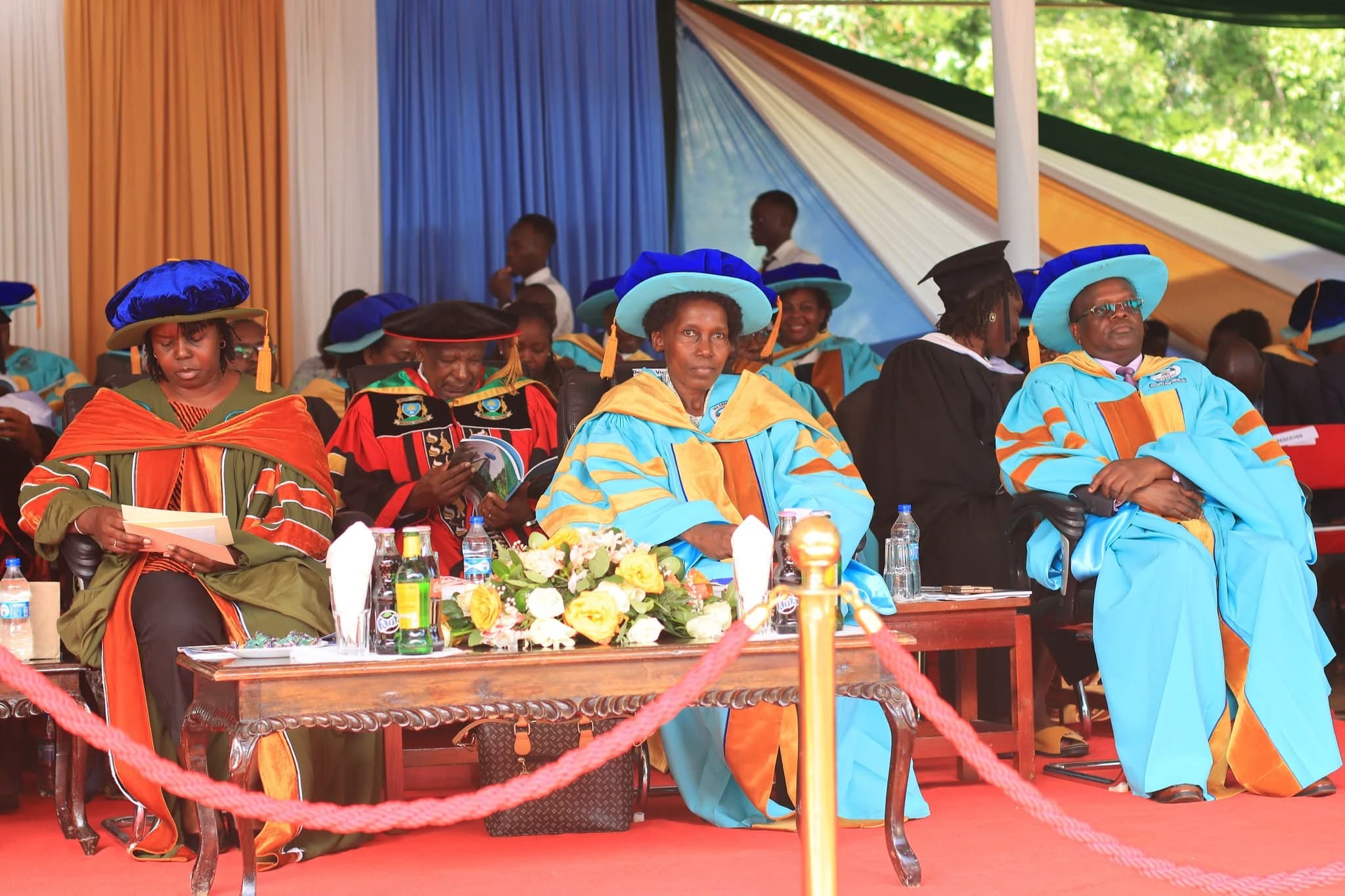
Kavashe was formally installed during the institution’s 14th graduation ceremony, where she outlined an ambitious vision anchored in quality education, institutional collaboration, research advancement and community transformation.
Taking up the prestigious position, the new Chancellor described her appointment as an honour that carries a collective responsibility to strengthen the university’s mandate and enhance its standing in Kenya’s higher education landscape.
She pledged to work closely with the University Council, management, academic staff, students, government agencies and development partners to advance the institution’s strategic priorities.
In her maiden address, Kavashe emphasised that the future of Pwani University would depend not only on academic achievement but also on its ability to generate knowledge, nurture innovation and respond to the changing needs of society.
She called for unity of purpose among university stakeholders, noting that institutional progress requires shared commitment, integrity and a common vision.
Addressing the graduands, she challenged them to look beyond the certificates and degrees they were receiving and embrace their responsibility as contributors to societal progress.
She urged the graduates to deploy their acquired knowledge and professional competencies in developing solutions to real-life challenges, improving livelihoods and creating opportunities within their communities.
Universities challenged to connect knowledge with national development
Principal Secretary for the State Department for Science, Research and Innovation, Prof Shaukat Ali Abdulrazak, congratulated Kavashe on her installation, expressing confidence in her ability to provide strategic leadership.
He used the occasion to challenge the graduands to become active participants in Kenya’s economic transformation through science, technology, entrepreneurship and innovation.
The PS observed that the country’s ambition of becoming a knowledge-based economy would depend heavily on its capacity to invest in research, support innovation and transform locally generated ideas into practical and commercially viable solutions.
He urged graduates to move beyond the traditional expectation of seeking salaried employment and consider creating enterprises that generate jobs and stimulate economic growth.
Prof Abdulrazak also highlighted government plans to increase investment in science, research and innovation, including a proposed allocation of one per cent of the country’s Gross Domestic Product (GDP) towards strengthening the sector.
He maintained that universities must increasingly position themselves as centres of discovery, technological advancement and enterprise development if Kenya is to strengthen its industrial competitiveness.
Kilifi County seeks deeper collaboration with Pwani University
Kilifi Deputy Governor Flora Mbetsa Chibule reaffirmed the county government’s commitment to strengthening its partnership with Pwani University, describing the institution as a strategic pillar in the region’s development.
She noted that the university’s contribution extends beyond classroom instruction, particularly through research, community outreach and innovations targeting local development priorities.
Agriculture, healthcare, education, tourism and sustainable management of marine resources were identified as critical areas where stronger university-county collaboration could deliver meaningful results.
Chibule called for closer engagement between the county government, university researchers and development partners to ensure that discoveries and innovations generated within the institution translate into tangible improvements in people’s lives.
She emphasised that Pwani University should remain deeply connected to the communities it serves, using its academic and research capacity to address challenges affecting Kilifi County and the wider Coast region.
The Chancellor’s installation was conducted through a robing exercise on behalf of University Council Chairperson Prof Mohamed Salim Badamana and Vice-Chancellor Prof James Kahindi.
The ceremony was presided over by Deputy Vice-Chancellors Prof Rose Rutto, responsible for Academic and Student Affairs, and Prof Helen Mondoh, in charge of Administration, Finance and Planning.
1,769 graduands mark major academic milestone
The leadership transition coincided with the graduation of 1,769 students who qualified for various academic awards across the university’s programmes.
The graduating class comprised six PhD recipients, 76 Master’s degree graduates, 1,482 Bachelor’s degree holders, 33 postgraduate diploma recipients, 166 diploma graduates and six certificate recipients.
The ceremony, held under the theme From Knowledge to Impact: Empowering Graduates to Shape the Future, reinforced the institution’s commitment to producing competent professionals and advancing research-driven development.
Kavashe’s installation comes with expectations that the university will strengthen its academic programmes, expand research opportunities, deepen partnerships with industry and government, and enhance its contribution to the socio-economic development of the country.
Her central challenge will be to help translate the university’s academic potential into measurable institutional growth and practical solutions for society.
For Pwani University, the new chancellorship presents an opportunity to reinforce the relationship between education, innovation and community transformation, ensuring that knowledge acquired within its walls makes a lasting difference beyond the campus.


Reader Discussion (0)
Sign in to comment