

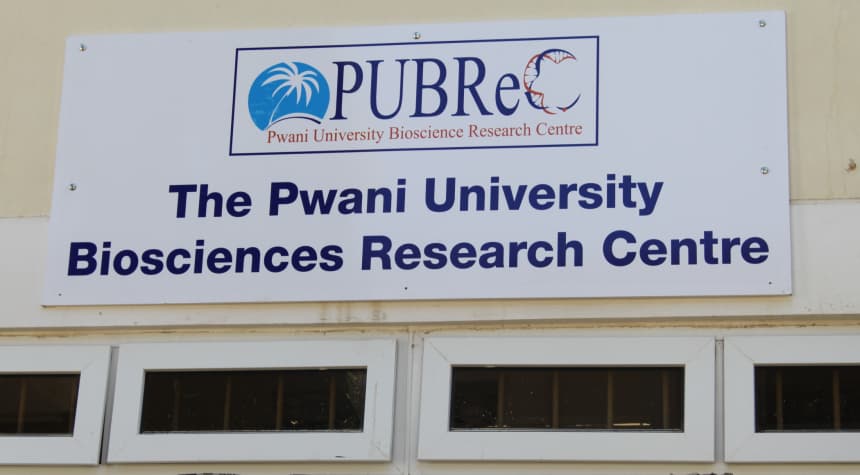







The National Biosafety Authority (NBA) has certified Pwani University's Biosciences Research Centre (PUBReC) to undertake research in modern biotechnology, a milestone that strengthens the institution's capacity for advanced scientific work.
The university has been certified as a Biosafety Level II (BSL-2) Containment Facility under Kenya's Biosafety (Contained Use) Regulations, 2011.
The certification allows PUBReC to carry out advanced biotechnology research, including genetic transformation and other regulated activities, subject to the applicable biosafety approvals.
NBA acting Chief Executive Officer Ann Karimi said the university was certified after satisfying the criteria for the safe handling and use of genetically modified organisms (GMOs) in research.
She said the certification is valid for one year and requires reinspection and recertification annually to ensure continued compliance.
Other registered research facilities in Kenya include the International Livestock Research Institute (ILRI) laboratory involved in GM research, the Kenya Agricultural and Livestock Research Organization (KALRO) Biotech laboratory and the Njoro laboratory.
Under Section 18(1) of the Biosafety Act (CAP 320), conducting any GMO-related research, confined field trials, imports or environmental releases without written authorisation from the NBA is strictly prohibited.
The Act requires institutions and scientists conducting GMO research in Kenya to establish an Institutional Biosafety Committee (IBC), an internal multidisciplinary body that oversees safety and serves as the official liaison with the Authority.
All laboratory or greenhouse GMO work must take place in a facility certified by the NBA at Biosafety Level II or higher. Such facilities require annual inspection and recertification.
Researchers must submit formal applications through their IBC for each stage of work, including contained laboratory use, Confined Field Trials (CFTs) and environmental release.
Teams using gene-editing tools must apply for an early consultation to verify whether their resulting organism falls under standard GMO regulations.




Reader Discussion (0)
Sign in to comment