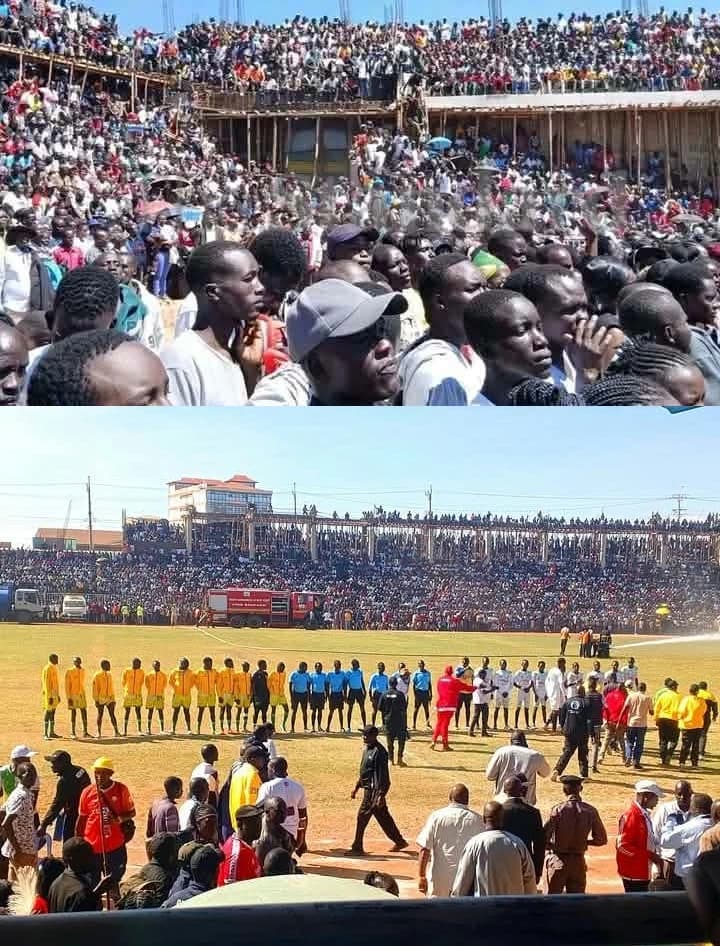


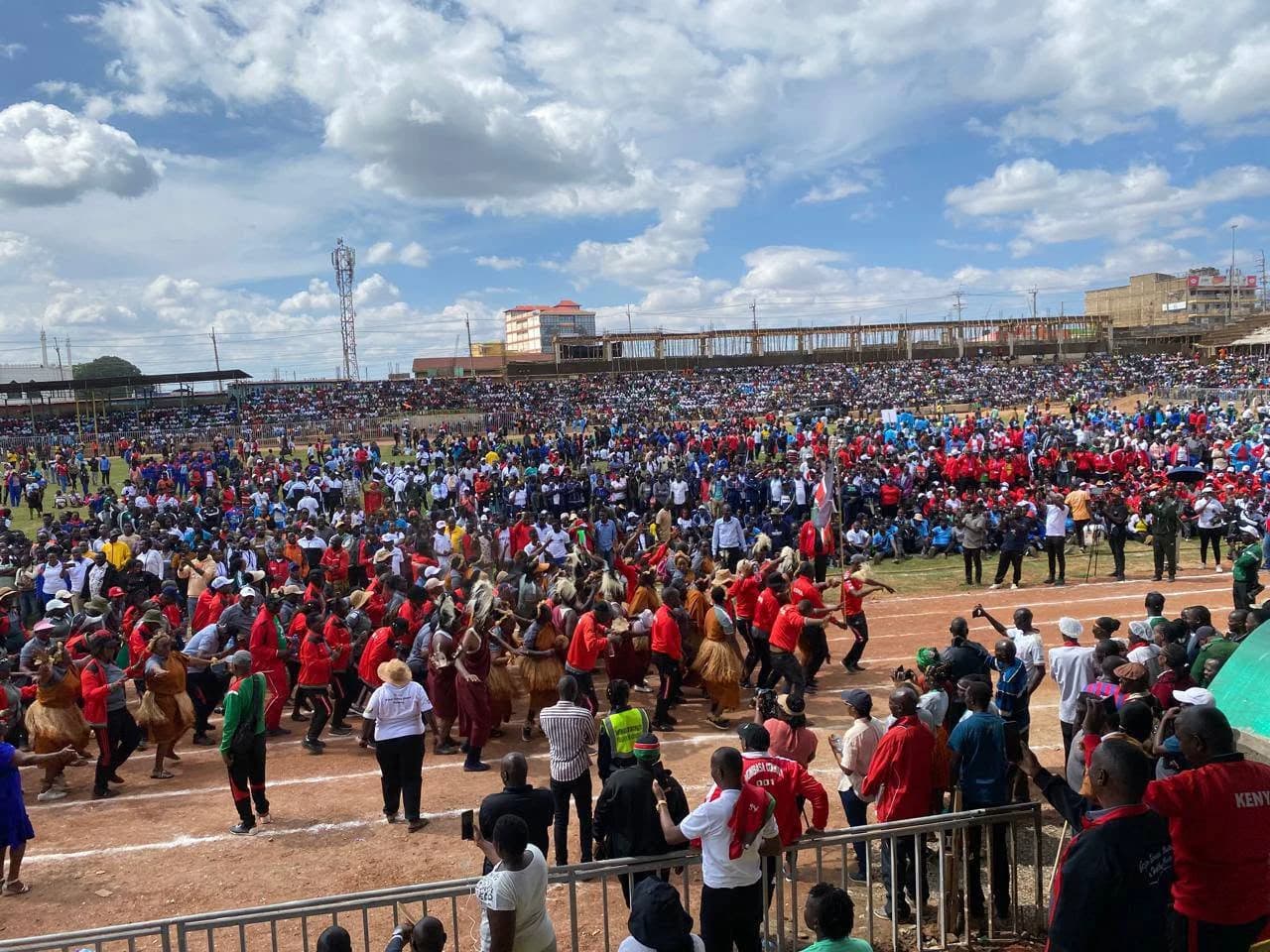
The stadium was packed beyond its ordinary capacity, transforming the venue into a sea of humanity. The atmosphere was electrifying, with deafening cheers, chants, ululations, whistles and spontaneous celebrations sweeping through the stands. Every corner of the stadium seemed to carry its own excitement, yet all the different voices converged around one common passion: football.
It was a spectacle that demonstrated what happens when sport becomes a common language. People who might ordinarily meet as strangers, belong to different ethnic communities, worship in different churches or mosques, speak different languages and occupy different social positions suddenly found themselves sharing one emotional experience.
Men and women, young people and elderly spectators, children and adults shouted in excitement as the two sides battled for supremacy. Some stood throughout the encounter, others raised their hands, while groups of supporters broke into songs and chants. Every promising attack attracted a reaction. Every missed opportunity generated collective disappointment. Every save, tackle and goal attempt became a moment of shared emotion.
The stadium was not merely occupied by spectators; it was alive with human interaction.
The excitement extended beyond the football pitch, with Makutano becoming a meeting point for different cultures, social experiences and economic interests. The gathering demonstrated that sporting competitions can serve as powerful instruments of national integration while creating opportunities for communities to interact and businesses to flourish.
When football becomes bigger than tribe, religion and age
Perhaps the most striking lesson from the Makutano spectacle was the diversity of the people brought together by the competition.
Different ethnic communities found themselves celebrating in the same venue. People from different counties and cultural backgrounds shared excitement without having to abandon their identities. Their languages, traditional expressions, songs and styles of celebration enriched the atmosphere rather than dividing it.
The elderly were not left behind. They joined younger spectators in following the contest, demonstrating that sporting passion is not confined to a particular generation. Young children watched with excitement, while adults who had followed football for decades relived the familiar emotions associated with competitive sport.
Religious differences also appeared insignificant in the face of the common sporting experience. Christians, Muslims and people from other religious backgrounds could share the same stands, cheer for their preferred teams and celebrate the spirit of competition.
The significance of such an atmosphere cannot be underestimated in a country as culturally diverse as Kenya.
Sport creates opportunities for people to encounter one another outside the boundaries of their everyday social, political and economic identities. It provides a neutral environment in which individuals can interact, cooperate, compete and appreciate one another.
A person does not need to speak another spectator’s language to understand a goal celebration. Neither does one need to belong to another person’s ethnic community to appreciate a brilliant save or a well-executed penalty.
Football communicates through emotion, discipline, teamwork and shared anticipation.
At Makutano, the shouting was different, the accents were different, the songs were different, but the excitement was remarkably common.
This is the kind of social consciousness that Kenya needs to nurture. People must increasingly recognise that their differences do not diminish their common humanity or their shared national destiny.
West Pokot’s victory and the drama of the penalty shootout
The final between Nairobi and West Pokot provided the sporting drama that such an occasion deserved.
Both teams carried the expectations of their supporters into a contest that eventually required the nerve-testing experience of a penalty shootout to determine the winner.
West Pokot ultimately prevailed, emerging victorious over Nairobi through penalties and securing a memorable triumph.
Penalty shootouts are among football’s most emotionally demanding moments. They place enormous responsibility on individual players while testing the collective patience of supporters. Every player approaching the spot carries the weight of expectation, while thousands of spectators wait anxiously for the outcome.
At Makutano, the conclusion provided the perfect climax to an already extraordinary sporting occasion.
West Pokot’s victory generated excitement among home supporters, while the contest itself offered an important reminder that competition and unity are not contradictory. One team must win and another must lose, but both remain participants in a shared sporting experience.
The dignity of sport lies not only in lifting trophies but also in respecting opponents, accepting results and recognising the effort required to compete.
The Nairobi team deserves recognition for reaching the final and contributing to a memorable contest. West Pokot’s triumph should equally be celebrated as an achievement that brought immense excitement to the home supporters.
The trophy may have gone to West Pokot, but the broader experience belonged to everyone who participated.
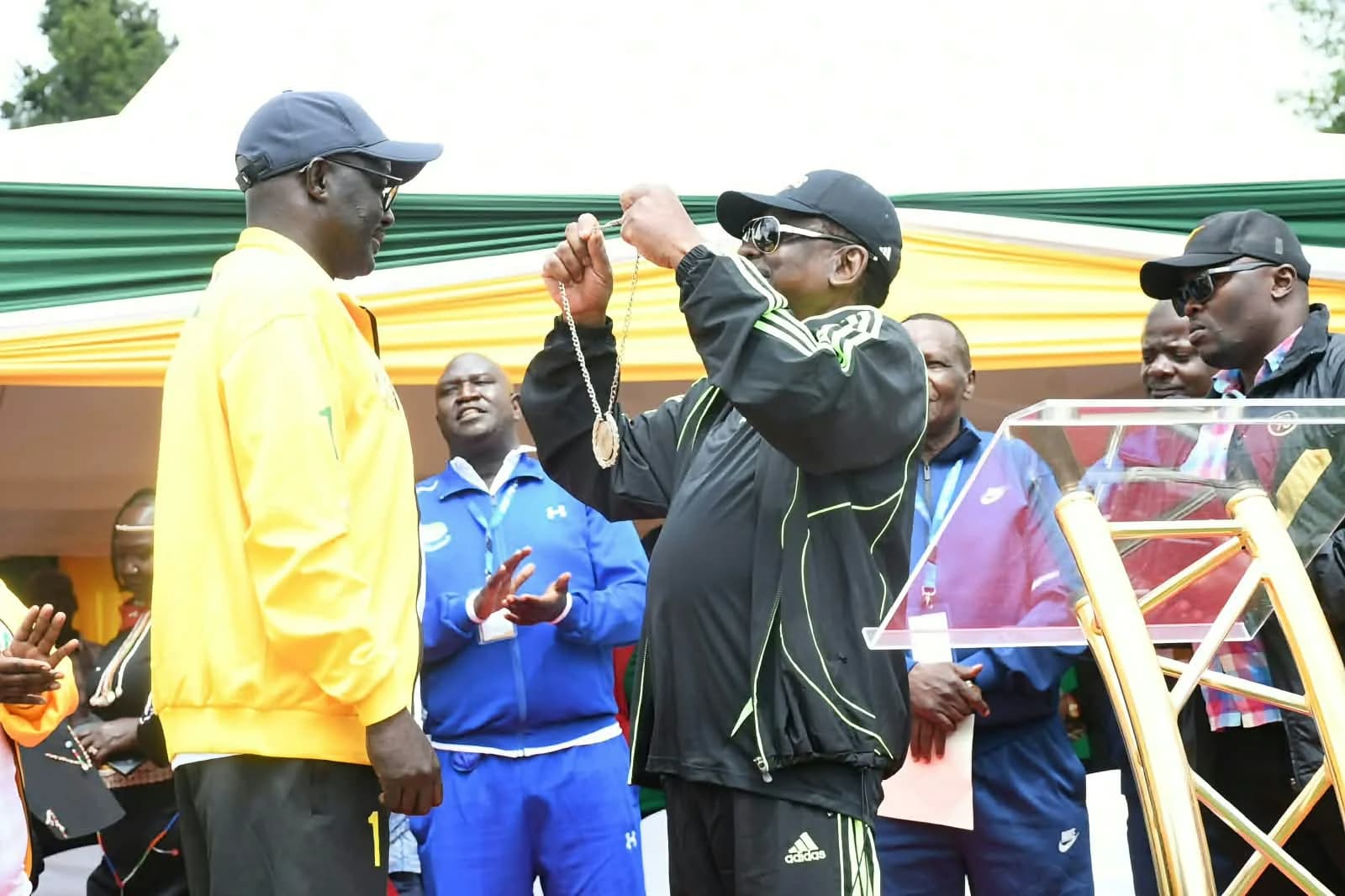
Governor Simon Kachapin and the responsibility of turning sport into national brotherhood
The occasion also provides an important platform for reflecting on the responsibility of leaders in cultivating peaceful coexistence and national unity.
West Pokot Governor Simon Kachapin’s leadership role in hosting such a gathering offers an opportunity to emphasise that counties should use sporting events to strengthen relationships beyond their geographical boundaries.
A message of harmony from the governor would underscore that West Pokot’s greatest achievement should not be measured exclusively by the football trophy but also by the friendships, hospitality and mutual respect developed through hosting fellow Kenyans.
The people who travelled to Makutano should leave with more than memories of football. They should carry experiences of friendship, appreciation and confidence in the ability of different communities to coexist peacefully.
The governor’s message should challenge young people to look beyond ethnic identities and recognise the values that bind them together as citizens.
Sport teaches discipline, teamwork, patience and respect for rules. These are not merely football lessons. They are essential values for building responsible families, institutions and communities.
West Pokot’s hospitality should, therefore, become part of a wider national conversation about the importance of opening communities to one another.
A county that welcomes visitors, celebrates diversity and provides an environment for peaceful interaction contributes to the broader project of national cohesion.
Aggrey Orengo and the message that differences should not divide Kenyans
The presence and participation of leaders such as Aggrey Orengo also provide an opportunity to reinforce the importance of inter-community understanding and national solidarity.
A message of harmony associated with his participation would challenge Kenyans to reject the temptation of defining one another exclusively through ethnic backgrounds, geographical origins or political loyalties.
The gathering at Makutano demonstrates that people can speak different languages, practise different religions, come from different counties and support different football teams while remaining members of one national family.
Leaders have an important responsibility to use public platforms to promote reconciliation rather than suspicion, cooperation rather than hostility, and understanding rather than confrontation.
Young people, in particular, deserve a country in which opportunities are determined by their abilities, ambitions and hard work rather than their ethnic identities.
The sporting field provides a practical illustration of this possibility. Players must cooperate, trust one another and respect common rules to achieve success. Their individual backgrounds become secondary to the collective objective.
The friendships established through sporting competitions should, therefore, extend into schools, workplaces, institutions and families.
The message is simple: Kenya’s diversity should be an asset to its development, not an obstacle to its unity.
Simba Arati and the importance of competing without becoming enemies
Kisii Governor Simba Arati’s participation in the wider sporting gathering also provides an opportunity to reinforce the importance of healthy competition and cooperation among counties.
The fundamental message is that football should unite people even when the contest produces winners and losers.
Nairobi and West Pokot may have entered the final as opponents, but they remain partners in the broader journey of national development.
West Pokot deserves congratulations for its penalty-shootout triumph, while Nairobi deserves recognition for its determination and contribution to an exciting final.
The outcome should never become a reason for hostility. Victory should be celebrated with humility, while defeat should be accepted with dignity.
County leaders should use such occasions to encourage collaboration in sports development, exchange talent, organise competitions and create opportunities for young people.
The sporting field should be a place where competition strengthens friendships rather than destroys them.
The wider lesson is that Kenyans can compete passionately, celebrate enthusiastically and still leave the stadium as brothers and sisters.
The business boom: When a full stadium becomes an economic opportunity
Beyond the football excitement, Makutano experienced an important economic lesson. A large gathering of people creates a market, and a market creates opportunities for businesses of different sizes.
The thousands of people who converged on the town for the KICOSCA competitions became potential customers for almost every enterprise operating within the local economy.
Hotels, lodges and guest houses were among the businesses positioned to benefit from the influx of visitors. Teams, officials, supporters and other participants needed accommodation, meals and refreshments. Establishments offering hospitality services consequently had an opportunity to attract increased business.
Restaurants, eateries, food kiosks and street vendors also had a ready market. The demand for meals, bottled water, soft drinks, snacks, fruits and other refreshments presented opportunities for traders who ordinarily depend on the relatively smaller daily population.
Groceries, supermarkets, mini-markets, butcheries, vegetable vendors and wholesale suppliers were equally positioned to benefit from the increased circulation of customers.
The economic activity extended to transport operators. Boda boda riders, taxi drivers and public transport operators had an opportunity to serve the increased movement of people into and out of Makutano.
Barbershops, salons, clothing shops, shoe sellers, mobile money agents and other small enterprises also formed part of the wider economic ecosystem that benefits when a town attracts thousands of visitors.
Even small-scale traders who operate from temporary stalls could take advantage of the occasion by selling merchandise, refreshments and other products demanded by visitors.
One businessman made an interesting observation about the economic implications of large gatherings, remarking that when the population is sufficiently large, an individual can easily become rich.
His observation captured an important economic principle: population creates a market, and a market creates opportunities for enterprise.
A business that struggles to attract customers during an ordinary day may experience significantly increased demand when thousands of visitors converge in one location.
The significance of the observation goes beyond the immediate excitement of KICOSCA. It challenges county governments to appreciate the relationship between sporting infrastructure, population movement, tourism and local economic development.
A stadium does not benefit only footballers, coaches and sporting officials. Its economic benefits can extend to the hotelier accommodating visiting teams, the grocer supplying food, the boda boda operator transporting supporters, the restaurant owner serving meals and the young entrepreneur selling refreshments.
When a stadium fills to capacity, the economic impact spills beyond the touchline.
Every additional visitor represents a potential customer for a hotelier, grocer, transporter, restaurant owner or small-scale trader.
This is why sporting events should be deliberately integrated into county economic planning. Counties should not wait for national competitions to arrive by chance. They should develop sporting calendars, attract tournaments, improve hospitality services and prepare local enterprises to benefit from the opportunities created.
A stadium that attracts thousands of visitors can become an economic engine for its surrounding community.
President Ruto’s county stadium ambition and the need to take sport to every corner
The spectacle at Makutano provides an important opportunity to revisit President William Ruto’s ambition of having every county equipped with a stadium.
The proposal should be examined beyond the political excitement surrounding infrastructure announcements. It raises a fundamental question about the place of sport in Kenya’s development priorities.
Why should access to modern sporting facilities remain concentrated in a handful of major urban centres when talent, sporting enthusiasm and the appetite for competition are distributed across the entire country?
Makutano demonstrated that communities outside Nairobi and other major cities have an enormous capacity to embrace sporting events. When a suitable venue is available, people turn up, participate and transform an ordinary football fixture into a major social and economic occasion.
Every county deserves an opportunity to develop sporting infrastructure that reflects its population, sporting interests and development needs.
A county stadium should not simply be a collection of terraces, a football pitch and dressing rooms. It should be a strategic public investment with multiple functions.
It should provide young people with opportunities to discover and develop their sporting abilities. It should host athletics, football, rugby, volleyball, cultural festivals and other organised activities. It should create opportunities for coaches, referees, sports administrators, event organisers, vendors and local businesses.
More importantly, it should provide communities with a shared public space where social relationships can be built across ethnic, religious, economic and generational boundaries.
The stadium should become an institution of community development.
However, the ambition must be accompanied by responsible planning. Constructing stadiums without providing adequate maintenance, professional management, security, accessibility and sustainable financing would defeat the purpose.
The national government and county administrations must look beyond the ceremonial opening of facilities and establish systems that guarantee regular utilisation.
Every facility should have a clear management structure, a maintenance budget, a sporting calendar and programmes that allow schools, community teams, women, persons with disabilities and emerging athletes to use it.
A stadium that is completed but rarely used represents a missed development opportunity.
Stadiums are not just about football; they are about social consciousness
One of the most important lessons from the KICOSCA final is that sporting infrastructure can contribute to a more conscious and socially connected population.
Consciousness develops when people begin to recognise that they share spaces, challenges, aspirations and responsibilities despite their differences.
A sporting event creates precisely such an environment.
When a young person from one community sits beside an elderly spectator from another, they share an experience that may gradually weaken social distance. When supporters from different backgrounds celebrate a spectacular sporting achievement, they develop an appreciation of talent beyond familiar ethnic and social boundaries.
When teams compete under common rules, participants learn discipline, fairness, accountability and respect for institutions.
Sport also teaches young people that success is rarely achieved individually. It requires teamwork, preparation, sacrifice, commitment and the willingness to trust others.
These values are relevant far beyond the football pitch.
Kenya needs more spaces where young people can interact constructively, where communities can celebrate collective achievements and where differences do not automatically become grounds for suspicion or hostility.
Stadiums can contribute to that national conversation.
They cannot independently eliminate tribalism, religious intolerance or social divisions, but they can create practical opportunities for interaction and mutual appreciation.
From sporting enthusiasm to lasting county development
The excitement witnessed at Makutano should not disappear with the conclusion of the KICOSCA tournament.
West Pokot County and other county governments should recognise the opportunity presented by such gatherings and invest in structured sporting development.
School competitions, inter-county tournaments, community leagues, youth championships and women’s sporting competitions should become regular features of county sporting calendars.
Talent identification should begin at the grassroots. Young athletes should have access to qualified coaches, proper equipment, competitive opportunities and pathways to professional development.
There is also a need to ensure that sporting facilities are accessible to ordinary citizens rather than being reserved exclusively for elite competitions and ceremonial functions.
A stadium belongs to the community it serves.
The national government, county governments, sports federations, schools and private investors should, therefore, work together to establish sustainable sporting ecosystems.
Local businesses should also be encouraged to participate through sponsorships, partnerships, supplies and event-related services.
The result should be a sporting economy that creates opportunities for both established enterprises and emerging entrepreneurs.
Makutano’s bigger message to Kenya
The KICOSCA final between Nairobi and West Pokot will be remembered for West Pokot’s victory through a penalty shootout. Yet the significance of the occasion goes beyond the final result.
The thousands who filled Makutano Stadium demonstrated the remarkable capacity of sport to mobilise people, generate collective excitement and create temporary communities out of individuals who might otherwise have little reason to interact.

Reader Discussion (0)
Sign in to comment