



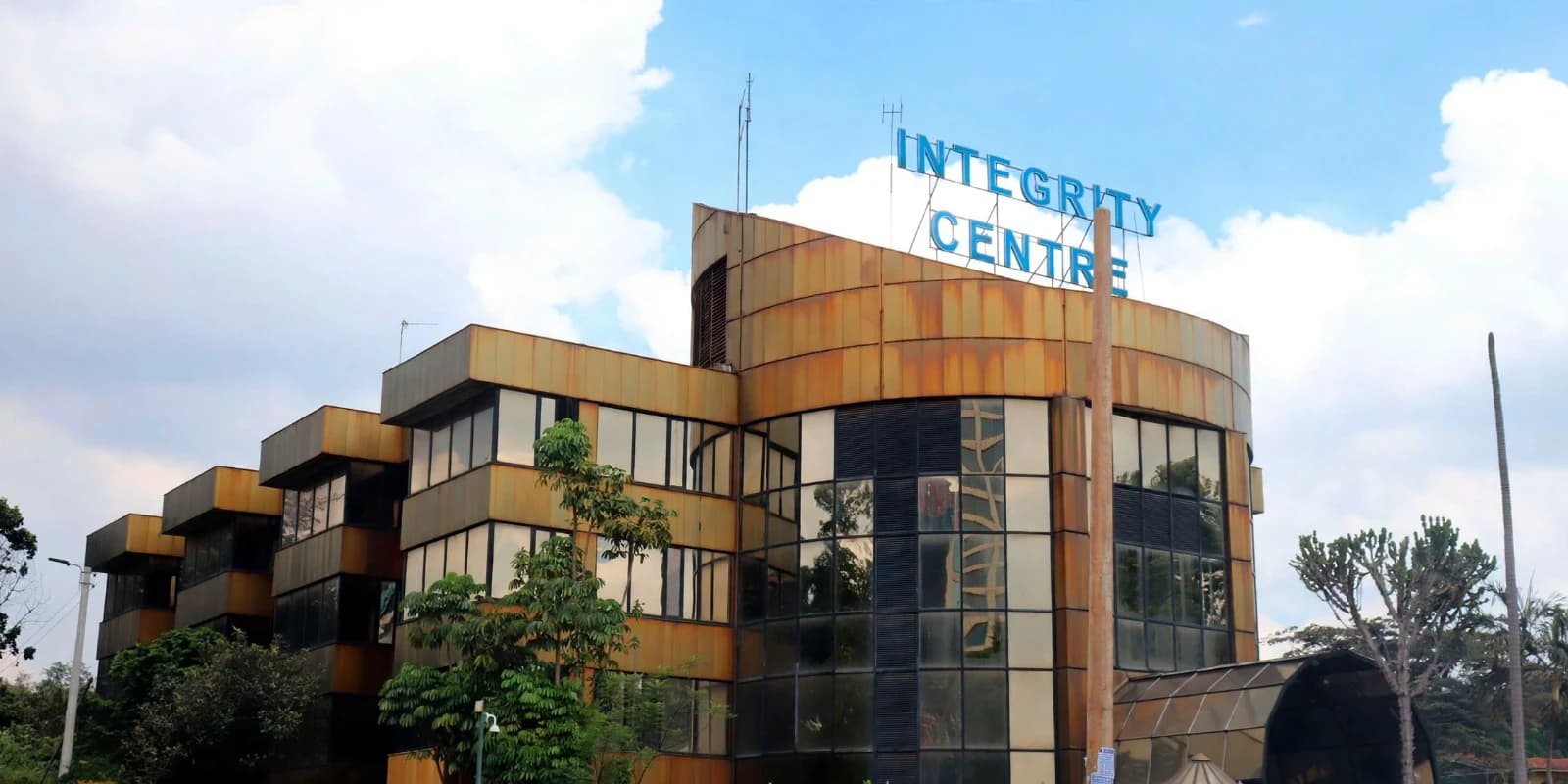



The Ethics and Anti-Corruption Commission (EACC) has uncovered cases of public servants who allegedly secured government employment using forged academic certificates, raising fresh concerns about integrity in public sector recruitment and verification of professional qualifications.
In its latest quarterly report covering July to September 2026, the commission detailed investigations involving employees who allegedly presented falsified KCSE certificates, college qualifications and university degrees to obtain government positions and earn salaries running into millions of shillings.
The findings have renewed scrutiny of recruitment procedures in public institutions, particularly the verification of academic documents presented by applicants seeking employment in the public service.
Among the cases highlighted is that of a former Kenya Airports Authority (KAA) driver who allegedly secured employment in December 2013 using a forged Kenya Certificate of Secondary Education (KCSE) certificate.
The employee reportedly presented a certificate indicating a mean grade of C plain, which was the minimum qualification for the position.
However, investigations established that the academic document was not genuine.
The former driver, who was interdicted in April 2025 before subsequently resigning, had earned Sh10.57 million in salaries between December 2013 and April 2025.
EACC forwarded the investigation file to the Director of Public Prosecutions (DPP) in August 2026, recommending charges of forgery, uttering a false document, fraudulent acquisition of public property and presenting a forged certificate.
The DPP returned the file on September 14 for further investigations.
Another case involved a former waiter at Kenyatta University Teaching, Referral and Research Hospital (KUTRRH), who allegedly used a forged hospitality qualification to secure employment.
The employee had applied for the position after the hospital advertised a vacancy requiring a diploma or certificate in hospitality, food and beverage production.
He was shortlisted, interviewed and subsequently appointed on a five-year contract in June 2020.
Investigators later established that the certificate purportedly issued by Brilliant Institute of Business Studies was forged.
The hospital subjected him to disciplinary proceedings and eventually dismissed him.
He had earned Sh676,909 between August 2020 and February 2022, according to the commission.
The DPP approved EACC's recommendation to prosecute him over fraudulent acquisition of public property, forgery, deceiving a principal and uttering a false document.
The commission also exposed cases involving senior county officials accused of presenting fake university degrees to qualify for appointments.
In Taita Taveta County, a County Executive Committee Member (CECM) in charge of Lands, Physical Planning, Mining and Urban Development allegedly used a forged Bachelor's degree in Project Planning and Management purportedly issued by the University of Nairobi.
Investigations established that neither the degree certificate nor the accompanying academic transcripts had been issued by the university.
The official allegedly earned Sh6.05 million between October 2025 and June 2026.
EACC recommended prosecution over fraudulent acquisition of public property, forgery and uttering false documents. However, the DPP returned the file in September for further investigations.
A former political adviser to the Taita Taveta governor also came under investigation over an allegedly forged University of Nairobi degree in Computer Science.
The report further detailed wider investigations into corruption in public institutions, including procurement irregularities and conflict of interest involving government employees.
The commission said it forwarded 50 investigation files to the DPP during the three-month reporting period. Of these, 43 contained recommendations for prosecution, while one was recommended for administrative action and six for closure.
Ten prosecution recommendations were accepted, 14 files were returned for further investigations and 24 remained under consideration.
Four cases had already been filed in court by the end of the reporting period.
The findings come at a time when public institutions continue to face pressure to strengthen recruitment standards, ensure transparency in hiring and protect public resources from individuals who obtain employment through fraudulent means.
The report was published in the Kenya Gazette on October 30, 2026.

Reader Discussion (0)
Sign in to comment