





Teachers' unions, university lecturers, technical trainers, private school operators and parents are asking Parliament to amend key provisions of the seven Education Sector Bills before they are enacted, as public participation on the proposals continues.
The stakeholders have raised concerns over proposed changes to education governance, university financing, student loans, teacher responsibilities, school recognition and parental representation. They argue that the legislation must address the realities facing different institutions and groups.
The seven Bills, which form part of President William Ruto's proposed overhaul of the education sector, are undergoing public participation coordinated by the National Assembly Education Committee. They cover school management, tertiary education funding and placement, teacher training, national assessments and qualifications.
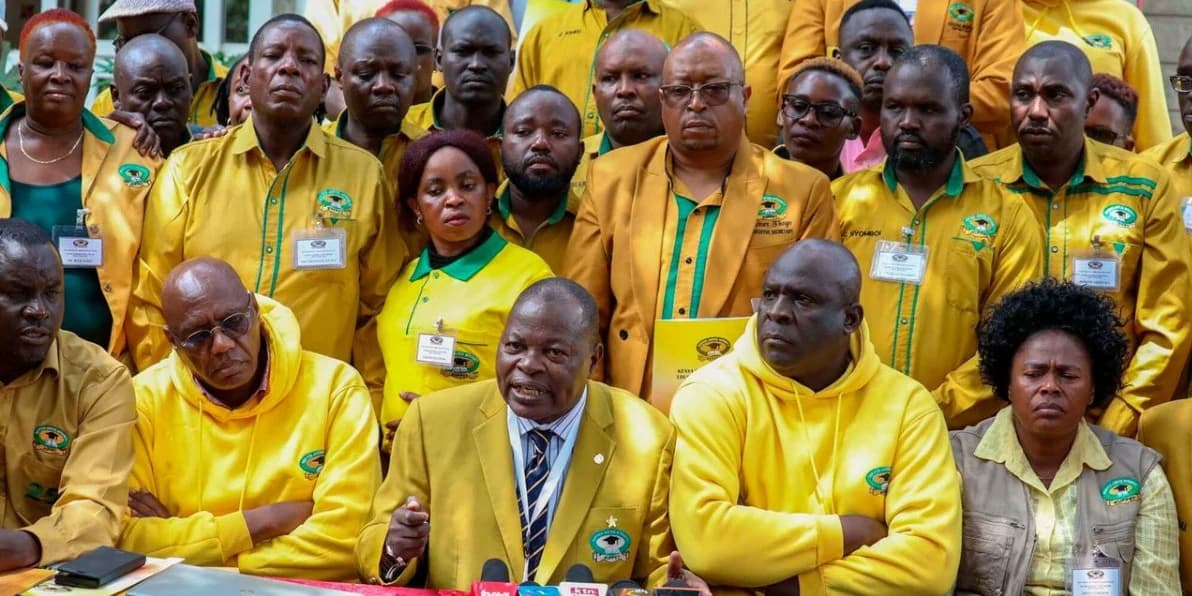
The Kenya Union of Post Primary Education Teachers (KUPPET) wants all levels of learning entrenched in law, with distinct and clearly defined legal frameworks for Early Childhood Development Education (ECDE), primary education, Junior School (JS), senior school, universities and other tertiary institutions.
The union wants the Bills to set up a properly stratified legal structure that defines the mandate, management, financing, staffing and accountability responsibilities at each level. It argues that each stage of learning should have clear legal recognition and institutional responsibilities, to prevent overlaps, administrative confusion and gaps in service delivery.
KUPPET has also challenged the proposed requirement that graduates begin repaying their higher education loans one year after completing their studies. The union wants repayment to start only after beneficiaries get jobs, arguing that graduates should not be expected to service loans when they have no reliable income.
The union has also questioned the proposed tertiary funding arrangements and demanded that scholarships be written into the framework. It wants the system to provide for both loans and scholarships, so that learners from poor backgrounds are not locked out of higher education.
One of the most contested proposals is the creation of a Tertiary Education Funding Authority, which would combine functions currently performed by the Higher Education Loans Board (HELB), the Universities Fund and the TVET Funding Board. The arrangement is intended to streamline student financing and address challenges in funding tertiary education.
The Universities Academic Staff Union (UASU) argues that concentrating on financing individual students without addressing universities' own financial challenges could leave institutions struggling to meet their operational obligations. The union wants the law to provide safeguards for continuing students, existing loans, scholarships, university financial obligations and employees during the proposed transition. It has also called for an assessment of the likely impact of the restructuring and for representation on the authority's board, so that university interests are considered in funding decisions.
The Kenya Union of Technical and Vocational Education Trainers (KUTVET) wants a funding model that recognises the different costs of technical and vocational training. It argues that practical courses need specialised equipment, learning materials, workshops and industrial training, which makes their financial needs different from those of courses that rely mainly on classroom instruction. The union wants the framework to consider the actual cost of delivering different courses, to avoid underfunding technical institutions.
The Kenya National Union of Teachers (KNUT) has opposed a proposal to restrict teachers from engaging in other income-generating activities outside official working hours. The union's objection raises questions about teachers' professional freedom, their ability to supplement their earnings and how far employment rules should govern activities beyond official duties.
Private school operators have raised concerns about provisions affecting the organisation and recognition of junior schools. They want standalone junior schools formally recognised in the proposed framework, and arrangements that would allow learners in private institutions to benefit from public bursaries and scholarships.
The National Parents Association is seeking stronger representation in education decision-making structures. Parents argue that decisions on school management, financing and learning conditions should reflect the experiences of families that carry significant responsibilities in supporting children's education.
Education Cabinet Secretary Julius Ogamba has maintained that the proposed reforms are intended to address persistent university funding challenges and prevent disruptions to learning. The government is seeking to reorganise aspects of education administration and financing through the seven Bills, and the public participation process gives stakeholders a chance to propose amendments before Parliament makes its final decisions.
The National Assembly Education Committee is expected to conclude consultations next week before submitting its report to Parliament. The outcome will determine whether the legislation proceeds in its current form or is changed to address the concerns raised.


Reader Discussion (0)
Sign in to comment