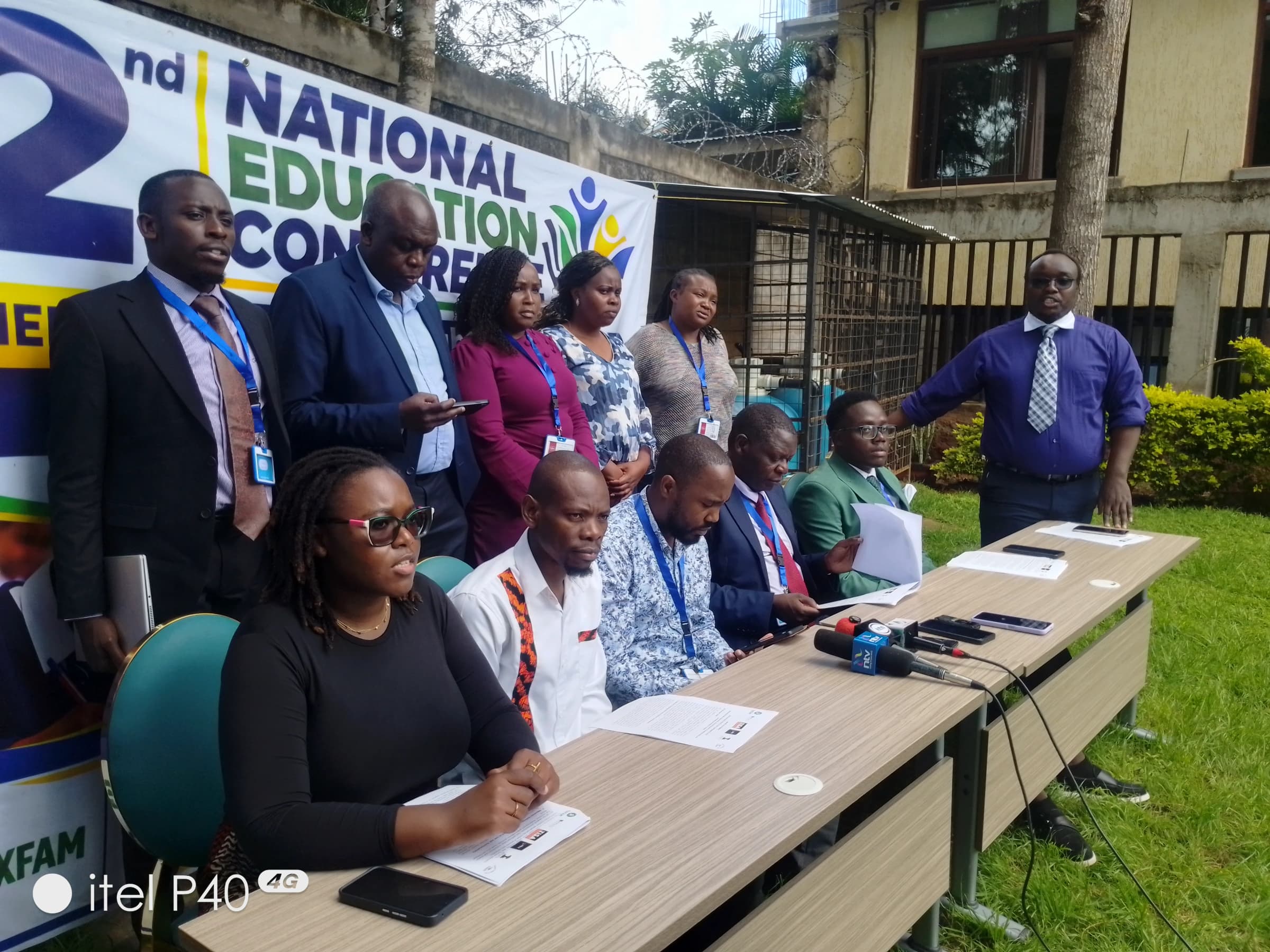
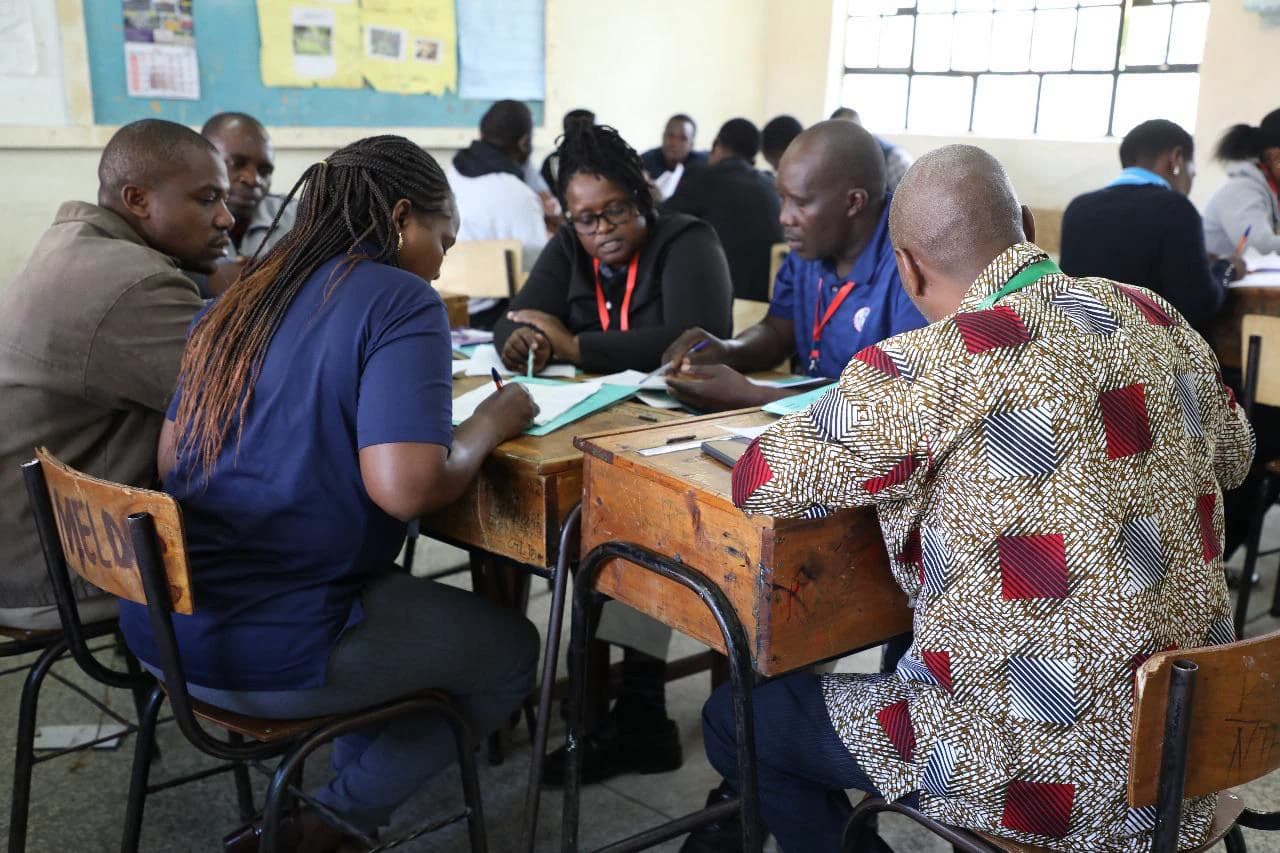
The call was made in a joint press statement issued by the organisations in Machakos during the second National Education Conference 2026, held under the theme “Reclaiming Public Education: Accelerating SDG 4 Implementation and Reducing Inequality in Kenya.”
The statement was issued by organisers and participants of the conference, comprising civil society organisations, education stakeholders, researchers, policymakers, development partners, teachers, learners and citizens.
They included Oxfam, EACHRights, TISA, RELI, Akili Dada and the Kenya Human Rights Commission (KHRC).
In the statement, the organisations warned that despite constitutional guarantees of free basic education, many families continue to face direct and indirect costs that limit access to education.
“Illegal levies and hidden charges remain a significant barrier for children from poor and vulnerable households who cannot afford these additional costs,” said National Parents Association of Kenya Chairman Silas Obuhatsa.
The groups called on the Ministry of Education and all relevant institutions to strengthen enforcement of existing laws and policies to ensure that no child is denied access to education because of their family’s inability to pay unauthorised fees.
They further called upon the Cabinet Secretary for Education to act on the Parliamentary Committee on Education’s report on illegal levies and provide an account of the action taken against school heads found culpable, as well as measures planned for 2027.
The organisations said education financing is not merely a matter of policy preference but a matter of national interest and a constitutional obligation.
Citing Article 203(1) of the Constitution, they said adequate financing of public education must be recognised as a matter of national interest, given its central role in advancing equality, human dignity and social and economic development.
They argued that while significant reforms have been introduced in recent years, concerns remain about whether these reforms are sufficiently anchored in law, adequately financed and effectively implemented to guarantee the right to education for all learners.
Government urged to provide clear transition plan for BoM teachers
The statement also raised concerns over the uncertainty surrounding teachers currently employed through Boards of Management (BoMs) and financed by parents and local communities.
“While commitments have been made to address this long-standing challenge, schools, parents, and teachers have not received sufficient information on how many teachers will be absorbed, what resources are available, and the implementation timelines,” said Robert Waweru from the Kenya Human Rights Commission.
The groups called on the government and the Teachers Service Commission (TSC) to urgently provide a clear transition plan that protects learning continuity, safeguards teachers’ livelihoods and relieves parents of the financial burden they continue to shoulder in financing essential teaching personnel.
Foundational learning a national priority
The organisations welcomed President William Ruto’s commitment made during the Kenya Comprehensive Schools Heads Association (KECSHA) conference that:
“By 2030, every Kenyan child must be able to read, write, and count by the end of Grade 3. We will measure progress every year, and we will publish the results, county by county and school by school, so that every parent can see how far we have come.”
However, they noted with concern that the commitment has not yet been adequately anchored in legislation, policy frameworks, implementation plans or financing commitments.
“We therefore call on the Government to translate this commitment into law, policy, and budgetary allocations, accompanied by annual public reporting on progress toward ensuring that every child can read, write, and count by the end of Grade 3,” the statement reads.
The groups warned that many learners continue to progress through the education system without acquiring foundational competencies, a learning crisis that threatens the effectiveness of all subsequent investments and undermines Kenya’s ability to achieve Sustainable Development Goals (SDGs) 1 (No Poverty), 4 (Quality Education) and 10 (Reduced Inequalities).
Addressing persistent inequalities in education
The conference also flagged persistent inequalities that continue to deny many learners equitable opportunities.
Learners in arid and semi-arid lands (ASALs), children with disabilities, girls, children living in poverty, street-connected children and other vulnerable groups continue to face barriers that limit their access to quality education, the statement said.
The organisations called for targeted interventions to address these inequalities and ensure that education financing and policy reforms prioritise those who are furthest behind.
In their collective call to action, the groups urged the Government of Kenya, Parliament, county governments, TSC, development partners, civil society, communities and all citizens to work together to strengthen public education and accelerate progress towards SDG 4.
“The future of Kenya depends on a public education system that is equitable, inclusive, and adequately financed,” said East African Centre for Human Rights (EACHRights) Executive Director Gilbert Onyango.
Reader Discussion (0)
Sign in to comment