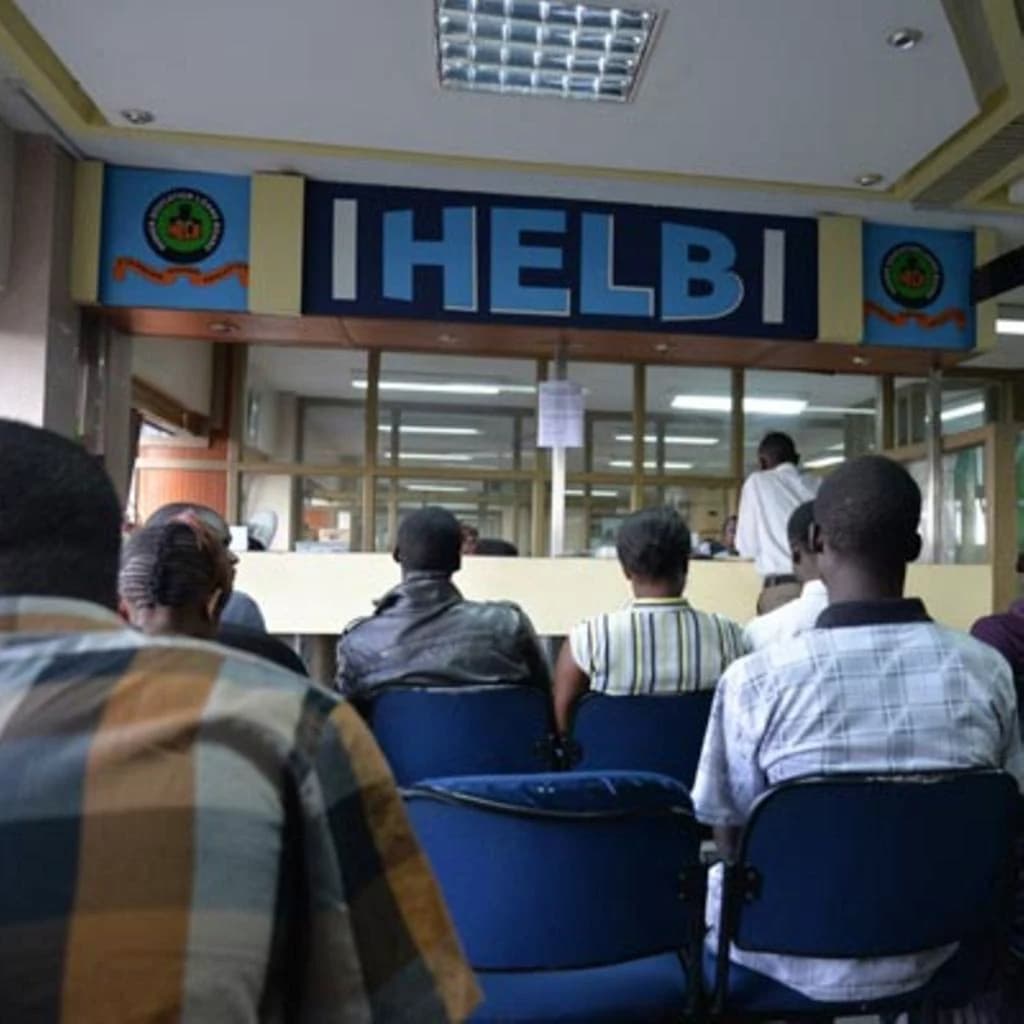



The disclosure, made during parliamentary scrutiny of higher education financing, paints a difficult picture for thousands of university and Technical and Vocational Education and Training (TVET) students who depend on government assistance to access and complete their studies.
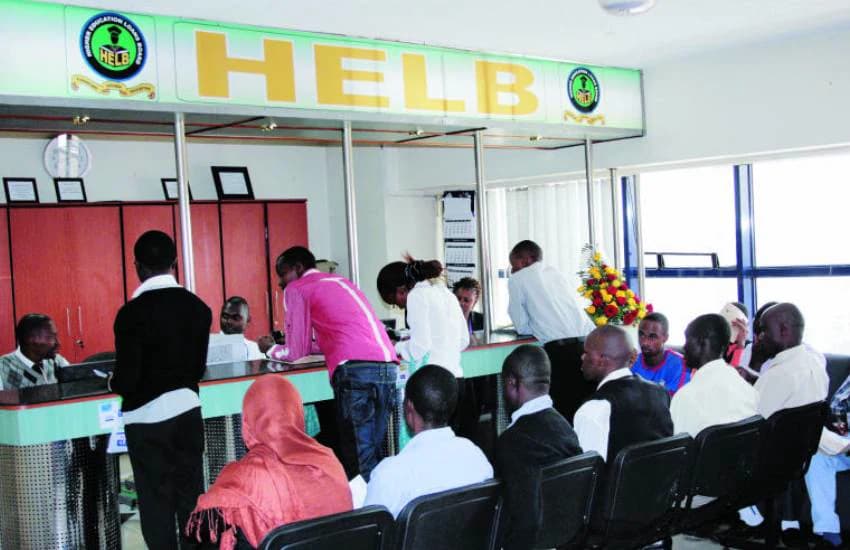
According to figures presented to the National Assembly Education Committee, HELB requires approximately Sh114.36 billion to meet the projected financing needs of 1,199,423 students.
However, the board has an allocation of only Sh56.71 billion, leaving a deficit of Sh57.65 billion.
The available allocation, therefore, covers approximately half of the projected requirement, exposing a substantial financing gap that could complicate the disbursement of student loans and the delivery of adequate financial assistance.
Funding requirements outpace government allocations
The figures reveal a widening mismatch between the demand for higher education financing and the resources available to meet it.
HELB’s projected requirement of Sh114.36 billion reflects the growing number of learners seeking financial assistance as access to university and technical education expands.
The challenge is particularly significant under the Student-Centred Funding Model, which was introduced to distribute government assistance according to students’ assessed financial circumstances.
The model combines scholarships, loans and household contributions, with the intention of making higher education more accessible, particularly to learners from economically disadvantaged backgrounds.
However, its sustainability is increasingly being tested by rising enrolment, expanding financial obligations and budgetary constraints.
HELB’s financial pressures have been building
The latest funding shortfall comes against a background of successive deficits that have placed additional pressure on the board.
HELB recorded a funding deficit of approximately Sh10.694 billion in the 2024/25 financial year.
The shortfall subsequently increased to approximately Sh18.58 billion in 2025/26.
Combined, the two deficits amounted to approximately Sh29.274 billion, illustrating the growing difficulty of matching student financing requirements with available resources.
The projected Sh57.65 billion shortfall for 2026/27 represents a further escalation in the board’s financing challenge.
University scholarships face a separate Sh16.56 billion shortfall
The financial difficulties extend beyond student loans.
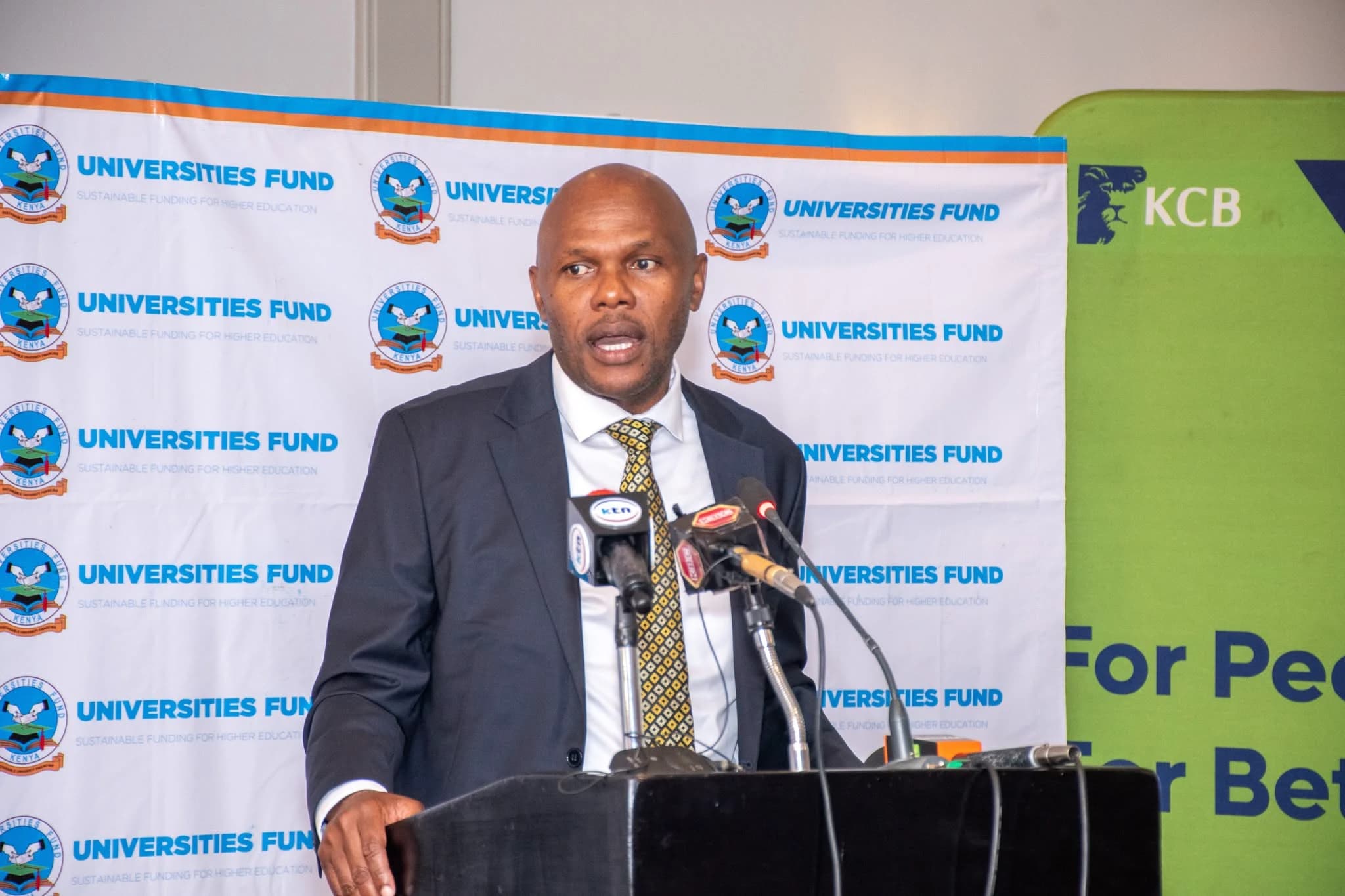
The Universities Fund, which administers government scholarships for university students, is also facing a substantial funding gap.
For the 2026/27 financial year, the scholarship requirement was projected at approximately Sh47.36 billion against an allocation of Sh30.8 billion, leaving a deficit of Sh16.56 billion.
When the two funding gaps are considered together, HELB and the Universities Fund face a combined shortfall of approximately Sh74.21 billion.
Institution Requirement (Sh billion) Allocation (Sh billion) Deficit (Sh billion)
HELB 114.36 56.71 57.65
Universities Fund 47.36 30.80 16.56
Total 161.72 87.51 74.21
This distinction is important because the Universities Fund’s scholarship deficit is separate from HELB’s loan financing gap.
The combined figures nevertheless demonstrate the scale of the financial pressure confronting Kenya’s higher education financing framework.
Student numbers continue to rise
The expansion in the number of students requiring assistance has become one of the biggest challenges facing higher education financing agencies.
HELB’s reported figures indicate that the number of students supported increased from approximately 567,338 in 2023/24 to 823,691 in 2025/26.
For 2026/27, the board projects that approximately 1,199,423 students will require financial support.
This growing demand places additional pressure on government allocations and raises questions about whether existing financing arrangements can sustainably accommodate expanding access to higher education.
For students from low-income households, the consequences of inadequate financing could be particularly serious.
Many depend on government loans and scholarships to meet tuition expenses and other costs associated with pursuing higher education.
Government proposes Sh100 billion annual funding framework
The government has also been pursuing a proposed financing framework intended to strengthen and consolidate support for higher education.
Under the proposed Tertiary Education Placement and Funding Bill, the government outlined an annual funding plan of approximately Sh100 billion.
The reported allocations include Sh56 billion for HELB, Sh30 billion for the Universities Fund and Sh9.6 billion for TVET scholarships.
These components total Sh95.6 billion, leaving Sh4.4 billion whose allocation requires clarification.
The government has projected that higher education financing requirements could reach Sh230 billion as the number of students rises towards 2.4 million by 2030/31.
The proposal signals recognition that the country’s higher education financing needs are growing beyond the capacity of existing funding arrangements.
A test of the government’s commitment to accessible education
The emerging funding crisis presents the Ministry of Education, National Treasury and Parliament with a significant policy challenge.
Expanding access to universities and TVET institutions without providing corresponding financial resources risks creating a system in which admission opportunities increase while the ability of students to finance their education remains uncertain.
The government must, therefore, balance enrolment expansion with predictable and adequate funding, transparent allocation procedures and stronger accountability in the management of public resources.
The effectiveness of the Student-Centred Funding Model will ultimately depend not only on how accurately students’ financial needs are assessed but also on whether the government can honour the financing commitments arising from those assessments.
For HELB, the Sh57.65 billion deficit is a serious warning. For students and their families, it raises a more immediate question: Will the government provide sufficient resources to ensure that financial circumstances do not become an obstacle to completing higher education?
Kenya’s ambition to build a skilled workforce and expand opportunities through higher education will require more than increased university and TVET enrolment. It will require a financing system capable of supporting the students it admits.
The central challenge is no longer simply expanding access to higher education but ensuring that every learner admitted into the system has a realistic financial pathway to graduation.

Reader Discussion (0)
Sign in to comment