


The teaching profession is not merely about delivering lessons, marking scripts, preparing schemes of work and attending staff meetings. It is also a complex social environment where different personalities, professional attitudes, ambitions and workplace behaviours interact every day.
There are teachers who guard authority like national security secrets, others who nurture learners with extraordinary compassion and some who have transformed reporting colleagues into an unofficial professional assignment.
There are administration praise-singers, permanent complainers, examination enthusiasts, staffroom politicians and individuals who have perfected the art of remaining unbothered by almost everything.
While these descriptions carry a generous dose of humour, they also expose workplace habits that can either strengthen or undermine the teaching profession.
The gatekeeper teachers: Classroom border control officers
These teachers believe authority is the most important ingredient in education. They guard their positions, classroom territories and influence with extraordinary determination.
To them, the classroom is a personal kingdom, the chalk is a symbol of power and learners are citizens who must seek permission before exercising their intellectual freedoms.
Their favourite expression is, “In my class, I make the rules!”
They are strict, controlling and sometimes uncomfortable with learners who ask too many questions. A simple inquiry can be interpreted as rebellion, while a learner who challenges an instruction risks being treated like someone attempting to overthrow a government.
They sometimes confuse fear with respect and silence with effective learning. They prefer unquestioning obedience and can turn a minor classroom mistake into a full-blown disciplinary emergency.
Their gatekeeping tendencies do not always end in the classroom. Some extend them to the staffroom, where opportunities, responsibilities, recognition and professional influence become territories to be protected.
They may feel threatened by colleagues who challenge established practices, introduce new ideas or question administrative decisions.
To them, a school operates best when everybody knows their place and nobody disturbs the existing arrangement.
Although discipline and authority are essential in every learning institution, excessive attachment to power can turn the classroom into an intimidating environment where learners fear making mistakes or expressing themselves.
Their biggest professional achievement, in their own estimation, is having a classroom where nobody dares challenge them.
The gentle teachers: The humanity ambassadors
On the other side of the professional spectrum are the gentle teachers. These are individuals who understand that children are not examination numbers, walking report cards or miniature adults expected to have solutions to every problem.
They recognise that every learner comes to school with a different background, personality, ability, challenge and personal experience.
They are approachable, patient, compassionate and genuinely interested in children’s welfare. They correct mistakes without humiliating learners, enforce discipline without destroying confidence and encourage questions without interpreting curiosity as rebellion.
They understand that a child who performs poorly may need support rather than another lecture about laziness.
Their classrooms are environments where learners can make mistakes, ask questions, develop confidence and discover their abilities without constantly looking over their shoulders.
They celebrate small achievements, notice changes in behaviour and make deliberate efforts to identify learners who may be struggling academically, socially or emotionally.
Some even become unofficial counsellors, motivational speakers, conflict mediators and occasionally emergency family advisers.
Their gentleness should never be mistaken for weakness. They can enforce school rules, demand accountability and maintain discipline without resorting to intimidation.
Their philosophy is simple: discipline should correct behaviour, not destroy dignity.
These are the teachers whose influence often extends beyond the classroom. Years after leaving school, former learners may still remember them, not necessarily because they taught the most difficult subject, but because they believed in them when nobody else did.
The motorcycle teachers: Bootlickers, tail-waggers and staffroom intelligence officers
Every school seems to have a few teachers who have perfected the art of remaining permanently in the good books of the administration.
They are the self-appointed intelligence officers, unofficial public relations representatives, enthusiastic defenders of administrative decisions and administration praise-singers.
They are popularly nicknamed motorcycle teachers because information appears to travel through them at remarkable speed, particularly when its destination is the headteacher’s or principal’s office.
A casual staffroom conversation can suddenly become an administrative briefing. A disagreement between colleagues may reach the principal before the parties involved have even finished resolving it.
Sometimes, the person who made the original statement has not even realised that it has already become an administrative matter.
But their defining characteristic is not merely reporting colleagues. It is also their relationship with authority.
These teachers are frequently accused of bootlicking, excessive flattery and behaving like tail-waggers whenever members of the administration appear.
They can agree enthusiastically with almost every administrative decision, even when the rest of the staffroom is struggling to understand its logic.
When the principal speaks, they are among the first to nod. When the administration makes a controversial decision, they quickly become its defence lawyers. When colleagues raise legitimate concerns, they may interpret criticism as disloyalty.
Their metaphorical tails are always wagging whenever authority is around!
They are particularly comfortable carrying information about fellow teachers to the administration, sometimes regardless of the nature, seriousness or context of the matter.
Interestingly, motorcycle teachers may enjoy considerable protection from sections of the school administration. Their closeness to authority can make them appear untouchable, even when fellow teachers question their conduct.
Some seem to enjoy privileged access, administrative goodwill and protection that ordinary colleagues can only dream about.
In the staffroom, however, their popularity is often another story. Colleagues may become suspicious of what they say in their presence, knowing that an innocent conversation might soon acquire a different interpretation in the principal’s office.
Their presence can weaken professional trust, encourage suspicion and turn the staffroom into an unofficial intelligence-gathering centre.
Their unofficial professional survival strategy appears to revolve around three activities: praising authority, collecting information and delivering reports.
Their favourite philosophy might as well be: “The administration is always right, and if it is wrong, let us first find out who reported it!”
There is, however, a distinction between responsible reporting and workplace gossip. Exposing abuse, corruption, misconduct or threats to learners is a legitimate professional responsibility.
The problem arises when reporting becomes habitual, malicious, selective or motivated by the desire to win administrative favour.
A school needs teachers who respect authority, not those who worship it; colleagues who uphold accountability, not those who trade professional trust for administrative protection.
There is a difference between being loyal to an institution and becoming personally attached to the individuals occupying its offices.
The unbothered teachers: The ministers of personal peace
Then comes the category that appears to have discovered the ultimate secret of professional survival: remaining unbothered.
These teachers have perfected the art of emotional detachment from almost everything happening around them.
A learner scores poorly? Life continues.
Half the class fails an assessment? The syllabus must move forward.
A child has not understood the lesson? Perhaps another teacher will explain it next time.
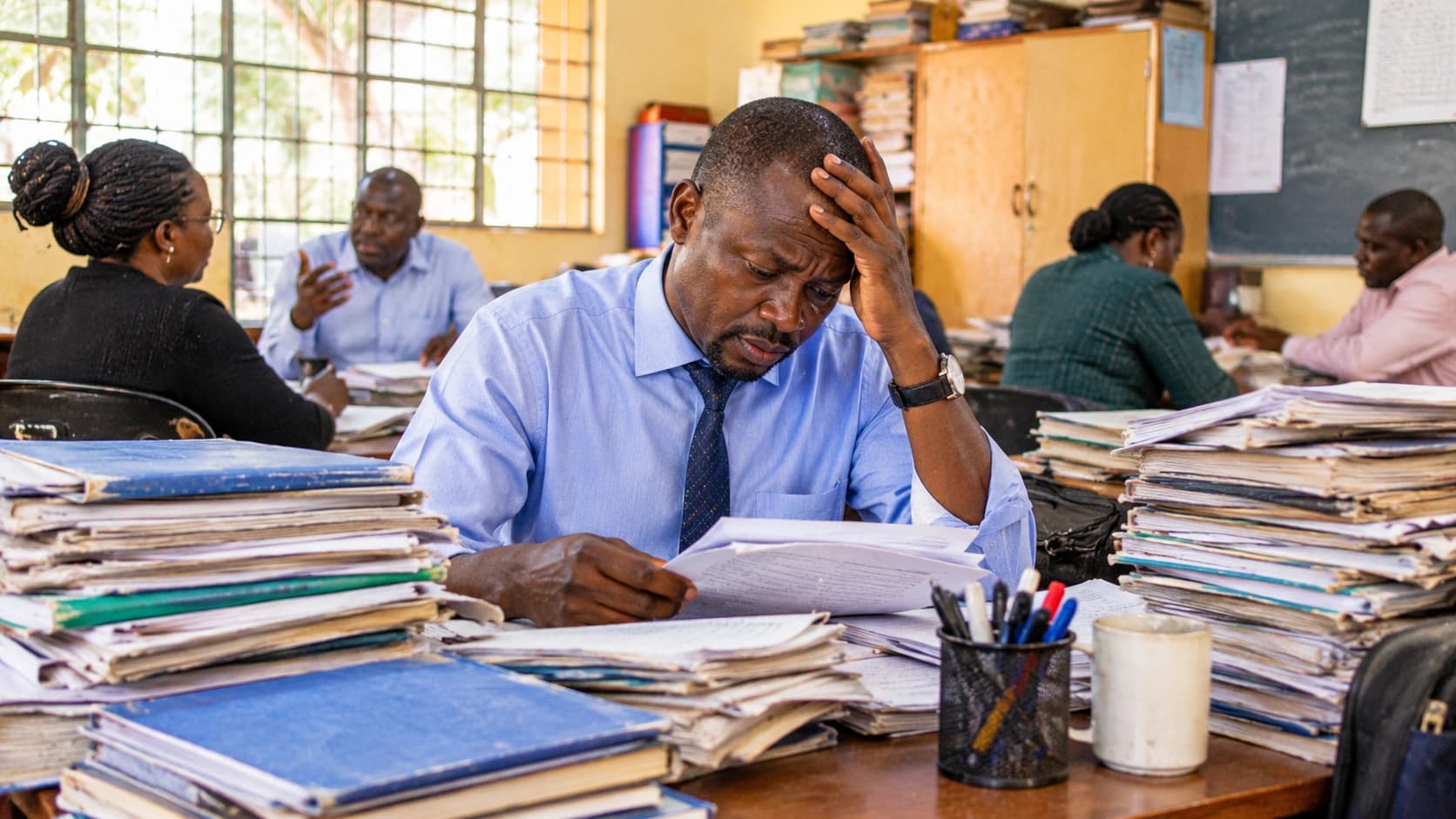
They report to school, teach their lessons, mark attendance and complete the basic requirements of their jobs. Beyond that, their enthusiasm for additional engagement can be difficult to locate.
They rarely investigate persistent learning difficulties, follow up on struggling learners or show much interest in improving classroom outcomes.
Some avoid additional responsibilities, resist innovation and consider any assignment outside their normal routine an attack on their personal peace.
Their favourite expression is, “I have done my part. The rest is not my responsibility!”
They can watch a classroom struggle academically with the composure of someone observing rainfall from a comfortable sitting room.
However, not every quiet or reserved teacher is unbothered. Some are exhausted, overworked or dealing with personal challenges. The real concern is persistent indifference towards learners and professional obligations.
Staffroom politics and professional habits
The staffroom politicians: Permanent campaigners and professional analysts
These teachers never seem to leave politics outside the school gate.
Every staffroom discussion becomes a political rally, and every disagreement presents an opportunity to declare political positions.
They have opinions about everything, from government policy and elections to the smallest administrative decisions.
They can turn a discussion about examination results into a debate about government performance. A conversation about teachers’ salaries can quickly become a political campaign complete with predictions, accusations and promises.
They are particularly skilled at predicting political outcomes, sometimes with the confidence of electoral commission officials.
Their favourite expression is, “Wait until the next election!”
They also have an extraordinary ability to analyse national politics during working hours, although they may sometimes struggle to explain the day’s lesson objectives.
Political awareness is not a professional weakness. However, problems arise when political allegiance becomes more important than professional responsibility, collegial relationships and learners’ welfare.
The examination-obsessed teachers: The marks and grades professors
For these teachers, education begins and ends with examination performance.
They know every learner’s position, every subject average, every examination target and sometimes the marks a child is expected to score before the examination has even been administered.
Their greatest concern is not necessarily whether a learner understands a concept but whether the learner can reproduce it in an examination.
They can turn an ordinary classroom lesson into an examination rehearsal.
A learner who asks about practical applications may be reminded that the examination is approaching.
Their favourite question is, “Will this come in the examination?”
They are also closely attached to the clock. They know exactly when lessons begin, when breaks start, when meetings should end and when the final bell is expected.
Some can detect the final five minutes of a lesson with almost supernatural accuracy.
Their eyes are permanently checking the clock, particularly when an administrator begins an unusually long speech.
Although examination preparation is important, excessive examination obsession can undermine creativity, practical skills and the broader objectives of Competency-Based Education (CBE).
Education should produce capable, creative and responsible individuals, not merely candidates who have mastered the art of predicting examination questions.
The favouritism teachers: The classroom politicians
These teachers have an interesting way of distributing attention, recognition and opportunities.
Some learners receive VIP treatment, while others appear to be permanent occupants of the ordinary section.
They have their favourite students, and sometimes their preferences are so obvious that even the classroom furniture could identify them.
The favoured learners can do almost nothing wrong, while others must provide explanations for breathing too loudly.
Their favourite philosophy is, “Some learners are simply different!”
They may give certain learners more opportunities, overlook their mistakes or defend them even when they are clearly in the wrong.
Unfortunately, favouritism can damage confidence, create resentment and undermine fairness in the classroom.
Every learner deserves dignity, attention and equal consideration, regardless of academic performance, family background or personal connections.
The permanent complainers: The staffroom opposition party
These teachers have a complaint for every occasion and an objection for every proposal.
If the administration introduces a new programme, they complain. If nothing changes, they complain about stagnation.
If meetings are called, they complain about meetings. If meetings are cancelled, they complain that communication is poor.
If the school introduces a new teaching approach, they question its usefulness. If the old approach remains, they complain that the institution is not innovative.
They can identify problems with extraordinary accuracy but may struggle to propose practical solutions.
Their favourite expression is, “In this school, nothing ever works!”
They sometimes make the staffroom resemble a permanent parliamentary opposition, with every administrative decision facing a vote of no confidence.
To be fair, some complaints expose genuine institutional problems. Teachers should be able to question decisions, raise concerns and demand better working conditions.
The problem arises when criticism becomes a permanent habit without constructive engagement.
The innovators: The school’s creative engines
These are teachers who are constantly searching for better ways of doing things.
They experiment with teaching methods, embrace technology, encourage practical learning and look for opportunities to improve learner participation.
They are not necessarily the loudest people in the staffroom, but their ideas can transform the classroom.
They may arrive with a new teaching resource, an innovative project or an idea that initially sounds strange to colleagues.
Their favourite question is, “How can we make this better?”
They understand that teaching is not simply about completing the syllabus but also about ensuring that learners acquire useful knowledge, skills and competencies.
They are particularly important in CBE, where creativity, problem-solving and practical competencies are central to learning.
Unfortunately, some encounter resistance from colleagues who believe that because something has always been done a certain way, it must remain that way forever.
The overtime teachers: The self-appointed school residents
These teachers seem to believe that leaving school immediately after completing their official responsibilities is a sign of insufficient commitment.
They are often the first to arrive and among the last to leave.
Sometimes, they make colleagues who observe reasonable working boundaries feel like professional fugitives.
They may spend considerable time in school, even when there is little additional work to accomplish.
Their favourite question is, “You are already leaving?”
They sometimes mistake physical presence for productivity and assume that the longer someone stays in school, the more committed they must be.
Some genuinely go the extra mile for learners and their institutions, which is commendable.
However, professional commitment should be measured by results, responsibility and quality of service rather than the number of hours spent occupying a chair in the staffroom.
The mentor teachers: The unsung professional parents
These are experienced teachers who willingly guide younger colleagues, share professional knowledge and help others navigate the challenges of the teaching profession.
They do not treat experience as a weapon or use seniority to intimidate new teachers.
They understand that a successful institution is built through knowledge-sharing, collaboration and mutual respect.
They are available to advise, encourage and correct colleagues without unnecessary humiliation.
Their favourite philosophy is, “Let me show you how we can do this better.”
They are among the most valuable members of any school community because they strengthen both individual teachers and the institution as a whole.
Which teachers does modern education need?
As Kenya continues implementing Competency-Based Education, the demands placed on teachers are evolving.
Learners need guidance, mentorship, creativity, individual attention and an environment that allows them to discover and develop their abilities.
This responsibility cannot be adequately fulfilled by teachers who are obsessed with controlling learners, those who are indifferent to their progress or those who spend more energy monitoring colleagues than improving the learning environment.
Schools need teachers who are approachable but firm, compassionate but accountable, innovative but professionally responsible.
They also need administrators who distinguish genuine whistleblowing from malicious reporting, professional accountability from personal vendettas and constructive criticism from staffroom politics.
A school should not become a battlefield where teachers compete for administrative favour, nor should the staffroom resemble an intelligence headquarters where every conversation requires security clearance.
The gatekeeper must understand that authority is not ownership of people. The gentle teacher must continue balancing compassion with discipline.
The motorcycle teacher must understand that professional loyalty does not require turning colleagues into permanent subjects of surveillance. The unbothered teacher must rediscover the responsibility that comes with handling young minds.
The examination enthusiast must remember that education extends beyond grades. The permanent complainer must learn to offer solutions alongside criticism.
The innovator must continue challenging outdated practices, while the mentor must keep opening doors for younger professionals.
Ultimately, a school’s success should not be measured by the number of disciplinary memos circulating, the number of colleagues reported to the principal or the number of teachers competing for administrative attention.
It should be measured by the quality of teaching, the welfare of learners, professional relationships and the commitment demonstrated inside and outside the classroom.
The final verdict: Teaching is bigger than staffroom politics
A gatekeeper may control the classroom, a gentle teacher may transform a child’s life, a motorcycle teacher may deliver the latest staffroom news to the principal before the tea gets cold, while an unbothered teacher may be wondering why everyone is making so much noise.
Meanwhile, the political teacher is predicting the next election, the examination enthusiast is calculating mean scores, the permanent complainer is identifying another problem, while the innovator is searching for a solution.
Ultimately, the teaching profession is bigger than individual personalities, administrative favour and staffroom politics. Its greatest responsibility remains nurturing learners and preparing them to become competent, responsible and productive members of society.



Reader Discussion (0)
Sign in to comment