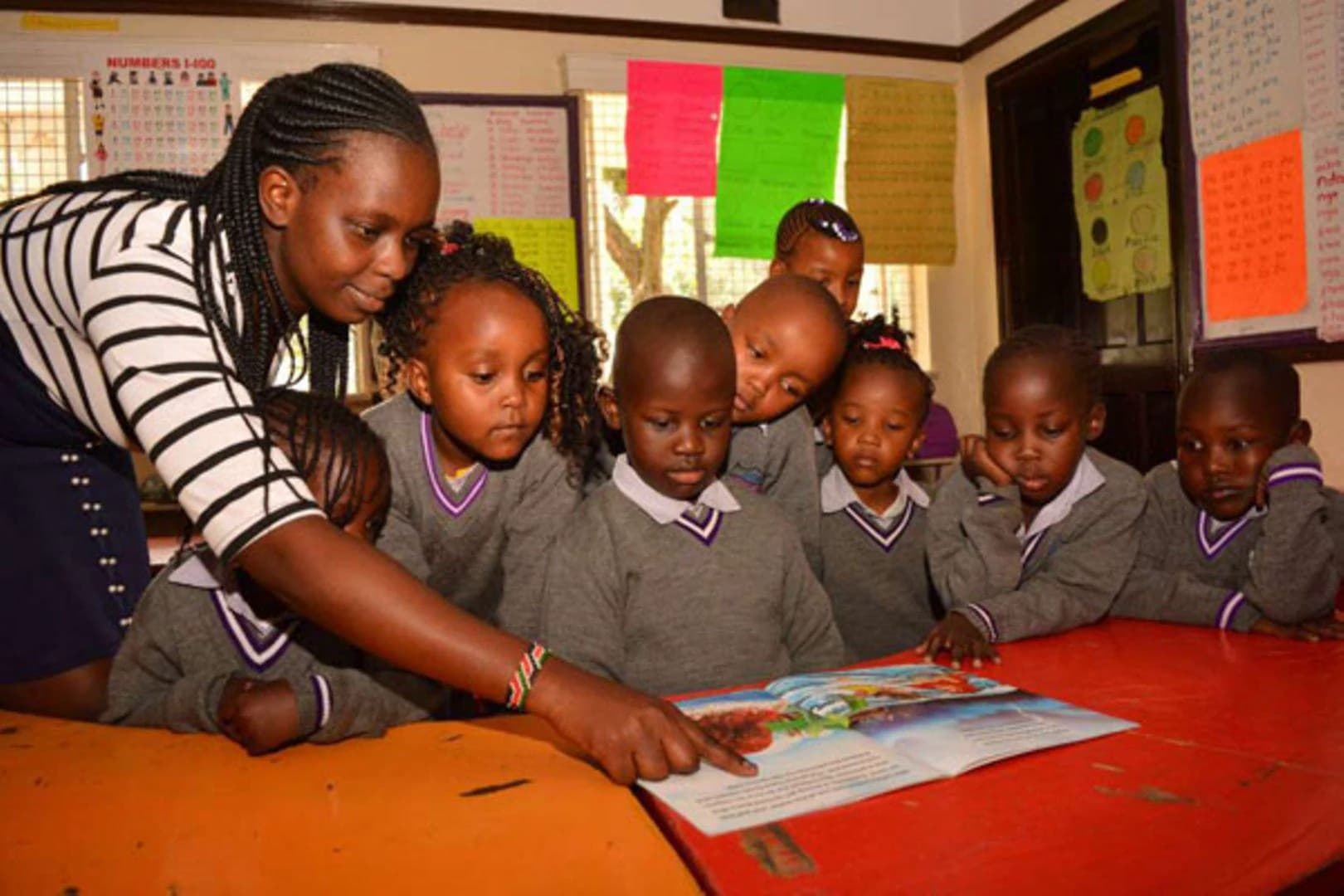
Children who enter school developmentally ready to learn can still fall significantly behind by Grade 3 if they attend poorly supported schools, a four-year South African study has found, raising fresh questions about the quality of foundational learning in Kenya.
The Roots & Shoots study, funded by the Mr Price Foundation and conducted with Stellenbosch University, followed 557 Grade R learners from 2022 across 75 public primary schools in five education districts in the Western Cape.
By 2025, 401 of the learners had been reassessed in Grade 3, providing researchers with an unusual opportunity to track what happened to the same children during their first years of formal schooling.
The results revealed a sharp divide according to school context.
By Grade 3, 92 per cent of learners in mid-fee schools had reached the Grade 3 reading benchmark, compared with 49 per cent in no-fee schools and only 36 per cent in low-fee schools.
The gap was even more striking among children who had initially started school developmentally on track.
Among learners assessed at both the beginning and end of the study, the proportion considered on track fell from 56 per cent to 40 per cent in no-fee schools and from 58 per cent to 32 per cent in low-fee schools.
In mid-fee schools, however, the proportion remained relatively stable, moving from 88 per cent to 90 per cent.
The researchers say the findings demonstrate that school readiness alone is not enough.
A child may enter school ready to learn but lose that early advantage if the quality of teaching and learning during the Foundation Phase is inadequate.
“School-readiness is necessary but not sufficient,” said Octavius Phukubye, director of the foundation behind the study.
The study also found a gender difference in literacy. Sixty per cent of girls reached the Grade 3 reading benchmark compared with 42 per cent of boys, although researchers found no comparable gender gap in mathematics.
Why Kenya should be watching
The South African findings carry an important lesson for Kenya as the country continues implementing Competency-Based Education (CBE) and strengthening early childhood and foundational learning.
The Kenyan education system, like many others across Africa, has invested heavily in getting children into classrooms.
But the more difficult question is whether children who enter school ready to learn remain on track once formal schooling begins.
That is where the South African experience becomes particularly relevant.
Kenya's ECDE programmes can prepare children socially, emotionally and cognitively for primary school. But those gains have to be consolidated during the first three years of primary education.
If a child enters Grade 1 able to recognise letters, communicate confidently and demonstrate basic numeracy but encounters weak instructional support, overcrowding, inadequate learning materials or inconsistent teaching, the initial advantage can gradually disappear.
The Grade 1–3 window cannot be ignored
The first three years of primary education are critical because they establish the foundations upon which later learning depends.
Reading, writing, numeracy, comprehension and communication are not simply subjects to be completed before moving to the next grade.
They are the tools through which children learn almost everything else.
A learner who struggles to read by Grade 3 is likely to encounter difficulties when required to read a science passage, understand a mathematics word problem or independently follow written instructions.
The learning deficit therefore spreads across the curriculum.
This makes early intervention more effective than waiting until upper primary, junior school or secondary education to discover that a learner has accumulated years of missed foundational skills.
Kenya's teacher question
The South African findings also revive an important Kenyan debate: who teaches children during the most critical years of their education, and what support do those teachers receive?
Early-grade teaching requires specialised skills.
Teachers must understand how children acquire reading and numeracy, recognise learners who are struggling and adjust instruction before weaknesses become permanent.
Professional development, instructional coaching and effective supervision therefore matter just as much as putting a qualified teacher in front of a class.
Kenya's CBE reforms will face a major test here.
A competency-based curriculum cannot deliver its intended outcomes if learners progress through the grades without acquiring the foundational competencies needed to engage with it.
Poverty must not become a learning sentence
The South African study does not suggest that children from poorer communities are less capable.
Instead, it shows how differences in school environments can influence whether early developmental gains are sustained.
That distinction is crucial for Kenya.
Children from disadvantaged households should not be expected to overcome socioeconomic barriers entirely through personal effort.
Schools serving vulnerable communities may need more teachers, stronger instructional support, learning materials, feeding programmes, remedial interventions and closer monitoring of learner progress.
Educational equity therefore cannot always mean giving every school exactly the same resources.
Sometimes the schools facing the greatest challenges need more support precisely because their learners face greater risks of falling behind.
Kenya should measure the learning journey, not just school entry
The South African experience suggests that education systems need to follow children beyond school enrolment and ask whether they are actually progressing.
For Kenya, this means strengthening continuous assessment in the early grades and using the results to trigger support.
The critical question should not simply be whether a child attended ECDE or entered Grade 1 at the expected age.
It should be: Can the child read? Can the child write? Can the child understand what they read? Can the child perform basic mathematical operations and apply them to everyday problems?
And if the answer is no, what is being done immediately?
Kenya's education transformation will ultimately be judged not by the number of policies launched, schools registered or children enrolled, but by what learners can actually do.
The South African study offers a caution against assuming that an apparently successful transition into school guarantees successful learning.
The first years require sustained attention.
A child can start school ready. The education system must then make sure the child stays ready, keeps learning and does not quietly fall behind.
That is the real challenge for Kenya's foundational-learning agenda.
READ ALSO:
The warning from South Africa is therefore simple: school readiness opens the door, but the quality of teaching determines how far the child travels through it.

Reader Discussion (0)
Sign in to comment