The Teachers Service Commission (TSC) has urged education stakeholders to provide accurate data on learners with special needs to help address the shortage of specialised teachers and guide government planning and resource allocation.
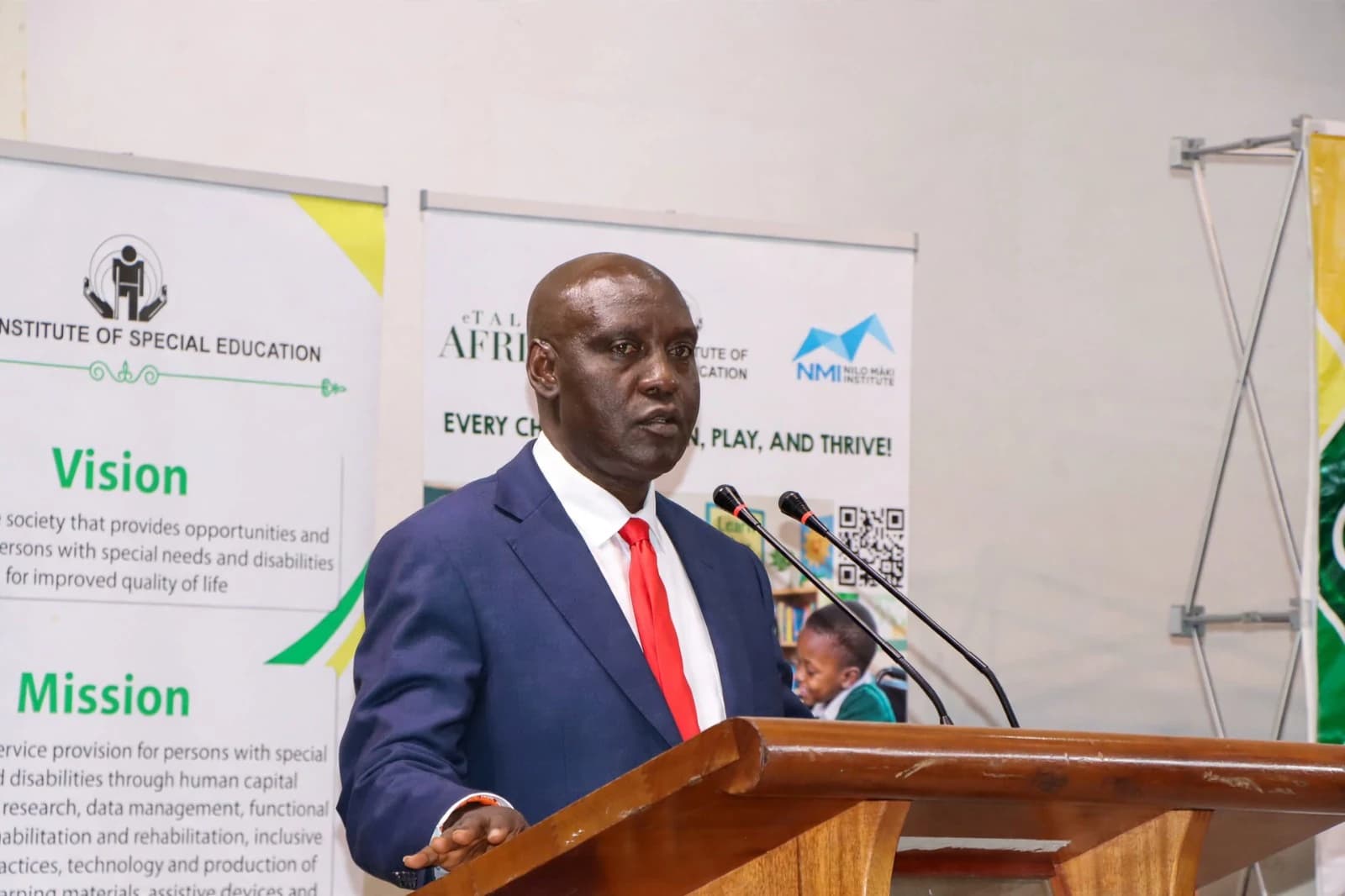
Speaking during the 2026 Kenya Institute of Special Education (KISE) Conference, Dr Reuben Nthamburi Mugwuku, TSC Director of Teacher Professional Management, said discrepancies in data submitted by schools were undermining efforts to determine the actual staffing needs of schools.
Mugwuku said some institutions report higher enrolment figures when seeking capitation funds but provide lower numbers when submitting staffing requirements, raising concerns about the reliability of the data. He noted that the commission had been forced to visit schools to establish the actual number of learners, only to find that some learners were missing from the schools.
"Data is important in staffing. We even go to schools to check, but when we arrive, we find learners are missing. Before we visit another school, they have already known we were there, and the learners go missing," he said.
He challenged stakeholders to take responsibility for providing reliable information to help the government determine the number of teachers and assistive devices required by learners with disabilities.(Education News Kenya — https://educationnews.co.ke/news/tsc-wants-accurate-numbers-to-fix-special-needs-education-gaps)
"We have to make sure children are assisted. Who will provide us with correct data?" he posed.
Mugwuku warned that the shortage of specialised teachers and assistive devices would persist if stakeholders failed to provide accurate information, emphasising that the responsibility extended beyond the Ministry of Education and the TSC.
"This is not an issue for the Ministry and TSC alone. It is the personal responsibility of every teacher and every stakeholder to come on board and provide data to assist the country in decision-making and the provision of equipment," he said.
The director revealed that the commission had sought to have more teachers trained in pre-vocational and vocational skills to support learners with special needs but had not received the required number of applicants. He called on universities and colleges to expand training opportunities in these areas to equip more teachers with the specialised skills needed to support learners with disabilities.
The TSC recruits and deploys teachers and Curriculum Support Officers to support special needs education, while government-supported retooling programmes equip teachers with the skills required to implement the Competency Based Curriculum.
However, the National Chairman of the Special Schools Heads Association of Kenya (SSHAK), Aggrey Waliaru, defended the accuracy of data submitted by schools, arguing that the discrepancies partly stemmed from how learners in early childhood development education (ECDE) are recorded.
Waliaru said some ECDE learners, whose institutions fall under county governments, are included in primary school figures even though they do not appear in the Kenya Education Management Information System (KEMIS). He also questioned the accuracy of teacher records in the Teacher Management Information System (TIMIS), which is used to manage teachers' personal information, postings and attendance.
According to Waliaru, the system does not allow school administrators to remove teachers who have been transferred to other institutions, leaving outdated records that distort staffing figures.
"TSC should visit TIMIS and give us the right to edit teachers who are supposed to be in the system. Teachers were transferred years ago but are still in TIMIS. You find that a school has 14 teachers, but 16 are listed in TIMIS because we do not have the right to edit," he said.
He called on the government to empower school heads to collect comprehensive data on special needs education across the country, arguing that many people lacked information about the different categories of disabilities and the support required. Waliaru said they would get accurate data if they received the mandate and funding to undertake the exercise.
TSC acting Chief Executive Officer Evaleen Mitei said the commission provides study leave with pay to enable teachers to pursue further training at KISE on special education, helping strengthen their capacity to deliver the curriculum and ensure continuity of specialised services. She said the commission was committed to ensuring that every teacher had the competencies, professional support and practical tools needed to serve learners effectively, adding that Curriculum Support Officers continue to monitor and support teachers working with learners with special needs.
Mitei also said the commission recognised the specialised role of trainers in special needs education and had developed a separate career progression structure for them, acknowledging that their responsibilities differed from those of other teachers.
"The educators are not only teaching subjects, but they are also restoring dignity, transforming lives and shaping futures. We recognise you and will continue investing in you," she said.
The call for accurate data comes amid a persistent shortage of qualified special needs education teachers across the country, leaving many learners with disabilities without adequate support. According to TSC figures cited in March 2026 by Mitei, only 9,340 of the country's more than 439,000 teachers are trained to work with learners with special needs, representing approximately 2.1 per cent of the national teaching workforce.
Mitei had called for urgent recruitment and specialised training, particularly in highly specialised areas such as deafblindness, multiple disabilities, science and vocational skills under the stage-based curriculum.
"We need more Special Needs Education teachers, especially for science and vocational skills under the stage-based curriculum," she said during a Kenya Disability Parliamentary Association (KEDIPA) forum held in Mombasa County in March 2026.
She attributed some of the challenges to budgetary constraints that have hampered teacher recruitment and promotions. Despite the challenges, Mitei said the commission remained committed to providing equal opportunities for qualified and registered teachers during recruitment, including through affirmative action for persons with disabilities.

Reader Discussion (0)
Sign in to comment