





Kenya's education system must confront one of the most consequential questions in contemporary education policy: Should learners who complete an academic year without mastering foundational literacy and numeracy competencies automatically progress to the next grade, or should repeating a class remain a legitimate option in exceptional circumstances?
This is not merely a debate about examinations, classroom promotions or the administrative movement of learners from one grade to another. It is a fundamental interrogation of what education is supposed to achieve. Are schools genuinely producing knowledgeable, competent and self-reliant individuals, or are they increasingly becoming transit centres where learners move from one academic level to another without necessarily acquiring the knowledge and skills expected of them?
The debate becomes particularly important when examined against the history of Kenya's 100 per cent transition policy.
The commitment to achieve 100 per cent transition from primary to secondary school gained political prominence in 2017 under President Uhuru Kenyatta's administration. In 2018, the Government moved towards implementing the policy, requiring children completing primary education to proceed to secondary school. By 2019, the administration was publicly declaring that the country had achieved 100 per cent transition.
The policy represented an important commitment to educational inclusion. It sought to eliminate unnecessary exclusion, reduce the number of children remaining outside secondary education and ensure that family circumstances did not permanently deny learners opportunities to continue schooling.
Its social and educational intentions were commendable. However, more than eight years after its introduction, Kenya must critically examine whether the emphasis on transition has been matched by sufficient attention to actual learning achievement.
There is an important distinction between ensuring that every child remains in school and assuming that every child has mastered the competencies necessary for progression.
A country can achieve impressive transition statistics while silently accumulating serious learning deficiencies. It can register excellent enrolment figures, celebrate increasing school attendance and report successful movement between education levels, yet still have learners who cannot read fluently, communicate effectively, perform elementary mathematical operations or independently interpret information.
That is the contradiction Kenya must confront.
The transition debate: Learning, accountability and individual differences
When the fear of repeating a class created a culture of academic seriousness
There was a time when the possibility of repeating a class made learners approach their studies with considerable seriousness. Academic progression was not always perceived as an automatic entitlement. Children understood that failure to demonstrate adequate academic understanding could delay their advancement.
This created a psychological incentive to work harder, revise consistently, complete assignments, consult teachers and seek assistance from academically stronger classmates.
The prospect of repeating a class was, for many learners, a powerful motivation. Some would sacrifice leisure time to revise because they understood that academic negligence carried consequences. Parents, too, were conscious of the possibility that their children could remain in the same grade if they failed to meet the expected standards.
Although the traditional repetition system had shortcomings, including the risk of humiliating struggling learners, it reinforced an important principle: academic progression should be accompanied by evidence of learning.
Today, some learners may develop the impression that moving to the next grade is guaranteed irrespective of their commitment, attendance, classroom participation or mastery of essential competencies.
Such an attitude, where it develops, can weaken academic responsibility. It can create a dangerous perception that schooling is primarily about completing prescribed years rather than acquiring knowledge.
However, the solution is not to restore fear as the foundation of education. It is to restore responsibility, seriousness, accountability and a genuine commitment to learning.
A learner's right to education must be protected, but that right should not be interpreted as an entitlement to academic progression without demonstrated readiness.
**The fundamental distinction between transition and genuine learning**
Education is cumulative. Every learning stage builds upon knowledge and competencies acquired at the preceding stage. This makes foundational literacy and numeracy indispensable to the entire educational process.
A child who cannot read with reasonable fluency may struggle to understand instructions, interpret examination questions, follow written explanations and independently access learning materials.
Similarly, a learner who has not mastered basic addition, subtraction, multiplication and division may experience difficulties when introduced to more advanced mathematical concepts.
These weaknesses do not automatically disappear when a learner moves to another grade. In many instances, they become more pronounced.
A learner who struggles with reading in the lower primary grades may eventually experience difficulties in science, social studies, mathematics and other learning areas because reading is central to understanding virtually every subject.
The receiving teacher inherits these learning gaps while simultaneously being expected to deliver content designed for a different level of understanding.
This creates an educational chain reaction in which one unresolved deficiency becomes the foundation of another.
The country must therefore distinguish between moving learners through an education system and moving them forward intellectually.
Transition without mastery risks becoming academic postponement rather than educational progress.
Different learners, different abilities and different learning speeds
One of the most important considerations in the debate about repetition and automatic progression is the recognition that learners are not academically identical.
Children may receive the same instruction, from the same teacher, in the same classroom and within the same period, yet demonstrate remarkably different levels of understanding.
Some learners grasp concepts almost immediately, while others require repeated explanations, practical demonstrations, illustrations, individual attention and additional time before they fully understand what is being taught.
This is a natural feature of human learning. It should not automatically be interpreted as laziness, indiscipline, intellectual inadequacy or a lack of potential.
Some children are particularly strong in language and communication but struggle with mathematical concepts. Others demonstrate exceptional numerical reasoning but find reading and writing challenging.
There are learners who understand theoretical explanations quickly, while others learn best through observation, experimentation, practical activities and hands-on experiences.
Some demonstrate remarkable memory and recall, while others reveal their abilities through creativity, artistic expression, construction, leadership, entrepreneurship, sporting activities and practical problem-solving.
The education system must appreciate that intellectual potential manifests itself in different ways.
A child who takes longer to understand fractions should not automatically be regarded as less intelligent than one who grasps the concept immediately. Similarly, a learner who struggles with written expression may possess exceptional practical abilities that conventional examinations do not adequately capture.
This is precisely why teachers must understand individual learner differences and embrace differentiated instruction.
However, recognising different abilities must not become an excuse for abandoning foundational standards. Every learner, regardless of their preferred learning approach or future career aspirations, requires functional literacy and numeracy.
The challenge is to accommodate individual differences while ensuring that essential competencies are eventually mastered.
Equal opportunity does not mean identical treatment
One of the misconceptions that undermines effective teaching is the assumption that treating every learner equally means teaching every child in exactly the same way.
Equal opportunity requires something more sophisticated: giving each learner the support and instructional approach necessary to achieve the expected learning outcomes.
A learner who understands concepts through visual illustrations may benefit from diagrams, charts and demonstrations. Another may respond better to verbal explanations, storytelling and guided discussions. Others require practical experiences, repeated exercises and individualised instruction.
When teaching fractions, for instance, a teacher can use physical objects, drawings, number lines and real-life examples instead of relying exclusively on abstract mathematical explanations.
During literacy lessons, learners may benefit from phonics, guided reading, storytelling, vocabulary development, individual reading exercises and peer-assisted learning.
Some children require additional exercises, while others need more challenging assignments to prevent boredom and stagnation.
This is not lowering standards. It is improving the route through which learners achieve them.
A competent teacher should not merely ask whether a learner has failed to understand a concept. The teacher should also interrogate whether the concept was presented in a manner that accommodated the learner's needs.
The danger of equating examination performance with intelligence
Education systems must move beyond the narrow belief that academic examination performance is the only reliable measure of intelligence, ability and future potential.
A learner who struggles with written examinations may possess exceptional mechanical, artistic, entrepreneurial, sporting, technological or leadership abilities.
Another may demonstrate outstanding creativity, interpersonal communication, innovation and practical problem-solving.
The Competency-Based Education framework provides an opportunity to recognise these different strengths and nurture talents beyond conventional academic performance.
This is particularly important because the future of work requires a broad combination of academic knowledge, practical skills, creativity, adaptability, communication and critical thinking.
Nevertheless, there must be a clear distinction between recognising diverse talents and overlooking foundational learning deficiencies.
A learner with outstanding sporting abilities still needs to understand written instructions, communicate effectively and perform basic calculations. A gifted artisan, entrepreneur or mechanic requires functional literacy and numeracy to interpret measurements, manage resources, understand instructions and make informed decisions.
Different talents should be nurtured, but foundational competencies must not be sacrificed.
Shared responsibility: Discipline, parents and teachers
The disappearance of corporal punishment must not mean the disappearance of discipline
In previous generations, corporal punishment was widely used as a disciplinary tool. Its threat often compelled learners to remain attentive, complete assignments and avoid misconduct.
However, physical punishment was harmful. It sometimes humiliated children, damaged teacher-learner relationships and created an environment where obedience was motivated by fear rather than genuine understanding.
Its abolition was an important child-protection measure and should not be reversed.
Nevertheless, the removal of corporal punishment should have been accompanied by stronger alternative disciplinary structures.
There is a growing need to distinguish between protecting children's rights and allowing indiscipline to flourish.
Learners must be protected from violence while remaining accountable for persistent absenteeism, negligence, incomplete assignments, classroom disruption and disrespectful conduct.
Schools should establish clear behavioural expectations, consistent consequences, counselling programmes, mentorship structures and positive reinforcement mechanisms.
Teachers must be supported to exercise professional authority without being intimidated or unnecessarily undermined.
A disciplined learning environment does not require physical punishment. It requires fairness, consistency, effective leadership and a school culture that values responsibility.
**Parental complacency: When protecting children from failure becomes a disadvantage**
Parents are central to the academic development of children, yet some have become excessively comfortable with the expectation that their children will automatically progress to the next grade.
Some rarely inspect exercise books, monitor homework, attend academic meetings or establish whether their children can read, write and perform basic calculations.
Others become confrontational when teachers raise concerns about their children's academic weaknesses.
There are also parents who appear more concerned about the possibility of their children repeating a class than about the long-term consequences of advancing without the knowledge required to succeed.
This attitude undermines the partnership between schools and families.
Responsible parenting goes beyond paying school fees, purchasing uniforms and ensuring that children attend school. It involves monitoring academic progress, encouraging reading at home, supervising assignments and maintaining constructive communication with teachers.
Parents must understand that academic difficulties should not be concealed to protect a child's ego or family reputation.
Sometimes, the most responsible parental decision is to acknowledge that a child is struggling and work with teachers to establish an appropriate intervention.
Protecting children from every uncomfortable academic experience does not necessarily prepare them for life. Children must learn perseverance, responsibility, resilience and the importance of working towards measurable goals.
Teachers must not be reduced to implementers of transition statistics
Teachers occupy the frontline of educational delivery, yet they are frequently expected to reconcile ambitious learning expectations with challenging classroom realities.
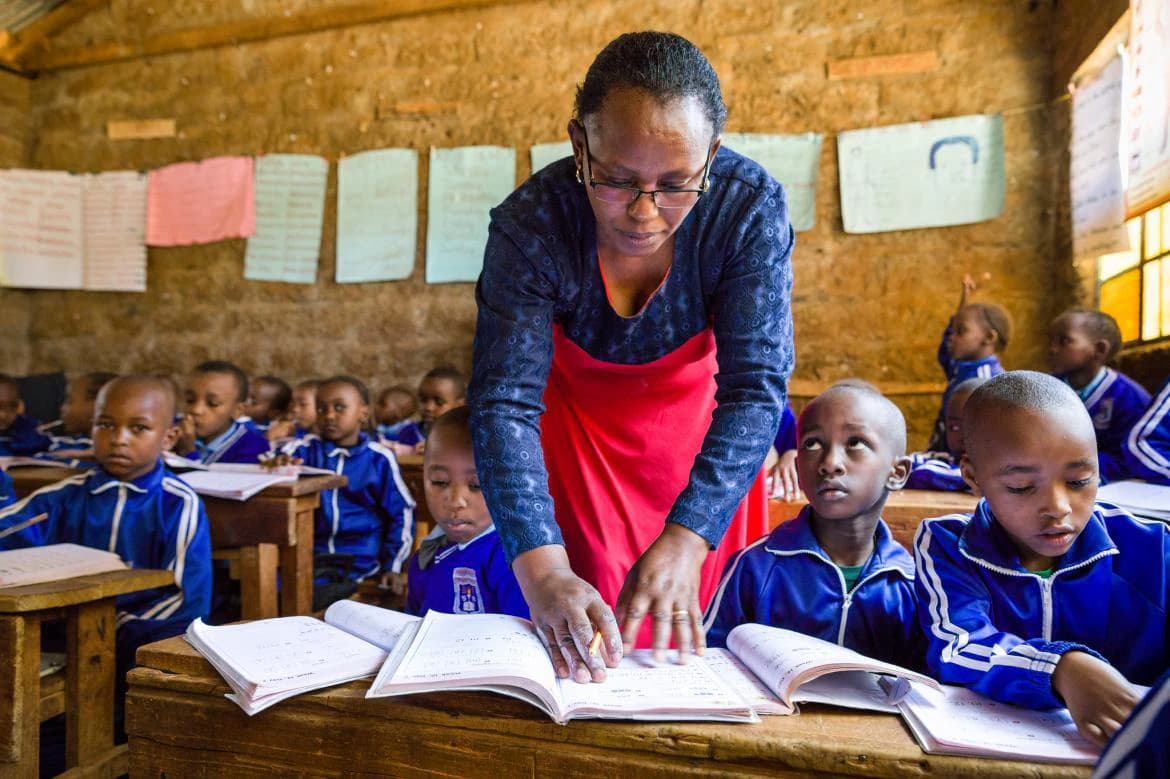
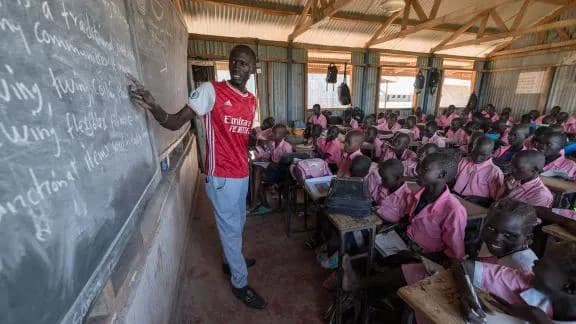
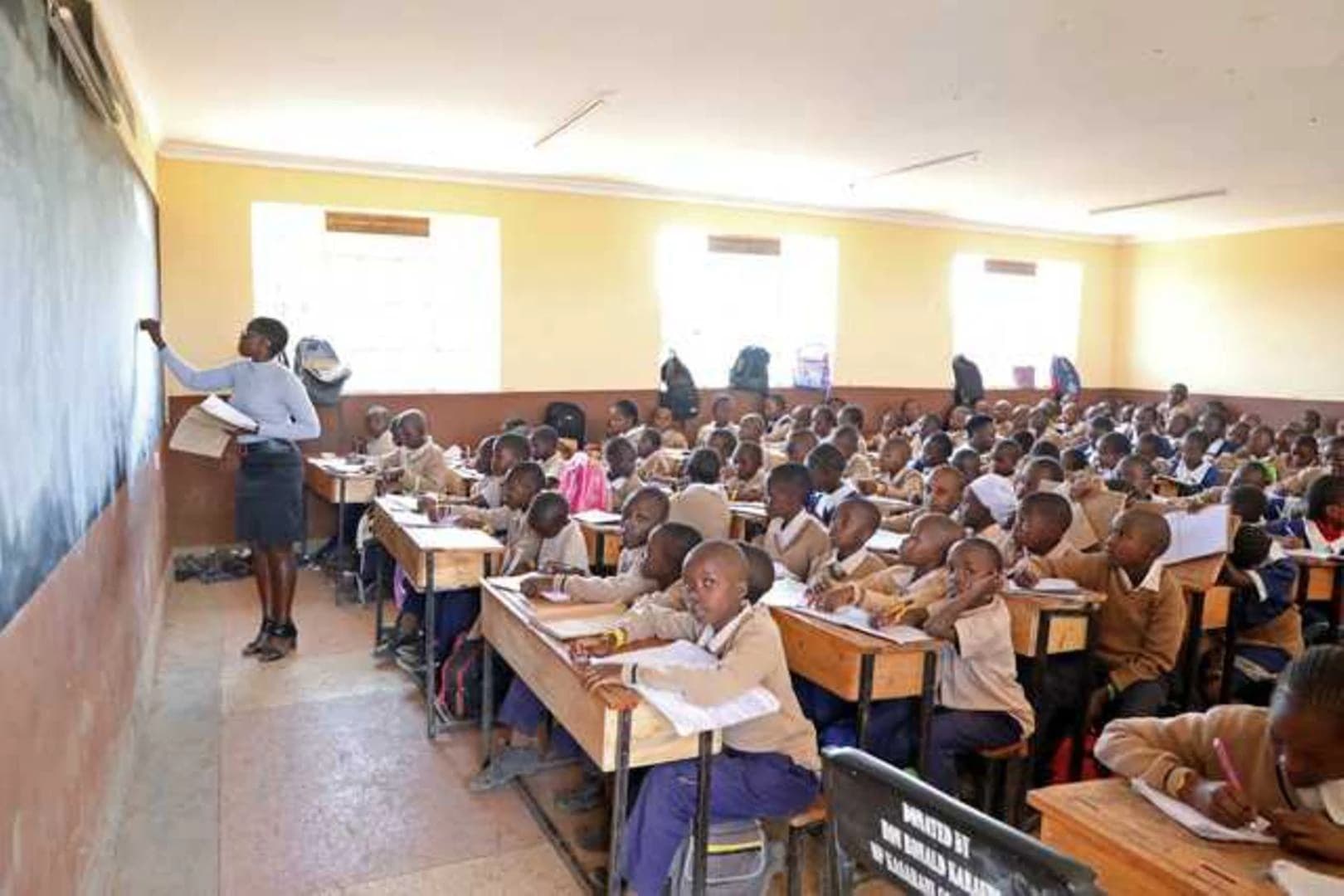
Overcrowded classrooms, teacher shortages, inadequate instructional materials, diverse learning needs and limited instructional time can undermine effective teaching.
A teacher may identify a learner who cannot read a simple passage or solve basic mathematical problems, yet the learner is expected to proceed to the next grade.
The receiving teacher then inherits the deficiencies and must simultaneously address previous learning gaps and introduce new content.
This arrangement can frustrate even the most committed educators.
Teachers must be empowered to conduct honest assessments without intimidation or pressure to manipulate academic records to demonstrate impressive progression statistics.
Professional assessment should establish what learners know, what they have not mastered and what interventions are necessary.
However, teachers must equally accept responsibility for identifying struggling learners early, varying instructional approaches and providing remedial support.
Teaching should never become a mechanical exercise of completing the syllabus while ignoring whether learners have understood the content.
The professional integrity of a teacher must be reflected in the willingness to identify learning deficiencies honestly and take deliberate action to address them.
Towards a balanced approach to academic progression
Repetition should be a last-resort educational intervention, not a punishment
Although there is a compelling argument for reconsidering automatic progression, returning to indiscriminate repetition would be equally misguided.
Repetition does not automatically translate into improved academic performance.
A learner who repeats a class under the same teaching conditions, with the same learning challenges and without targeted support may simply reproduce the same results.
Some children struggle because of learning difficulties, language barriers, prolonged absenteeism, poverty, inadequate instruction, family instability or circumstances beyond their control.
Such learners require appropriate interventions rather than punishment.
Kenya should consider a carefully regulated retention framework in which repeating a class remains an option in exceptional circumstances.
Before a learner is retained, schools should establish that appropriate teaching interventions have been provided, parents have been engaged, assessments have been conducted and the learner's individual circumstances have been considered.
Where retention is necessary, it must be accompanied by a substantially different and more effective learning plan.
It should never be based solely on one examination, a teacher's frustration or an arbitrary performance threshold.
The central objective must be to give the learner another meaningful opportunity to acquire missing competencies.
A child should not be made to repeat a grade merely to satisfy institutional expectations. Equally, a child should not be promoted simply to satisfy transition statistics.
Early identification is better than end-of-year surprises
One of the weaknesses in addressing learning deficiencies is waiting until the end of an academic year to discover that a learner has not mastered essential competencies.
Schools should institutionalise continuous assessment that identifies learning difficulties at the earliest possible stage.
A child who cannot recognise letters, construct simple sentences, read age-appropriate passages or perform basic calculations should be identified immediately.
Teachers should maintain individual learner progress records showing competencies acquired, areas requiring improvement and interventions undertaken.
School heads should regularly review these records and mobilise teachers to work collectively rather than operate as isolated individuals.
Early identification also requires recognising that some learning difficulties may need specialised assessment and support. Not every struggling learner requires repetition; some require a different instructional approach, additional time or specialised educational intervention.
The earlier such challenges are identified, the greater the opportunity to address them before they become entrenched.
School heads must become champions of foundational learning
The responsibility for improving literacy and numeracy should not be left to lower-primary teachers alone.
Heads of institutions must provide instructional leadership by ensuring that foundational learning receives sufficient attention in school improvement plans.
They should organise collaborative lesson planning, professional discussions, peer learning, classroom observation and regular analysis of learner performance.
Teachers handling different grades should collaborate to ensure continuity in learning. A teacher receiving a new class should understand the foundational competencies learners are expected to bring from the previous grade.
School heads should also mobilise teachers to work as a team rather than as individuals pursuing isolated classroom targets.
Where educators share successful instructional strategies, teaching resources and experiences, struggling learners benefit from collective professional expertise.
Effective school leadership must also prioritise teacher motivation, learner welfare, parental engagement and the availability of appropriate learning resources.




Reader Discussion (0)
Sign in to comment