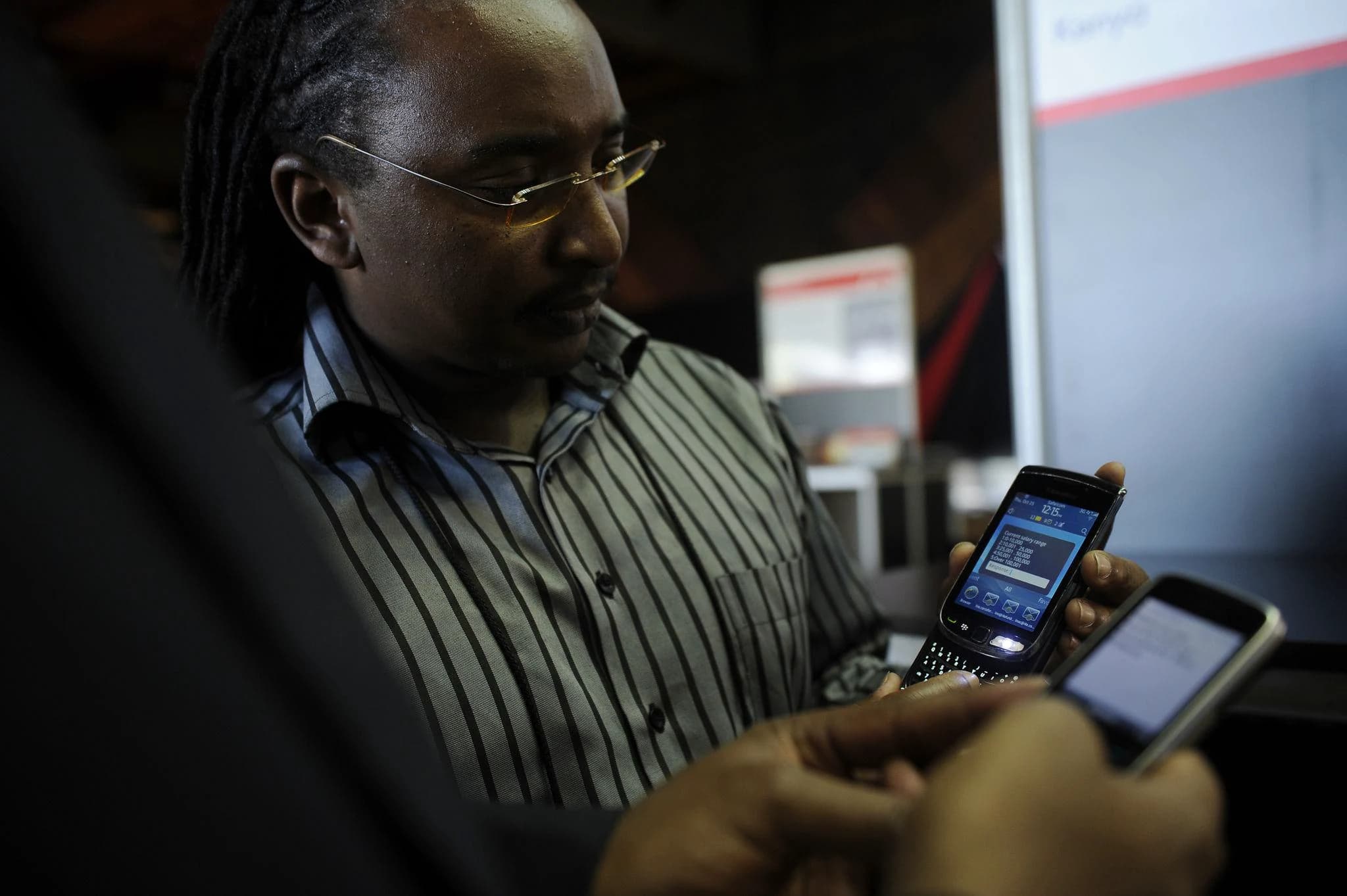







Every 10 minutes, a mobile phone mugging is reported to occur in Nairobi, exposing the frightening scale of a crime that has become a serious security concern for residents and smartphone users.
The frequency of phone theft in the capital is particularly alarming. Research published by ENACT and the Institute for Security Studies (ISS) in May 2024 documented an estimated phone mugging every 10 minutes in Nairobi.
A separate report published by Citizen Digital on November 10, 2026, estimated that approximately 10 mobile phones are stolen every 20 minutes in the capital. If that reported rate remains constant, it translates into approximately 30 stolen phones every hour, 720 in a day and 21,600 in a 30-day month.
Nationally, the November 2026 report indicated that approximately three out of every ten Kenyans have lost their mobile phones through theft or snatching.
Applying this proportion to an estimated population of 60 million people translates into approximately 18 million Kenyans who may have experienced mobile phone theft. This is a mathematical extrapolation of the reported proportion rather than an independently established national headcount.
These figures paint a disturbing picture of the vulnerability of mobile phone users and explain why innovative security interventions are increasingly necessary.
It is against this worrying background that Kenyan innovator Eliud Gilisho has developed an ambitious anti-theft technology designed to make stolen phones scream, expose their location and potentially help victims identify the people responsible for stealing their devices.
Christened Afande, the innovation is designed to offer smartphone users an additional layer of protection by combining a loud alarm, GPS tracking and video-recording capabilities in one security system.
The innovation is particularly significant because mobile phones have evolved beyond ordinary communication gadgets. They are now personal banks, business offices, educational resources, digital identification tools and repositories of sensitive personal information.
A stolen smartphone can expose its owner to financial fraud, identity theft, privacy violations, unauthorised access to personal accounts and the loss of important professional and personal documents.
For millions of Kenyans who depend on mobile money, digital banking and smartphone-based businesses, losing a phone can disrupt their livelihoods and expose them to substantial financial risks.
From robbery victim to technology innovator
Gilisho's journey into developing Afande began with a traumatic personal experience in 2025.
While walking home from his workplace in Nairobi's Kilimani area, he was accosted by criminals travelling on a motorcycle. The attackers stabbed him before escaping with his mobile phone and laptop.
The devices contained important personal information, contacts and documents. The incident exposed the vulnerability of digital information when criminals gain possession of personal devices.
Rather than allowing the experience to end as another robbery incident, Gilisho resolved to develop a technological solution that would make phone theft considerably more difficult.
Being an IT expert, he began exploring available security technologies but felt that existing solutions did not adequately address the realities of phone snatching and theft in the local environment.
His idea was to develop a system that would produce an unmistakable alarm whenever a phone was stolen, attracting public attention and making it difficult for the criminal to escape unnoticed.
The concept eventually evolved into Afande, a remote-controlled security system that has transitioned from a handheld remote into a smartwatch.
How Afande is designed to work
Once activated, the stolen phone begins producing a loud warning message declaring that the device has been stolen. The alarm includes the Swahili phrase "Huyu ni mwizi", intended to alert people nearby and expose the person carrying the device.
Gilisho incorporated voices recorded from a group of women he gathered from Kibra and took to a recording studio to produce the alarm messages.
According to the innovator, the system is designed to prevent a thief from switching off the alarm or reducing its volume once activated.
The technology also incorporates GPS tracking, enabling the owner to monitor the location of the stolen phone, establish the distance between themselves and the device and follow its movements.
Another distinctive feature is its ability to capture video footage of the surroundings, potentially providing information about the circumstances surrounding the theft.
Gilisho says the alarm continues operating even when a thief attempts to connect earphones or earpieces. He further claims that the security system can reactivate when a phone that has run out of battery is charged and switched on again.
One of the major questions surrounding remote-controlled security systems is what happens when criminals steal both the phone and the device used to activate its security features.
Gilisho says Afande addresses this challenge through a unique security code comparable to a mobile money PIN.
If a thief takes both the phone and the smartwatch or remote, the owner can use another phone to access the system and activate the stolen device through the security code. This is intended to ensure that losing the primary activation device does not automatically compromise the entire security arrangement.
Emergency alerts and personal safety
Beyond protecting mobile phones, Afande has an additional function aimed at addressing gender-based violence and other situations involving personal danger.
Through a specialised emergency feature, users can configure a distress keyword, such as "Usiniue", to trigger an emergency response.
Once the system detects the configured distress trigger, it is designed to transmit the victim's location and video footage of the incident to designated relatives or trusted contacts.
The phone can also switch off its visible display while secretly recording, according to Gilisho.
He envisions integrating the technology with police emergency response systems in future developments, potentially enabling victims to communicate distress information to security agencies more effectively.
This functionality could prove particularly relevant in situations involving domestic violence, physical attacks, stalking and other emergencies where victims may be unable to make conventional telephone calls.
The name Afande reflects the developer's ambition to make users feel as though they have a personal security officer accompanying them wherever they go.
The innovation also raises important questions about how Kenya can harness local technological creativity to address everyday security challenges.
Indeed, the existence of organised phone-theft networks makes the problem even more complex. Research by ENACT and ISS has documented criminal networks involved in stealing smartphones and moving them across East African borders, including Uganda, Tanzania, Rwanda and Burundi.
Stolen smartphones can be resold, dismantled for parts or transported across borders, making recovery difficult for victims and law enforcement agencies.
This demonstrates that phone theft is not simply an isolated street crime but can form part of a wider illicit commercial enterprise.
Afande's proposed ability to trigger an alarm, track a device and capture footage could introduce another layer of deterrence and potentially improve the chances of recovering stolen gadgets.
However, the innovation's long-term success will depend on affordability, compatibility with different phone models, reliable GPS connectivity, battery efficiency and protection against sophisticated attempts to disable the system.
Its video-recording and emergency-tracking capabilities will also require strong privacy safeguards, responsible handling of recorded footage and compliance with Kenya's data protection laws.
Independent testing, regulatory compliance and practical demonstrations of its effectiveness will be important in establishing public confidence.
The developer will also need to address questions surrounding the reliability of distress-keyword detection, false alarms, network connectivity and the security of information transmitted to relatives or other designated contacts.
If successfully commercialised and made accessible, Afande could demonstrate how Kenyan innovators can develop homegrown solutions to problems affecting millions of people.
Gilisho hopes the technology will eventually benefit users beyond Kenya, including international travellers and tourists who may be concerned about phone theft and personal security.
His ambition is not merely to introduce another smartphone application but to create a dependable personal security companion that makes criminals think twice before targeting innocent people.
Ultimately, Afande represents an interesting example of how personal adversity can inspire technological creativity. An attack that left Gilisho without his phone, laptop and important information became the motivation behind an innovation that could potentially offer protection to millions of mobile phone users.
With a reported phone mugging occurring every 10 minutes in Nairobi, the need for practical interventions cannot be overstated. Kenya must complement conventional policing with technological innovation, public awareness, effective investigations and stronger action against organised networks dealing in stolen devices.
The bigger question is whether locally developed innovations such as Afande can help turn the tide against a crime that continues to threaten personal security and the country's growing digital economy.

Reader Discussion (0)
Sign in to comment