



Singapore has placed early childhood education at the centre of an emerging global debate on artificial intelligence, with education leaders from 18 countries gathering to examine how schools can prepare children for a rapidly changing technological world without sacrificing the human foundations of learning.
The discussions carry important lessons for Kenya as it continues implementing Competency-Based Education (CBE), particularly at the Early Childhood Development and Education (ECDE) level, where the foundations of creativity, communication, critical thinking, problem-solving and social development are established.
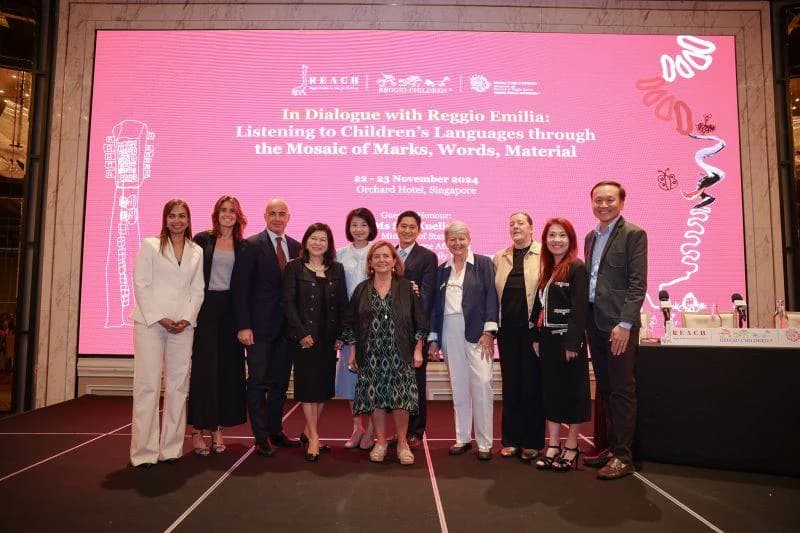
The two-day REACH Reggio Emilia Conference 2026, held from October 30 to 31 at METT Singapore, brought together more than 400 educators, school administrators, policymakers, regulators and researchers from Singapore, China, Hong Kong, Malaysia, Indonesia, India, Australia, other ASEAN countries, South America, the Middle East and Italy.
Held under the theme *Education in Complex Times: Children, Democratic Cultures and the Role of Childhood in Shaping the Future*, the conference examined how education systems can respond to artificial intelligence while protecting children's rights, individuality, creativity and ability to participate meaningfully in society.
Senior Minister of State Goh Pei Ming, from Singapore's Ministry of Home Affairs and Ministry of Social and Family Development, attended as Guest of Honour.
The conference was organised by REACH (Reggio Emilia in Asia for Children), part of the EtonHouse Group, in partnership with Reggio Children of Italy and with support from the Embassy of Italy in Singapore.
What Kenya can learn from the Reggio Emilia approach
For Kenya, the discussions come at an important stage in the implementation of CBE, which seeks to move education away from excessive dependence on memorisation towards the development and practical application of competencies.
The Kenyan education reform emphasises communication, collaboration, critical thinking, creativity, citizenship, digital literacy, problem-solving and self-efficacy.
These objectives share important similarities with the educational philosophy explored in Singapore, particularly the belief that children should actively participate in constructing knowledge rather than remain passive recipients of information.
However, the Reggio Emilia approach and Kenya's CBE are not identical systems. Reggio Emilia is an educational philosophy and pedagogical approach, while CBE is a broader national education framework.
Their common principles nevertheless offer opportunities for professional exchange and adaptation. Kenya can draw lessons from the approach without abandoning its curriculum, cultural identity or national education priorities.
Originating in the Italian city of Reggio Emilia, the philosophy recognises children as capable, curious individuals with enormous potential to explore, question, experiment and construct knowledge.
One of its most recognised concepts is the "100 languages of children", which describes the many ways young learners express their thoughts, feelings and understanding.
These include drawing, painting, music, movement, storytelling, construction, play, conversation and interaction with the natural environment.
The approach challenges the tendency to measure children's intelligence solely through written exercises, examinations or their ability to reproduce information supplied by teachers.
Instead, it encourages educators to observe children's interests, listen to their questions and create learning experiences that allow them to investigate ideas independently and collectively.
The learning environment is also treated as an important educational resource. Classrooms, outdoor spaces, natural materials and creative activity areas are deliberately organised to stimulate curiosity and interaction.
Reggio Children identifies relationships, family participation, educational documentation, collaboration among teachers and the learning environment as important foundations of its philosophy.
One of the most important lessons for Kenya concerns the professional role of ECDE teachers.
Under a child-centred approach, the teacher is not simply a person who delivers information or dictates what children must learn. The teacher becomes a facilitator, observer, guide and partner in the learning process.
For example, instead of teaching children about plants exclusively through pictures or memorised explanations, an ECDE teacher can organise an outdoor activity where learners observe seeds, plant them, water them and monitor their growth.
Through this exercise, children begin developing environmental awareness, communication, observation, basic numeracy, responsibility and problem-solving skills.
Similarly, building structures using locally available materials can introduce early mathematical concepts, creativity, teamwork and spatial awareness.
Storytelling, music, drawing, modelling and dramatic play can strengthen language development, imagination and confidence.
Such activities demonstrate that competency development does not necessarily require expensive digital equipment. Well-planned learning experiences, appropriate materials and a professionally trained teacher can make a significant difference.
Teacher preparation and responsible use of AI
The Singapore discussions also raise an important question about the preparation and continuous professional development of teachers.
Kenya cannot successfully implement CBE if ECDE teachers are insufficiently prepared to understand child development, identify individual learning needs, assess competencies and organise meaningful learning experiences.
Teacher training should therefore place greater emphasis on practical pedagogy, inclusive education, child psychology, observation, assessment, creativity and the effective integration of technology.
The country's pre-primary education policy guidelines already provide for play to be integrated into learning activities and recognise language, mathematical, environmental, psychomotor, creative, religious and moral learning areas.
This provides an existing foundation upon which lessons from international approaches can be adapted.
There is also a need to strengthen mentorship, classroom support, professional collaboration and continuous training for teachers working in public and private ECDE centres.
County governments, which have constitutional responsibility for pre-primary education, have an important role in providing appropriate infrastructure, teaching materials, adequate staffing and supportive working conditions.
The national government and relevant education agencies should complement these efforts through policy coordination, curriculum guidance, teacher development and quality assurance.
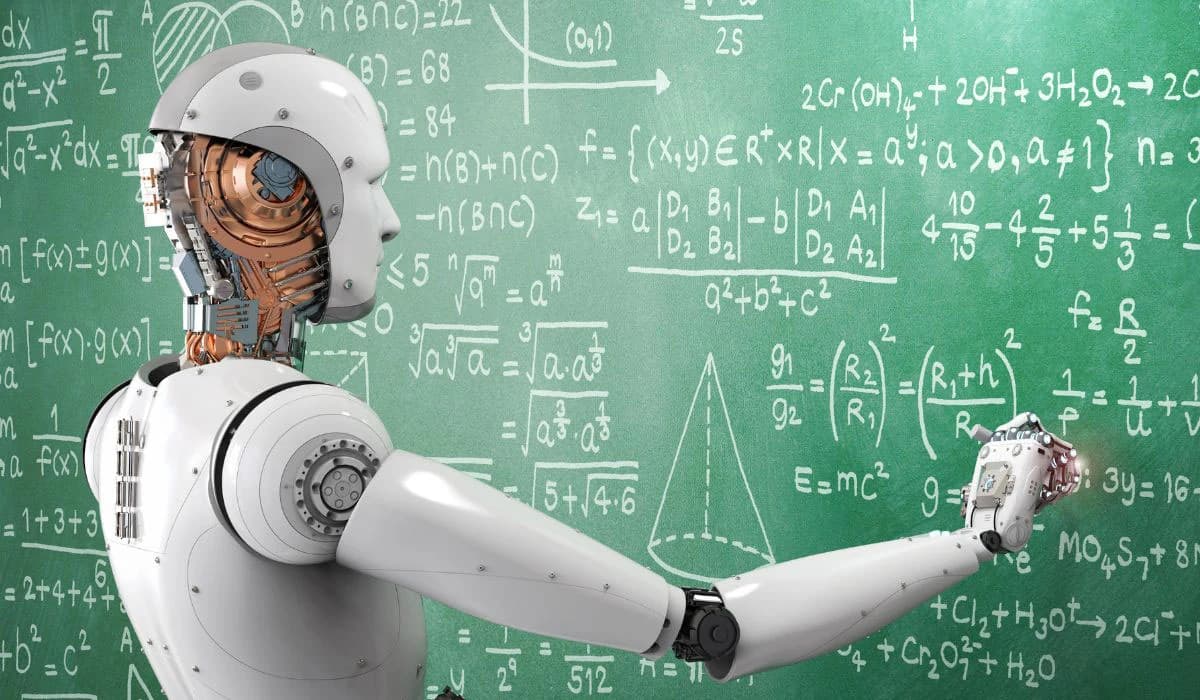
Another important dimension of the Singapore conference is the growing influence of artificial intelligence on education.
AI has the potential to support teachers in preparing learning resources, developing age-appropriate activities, organising educational information and identifying different ways of explaining concepts.
However, its introduction into early childhood education requires particular caution.
Young children need human interaction, physical exploration, conversation, play, emotional support and opportunities to develop relationships with others.
Excessive dependence on screens or automated learning platforms could undermine these important developmental experiences.
AI should therefore be introduced responsibly, with appropriate safeguards for children's privacy, safety and developmental needs.
Teachers must remain central to educational decision-making, while technology serves as a supporting resource rather than a substitute for professional judgement and human relationships.
For Kenya, this means investing in teachers' digital literacy while ensuring that technological advancement does not widen inequalities between well-resourced urban schools and underfunded rural and marginalised communities.
The Reggio Emilia philosophy also places considerable importance on family participation.
Parents are viewed as partners in children's development rather than individuals whose responsibility ends when they take their children to school.
This principle has particular relevance in Kenya, where children's educational experiences are influenced by family circumstances, language, culture, nutrition and the communities in which they grow up.
Stronger cooperation between ECDE teachers and parents can help reinforce learning at home through storytelling, conversations, household activities, games and exploration of the immediate environment.
It can also improve the identification of developmental challenges and support children who require additional attention.
For CBE to achieve its objectives, schools, families, communities and education authorities must work together.
New research partnership and the future of education
A major development announced during the conference was a new research and professional-learning collaboration involving EtonHouse, E-Bridge and Reggio Children.
The partnership will strengthen cooperation through regular professional dialogue, joint research projects and professional development programmes focusing on infant care and early childhood education.
It will draw on the experiences of infant-toddler centres and preschools in Reggio Emilia, Italy, while exploring how educational principles can be interpreted across different cultural and institutional environments.
Bipasha Minocha, Chief Executive Officer of REACH, said the collaboration would expand existing professional-learning programmes to include shared research projects involving educators from EtonHouse and E-Bridge.
She emphasised that democratic culture in schools is reflected in everyday decisions, particularly whether children are listened to and whether their contributions can influence learning experiences.
Italy's Ambassador to Singapore, Dante Brandi, said the Reggio Emilia philosophy offered valuable guidance at a time when artificial intelligence was transforming how younger generations engage with knowledge.
The conference also followed renewed international attention on the approach after the Princess of Wales reportedly visited Reggio Emilia in May 2026 as part of her work on early childhood development.
The broader message from Singapore is that the success of education reforms should not be judged exclusively by curriculum changes, digital equipment, examination results or the number of learners transitioning between education levels.
It should also be measured by the ability of schools to nurture confident, curious, creative and responsible individuals.
For Kenya, the challenge is to translate the ambitions of CBE into everyday classroom experiences, beginning with the youngest learners.
This requires properly trained ECDE teachers, improved learning environments, adequate resources, meaningful parental participation and policies that recognise the importance of play, exploration and practical learning.
As artificial intelligence continues to reshape society, Kenya has an opportunity to strengthen its education reforms by borrowing relevant international lessons while developing solutions suited to its own social, economic and cultural circumstances.
Ultimately, the future of education will not be determined by how much technology children can access, but by how effectively schools prepare them to think independently, solve problems, relate with others and use technology responsibly.
The most important investment in the age of artificial intelligence may therefore remain the development of the human mind.

Reader Discussion (0)
Sign in to comment