




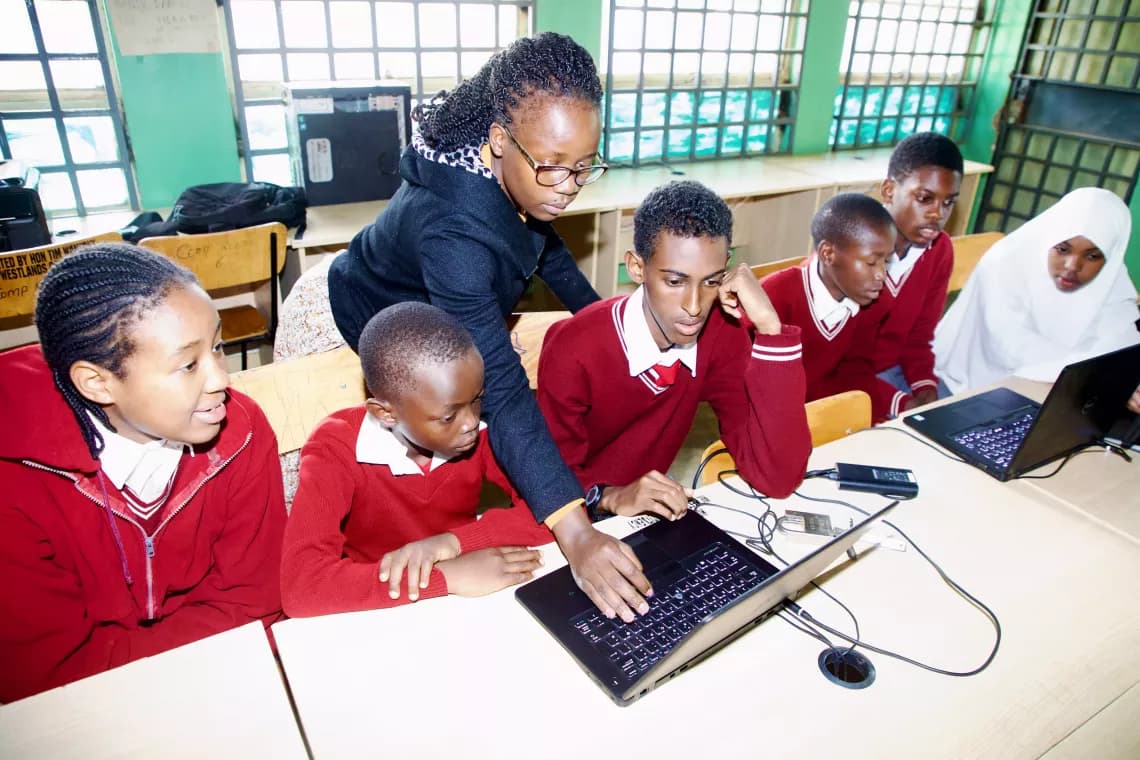
The philosophy of “Usawa ni Sawa” reminds us of a fundamental principle of a just society: every individual deserves dignity, fairness and an equal opportunity to succeed, regardless of their background, economic status, abilities or circumstances. While this philosophy speaks broadly to social justice and equality, its significance is equally profound in education. It challenges us to rethink how we educate our children and whether our education system provides every learner with a genuine opportunity to discover, develop and maximise their potential.
This is precisely where Competency-Based Education (CBE) becomes important. At its heart, CBE is built on the understanding that every learner matters, every learner has potential, and every learner deserves an opportunity to succeed. It moves education away from the traditional assumption that success should be measured primarily through examination grades and positions in class. Instead, it recognises that learners possess different abilities, talents, interests, learning needs and aspirations.
Equality does not necessarily mean treating every learner the same; it means giving every learner a fair opportunity to succeed.
In a traditional examination-oriented system, learners were often judged according to their academic performance, with those who scored highly celebrated while those who struggled academically were sometimes labelled as failures. Unfortunately, such an approach could overlook exceptional talents in sports, music, creative arts, technology, entrepreneurship, practical skills and other areas of human ability. A learner who struggled with mathematics could be exceptionally gifted in coding, while another who found languages challenging could demonstrate outstanding creativity, leadership or mechanical skills.
Does struggling in one learning area mean that a child has no future? Certainly not.
CBE challenges this thinking by recognising that intelligence and potential are diverse. It creates room for learners to demonstrate what they know, what they can do and how they can apply knowledge to solve real-life problems. It shifts the question from “How many marks has this learner scored?” to “What can this learner do, and how can we help them become better?”
Every learner matters: The foundation of CBE
The principle that every learner matters must go beyond policy documents and become a practical commitment in every classroom. Teachers must recognise individual differences and deliberately create learning environments where all learners can participate, contribute and demonstrate their abilities.
Through differentiated instruction, project-based learning, inquiry-based learning, collaborative learning, experiential learning and problem-solving activities, teachers can provide multiple opportunities for learners to develop competencies. A classroom should not be a place where only the academically strongest learners shine. It should be an environment where the quiet learner, the gifted learner, the learner with special educational needs, the creative thinker and the practical problem-solver all find opportunities to thrive.
This calls for a shift in the teacher’s role. The teacher is no longer merely a transmitter of information but a facilitator, mentor, assessor and nurturer of talent. Teachers must identify individual learning needs, provide appropriate support, offer constructive feedback and create opportunities for learners to demonstrate progress at their own pace.
Equity must translate into opportunities and resources
Although CBE promises an inclusive and learner-centred education system, its success depends on how effectively schools implement its principles. It is not enough to declare that every learner matters when some schools lack laboratories, workshops, digital devices, learning materials, trained teachers and appropriate infrastructure.
A learner cannot fully develop digital literacy without meaningful access to technology. A learner with exceptional sporting ability needs facilities and coaching to nurture that talent. A learner interested in science requires opportunities to experiment, investigate and innovate. Similarly, learners with disabilities require appropriate assistive technologies, accessible infrastructure and individualised learning support.
Therefore, equity in CBE must mean more than admitting every child into school. It must involve providing the necessary opportunities, resources and support that enable every learner to realise their potential.
The government, school proprietors, education leaders, parents and other stakeholders must work together to address these inequalities. The success of CBE should not depend on the financial strength of a learner’s family or the geographical location of their school.
Identification and nurturing of potential must begin early
One of the most significant opportunities presented by CBE is the deliberate identification and nurturing of learners’ potential. Schools should not wait until Grade 9 or senior school to begin asking learners what they would like to become in life.
Talent identification should be a continuous process beginning in the early years of education. Through classroom observations, co-curricular activities, clubs, competitions, projects, mentorship programmes, career days and practical learning experiences, teachers can identify learners’ interests and emerging abilities.
Career development should also be viewed as a partnership between schools and parents. Parents understand their children’s interests and abilities beyond the classroom, while teachers observe their learning behaviours and competencies in structured learning environments. When these observations are shared, schools can develop more meaningful strategies to nurture individual potential.
The Discover, Develop and Deploy approach provides a useful way of understanding this responsibility. Schools must help learners discover their interests and abilities, provide opportunities and resources to develop them, and eventually prepare them to deploy their competencies to transform society.
This is how education becomes meaningful beyond examinations and certificates.
Assessment should measure growth, not merely rank learners
The Competency-Based Assessment (CBA) approach also reinforces the philosophy that every learner matters. Assessment should provide evidence of what a learner can demonstrate, identify areas requiring support and inform appropriate interventions.
Continuous assessment, practical tasks, portfolios, projects, observations and performance-based activities provide a broader understanding of learner development. Such approaches allow teachers and parents to appreciate progress that may not necessarily be reflected in a written examination.
The objective should not simply be to identify the best-performing learners but to ensure that every learner makes progress towards achieving their potential.
This does not mean compromising standards. Rather, it means maintaining high expectations while recognising that learners may require different pathways, levels of support and opportunities to demonstrate achievement.
The responsibility of school leadership
School leaders have a critical responsibility in translating the philosophy of equality and inclusion into everyday school practices. They must create a culture where teachers understand learner diversity, instructional approaches are inclusive, resources are allocated fairly and every learner’s progress is valued.
Leadership must also ensure that school programmes go beyond academic achievement to embrace sports, performing arts, science and technology, innovation, leadership, entrepreneurship and community service.
A successful school should not be judged exclusively by the number of learners attaining the highest examination grades. It should also be judged by how effectively it identifies, nurtures and develops the unique potential of every learner.
The ultimate measure of educational success is not how many learners outperform others, but how many learners are empowered to become the best versions of themselves.
A fairer Kenya begins in the classroom
The philosophy of “Usawa ni Sawa” offers an important reminder that no child should be considered less important because of their background, academic performance, disability, financial circumstances or perceived limitations.
CBE provides an opportunity to build an education system that recognises the dignity and potential of every learner. However, this vision will only become reality when policies translate into meaningful classroom experiences, adequate resources, committed teachers, supportive parents and visionary school leadership.
Kenya needs an education system that does not manufacture successful learners according to one academic definition but develops individuals with diverse competencies, talents, values and abilities.
The doctor, engineer, teacher, artist, musician, entrepreneur, athlete, technician, farmer and innovator all have a place in national development. None should be made to feel that their contribution is less valuable because their talent does not fit within a narrow definition of academic excellence.
As we continue implementing Competency-Based Education, we must remember that every learner is somebody, every talent deserves an opportunity, and every child has a future worth investing in.
Ultimately, the true success of CBE will not be measured by how many learners we have placed at the top, but by how many we have refused to leave behind.
Usawa ni Sawa. Every learner matters. Everyone’s potential counts. Every future deserves an opportunity.
The writer is a CBE champion and education leadership advocate.

Reader Discussion (0)
Sign in to comment