A total of 653 examination storage centres have been established across the country as the government steps up security measures to safeguard the ongoing 2026 Kenya Certificate of Secondary Education (KCSE) examinations amid rising cases of suspected examination malpractice.
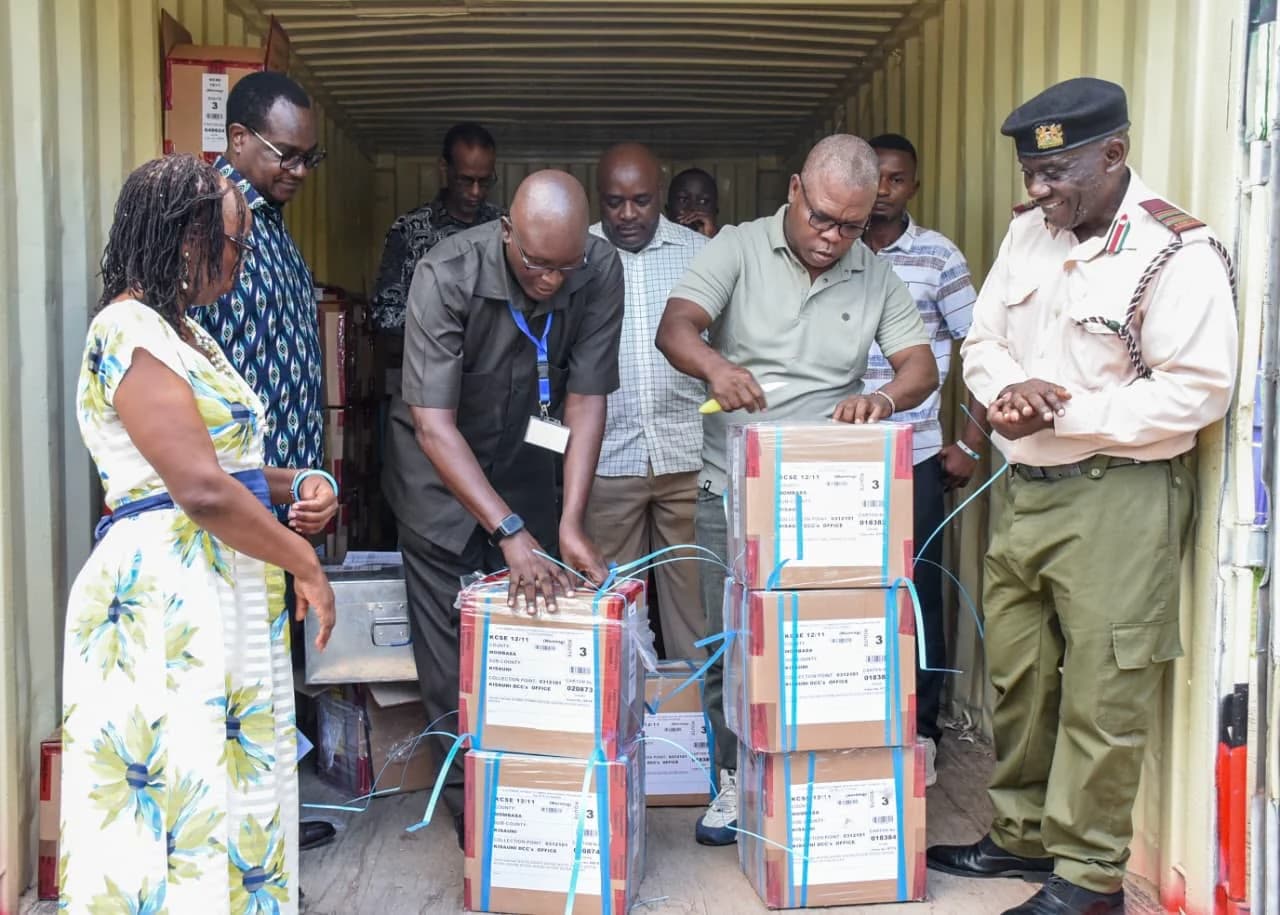
The decentralised storage system introduced by the Kenya National Examinations Council (KNEC) is intended to bring examination materials closer to schools, minimise transportation risks and prevent unauthorised access to examination papers.
The enhanced arrangements come as police investigate a suspected examination fraud syndicate linked to Kibabii University in Bungoma County, following the arrest of a man accused of circulating examination papers through Telegram and mobile phone platforms.
Bungoma County Police Commander Omar Arero said detectives arrested the suspect on Monday evening after recovering a mobile phone believed to contain evidence of the alleged distribution network.
KNEC Chief Executive Officer David Njengere said security agencies moved swiftly to contain the incident, preventing the examination material from spreading widely. He explained that the council had introduced advanced security features on examination papers to help investigators trace the source of leaked material and identify those involved in irregularities.(Education News Kenya — https://educationnews.co.ke/news/653-examination-storage-centres-set-up-as-knec-tightens-security-over-kcse-exams)
Mr Njengere said examination containers are fitted with electronic smart padlocks monitored remotely from KNEC headquarters. Any attempt to open them outside the authorised time triggers an alert.
Under the arrangement, examination centre managers are required to collect examination materials at exactly 7am before transporting them to their centres under tight security.
The government has also deployed additional security personnel and helicopters to support the distribution of examination materials, while every examination centre is guarded by at least two armed police officers.
To strengthen accountability, KNEC has introduced serialised and anonymised examination scripts with unique identifiers that enable investigators to trace the origin of examination materials circulating on social media. The council has also introduced colour-coded packaging to distinguish morning and afternoon papers.
Education Cabinet Secretary Julius Ogamba said the government was concerned about candidates who had failed to report to examination centres in Nairobi, with 13 cases recorded by Tuesday. He said a multi-agency team had been deployed to trace the missing candidates and establish the circumstances surrounding their absence.
The 2026 KCSE examinations, which have attracted more than one million candidates, are scheduled to conclude on November 20.











Reader Discussion (0)
Sign in to comment