
Kiambu National Polytechnic has become the centre of attention for technical and vocational education and training (TVET) institutions in the Nairobi and Kajiado region as students converge for a major sporting competition aimed at nurturing talent and strengthening interaction among trainees.
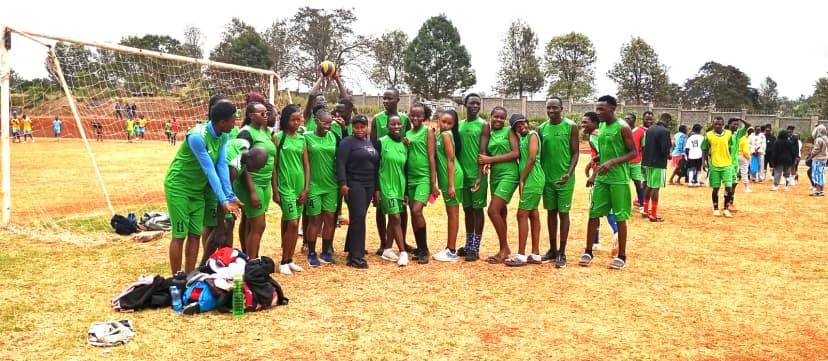
The Kenya Association of Technical Training Institutions (KATTI) Nairobi Region Season Three ball games have brought together representatives from 23 public and private technical institutions for a series of football, volleyball and basketball competitions.
The regional tournament, being hosted by Kiambu National Polytechnic (KINAP), formerly Kiambu Institute of Science and Technology, runs through Saturday before participants depart on Sunday.
The competition is also serving as a selection and preparation platform for the national KATTI games scheduled for November.
Nairobi and Kajiado region sports and recreation chairman Simon Nyaga said the tournament was designed to give trainees an opportunity to develop their sporting abilities while building friendships and professional networks.
He said the games allow students to interact with colleagues from other institutions and exchange ideas about their training, experiences and opportunities.
“Games provide room for trainees to network and relate with one another,” Mr Nyaga said.
The official said the competition was not merely about determining the best team but also about identifying young people with exceptional sporting abilities.
According to him, talent scouts and representatives of sports organisations can use such competitions to identify players capable of progressing to higher levels of competition.
The tournament features both male and female teams, with football, basketball and volleyball among the disciplines being contested.
Mr Nyaga said the sporting activities were taking place against the backdrop of wider changes in the TVET sector, where institutions are increasingly focusing on practical competencies and industry-oriented training.
He said colleges were working to ensure that courses offered to trainees correspond to the skills required by employers and businesses.
“We are training with the industry for the industry,” he said.
He added that closer collaboration with industry was helping institutions reduce the mismatch between training and the skills demanded in the labour market.
The approach, he said, was expected to improve graduates' chances of securing employment while also equipping them with competencies that could support self-employment.
Trainees embrace technical skills and entrepreneurship
The focus on practical skills was echoed by students participating in the games, who said their college experience had demonstrated that technical qualifications could be combined with talent, innovation and entrepreneurship.
Lang'ata Technical and Vocational College student Victor Ouma said participating in the KATTI games had broadened his experience beyond academic work.
Mr Ouma, who is pursuing Level Six automotive engineering, said he was participating in volleyball while his college was also represented in football.
He said the games allowed trainees from different institutions to interact and learn how their colleagues were approaching both education and extracurricular activities.
For him, technical training also provides an opportunity to respond to emerging technologies.
He cited the growing interest in electric vehicles as an area where young automotive technicians could develop new expertise.
Mr Ouma said he hoped to eventually establish his own workshop instead of depending entirely on formal employment.
His ambition, he said, was to use the skills acquired through TVET training to create opportunities for other young people.
He urged young people who have not pursued further education or technical training to consider enrolling in TVET institutions.
He said the competency-based education and training system had widened access to practical training and certification for people with different educational backgrounds.
Kabete National Polytechnic basketball captain Mark Oluoch said participants had arrived at KINAP determined to win despite the strong competition.
Kabete was drawn in Pool B alongside Nairobi National and Nairobi Technical, setting the stage for closely fought basketball matches.
Mr Oluoch said many of the players were already familiar with one another from competitions outside their institutions, including Nairobi leagues.
This experience, he said, was expected to raise the standard of competition while also making the tournament an opportunity for players to expand their sporting networks.
But Mr Oluoch said success after college would require more than obtaining certificates.
He advised trainees to actively practise and apply the skills they acquire rather than relying exclusively on classroom instruction.
According to him, employers increasingly look for evidence that graduates can put their knowledge into practice.
“Papers plus skills” would give young people a stronger advantage in the labour market, he said.
Female trainees showcase talent as national games beckon
The competition has also provided female trainees with a platform to demonstrate their abilities and compete alongside their male counterparts.
Jacinta Kiptoo of Maasai National Polytechnic in Kajiado said her team had travelled to Kiambu with a clear objective to finish among the best.
Ms Kiptoo, who plays netball, said the tournament had generated excitement among participants and provided an opportunity for institutions to measure their abilities against other teams.
Her determination reflected the competitive mood at KINAP, where teams were seeking victories while maintaining the spirit of friendship and sportsmanship.
The organisers said the interaction created through the games would continue beyond the competition as students from different institutions establish professional and personal networks.
Mr Nyaga said the growing role of TVET in Kenya's development should encourage more young people to consider technical training as a first-choice career pathway.
He said technical institutions should not be regarded merely as destinations for students who fail to secure opportunities elsewhere.
Instead, he described them as institutions where young people can acquire practical competencies applicable in employment, business and everyday life.
The official said the skills gained in TVET institutions could benefit people regardless of their area of specialisation.
The KATTI games have consequently offered a practical demonstration of this broader vision, bringing together education, sports, discipline, teamwork, networking and career development.
As the regional tournament heads towards its conclusion, the participating institutions will also be looking beyond the medals, with the national games in November providing the next stage for teams and individual athletes seeking to make their mark.
READ ALSO:
For the trainees, the competition represents more than a few days on the sporting field. It is also an opportunity to demonstrate that technical education can produce young people who are skilled, competitive, creative and prepared to create opportunities for themselves and others.



Reader Discussion (0)
Sign in to comment