






Thousands of learners face an uncertain future as unpaid university bills, inadequate student support and rising living costs threaten access to higher education, exposing a troubling gap between admission and graduation.
A university admission letter should mark the beginning of a journey towards professional achievement, economic independence and a better future. For thousands of Kenyan students, however, gaining admission is only the first hurdle. The greater challenge is finding the money to remain in university until graduation.
For students from financially struggling families, the dream of earning a degree can quickly become a battle against unpaid tuition fees, accommodation expenses, inadequate upkeep and delayed financial assistance. Some struggle through their studies, others defer semesters, while some eventually abandon their education altogether.
Kenya lacks a single, consolidated national figure showing how many university students permanently drop out specifically because they cannot afford fees. However, figures presented to Parliament, historical reports from the Higher Education Loans Board (HELB) and government funding projections reveal a serious challenge: admission does not guarantee completion.
The central question is no longer simply how many students qualify for university, but how many can afford to remain enrolled long enough to graduate.
2,105 students drop out as thousands defer studies
Between 2016 and 2025, 2,105 government-sponsored students placed in 31 private universities dropped out, while another 7,087 deferred their studies, according to figures presented to Parliament by the Kenya Association of Private Universities in 2025.
The association linked the disruptions to funding difficulties affecting the government-sponsored programme. It reported that the government owed the institutions approximately Sh48.8 billion in outstanding payments for students placed through the Kenya Universities and Colleges Central Placement Service (KUCCPS).
The association also told lawmakers that only Sh14 billion of an expected Sh63 billion had been disbursed over the period under discussion.
The figures do not cover every Kenyan university, nor do they establish that all affected students left solely because they could not personally afford fees. They nevertheless illustrate how funding failures can disrupt education even for learners admitted through an official government placement system.
The distinction between dropping out and deferring studies is important. Some students may eventually return, while others may never recover from the financial setback.
The challenge extends beyond private universities.
In March 2026, the State Department for Higher Education reported that approximately Sh41.5 billion had been allocated against a requirement of Sh74.4 billion to support 1,104,157 university and technical and vocational education and training (TVET) students in the 2025/26 financial year.
The resulting funding gap was about Sh32.9 billion.
Higher Education Principal Secretary Beatrice Inyangala told the National Assembly's Education Committee that a proposed supplementary allocation of Sh4.1 billion would support an additional 74,031 students, leaving 379,858 without funding under the projected arrangement.
These figures cover both university and TVET students. They represent a population at risk of going without funding, not a confirmed dropout count.
For learners from low-income households, however, a funding gap can quickly become an educational crisis. Tuition balances remain unpaid while accommodation, food, transport and learning materials still have to be financed. Families that have exhausted their savings paying for earlier stages of education may have nowhere else to turn.
The problem is compounded when students cannot meet their household contribution under the student-centred funding model introduced in 2023. Although the model was designed to link government assistance to assessed financial need, concerns about the adequacy of support and the affordability of household contributions remain central to the debate.
The real test of a funding arrangement is not whether a student receives some assistance, but whether that support is sufficient to sustain the student through the academic year.
The financial burden beyond tuition fees
University expenses extend well beyond fees. Students need accommodation, meals, transport, textbooks, internet access and, increasingly, laptops and other digital learning equipment. Those studying far from home must also meet travel costs.
Even where scholarships or loans cover part of tuition, living expenses and the remaining household contribution can be beyond a family's means.
Students caught in this situation may seek casual employment that competes with their studies, continue learning while lacking basic necessities or interrupt their education until they can raise the required money.
Depending on university rules, accumulated fee arrears may also restrict registration, examination access or progression to the next semester.
Financial exclusion can therefore occur long after admission, when a student has already invested years of effort and family resources in pursuing a degree. For those unable to return, the admission letter becomes a painful reminder of an opportunity they could not afford to complete.
The problem predates the current funding arrangements.
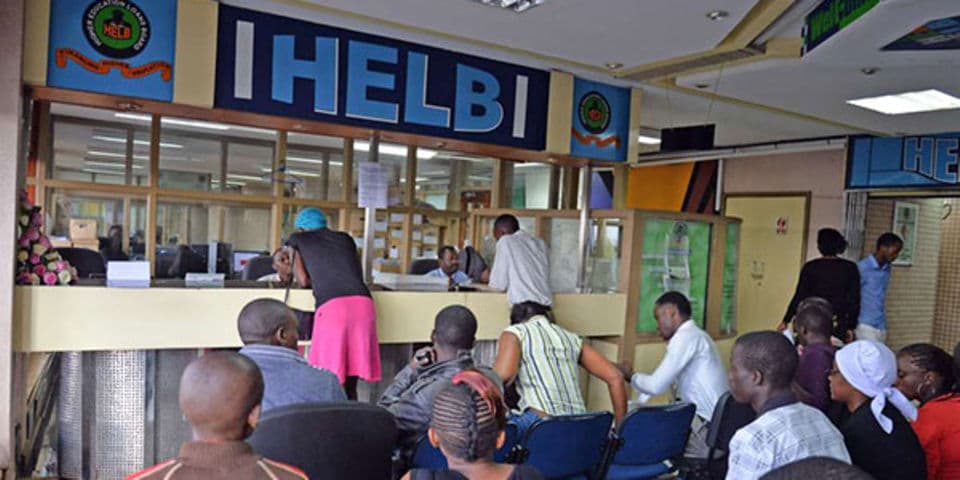
In April 2023, HELB's then chairman, Ekwee Ethuro, reported that budget cuts during the 2019/20 and 2020/21 financial years had affected 142,361 students who had begun their education with HELB support and were subsequently forced to drop out for lack of funding.
The board also reported cumulative losses of Sh6.15 billion over the preceding three financial years through budget cuts and reduced loan recoveries associated with the effects of the COVID-19 pandemic.
The 142,361 figure is a historical claim by HELB, not a current national count of university students who have permanently dropped out because of fees. It should also not be added to the figures from private universities without establishing whether the groups overlap.
Nevertheless, the report highlights how funding instability can derail students who have planned their education around expected financial assistance.
When a student abandons university because of financial difficulties, the consequences extend beyond the individual.
Families may lose years of savings spent on fees, accommodation, transport and other educational expenses. Students may also be left with loan obligations without obtaining the qualifications they expected to use to secure employment.
The setback is particularly painful for those who leave during their final year. After investing several years in their studies, an outstanding fee balance or an inability to meet remaining costs can stand between them and graduation.
Financial hardship can also undermine academic performance before a student formally withdraws. Hunger, insecure accommodation, stress and the need to seek work can affect attendance, concentration and examination preparation.
For the country, the loss extends to the potential economic and social benefits of producing graduates equipped to contribute to national development.
Funding must support students through graduation
Despite the reported cases, Kenya still lacks a consolidated national count of students who permanently leave university because they cannot afford their education.
The Ministry of Education, HELB, the Universities Fund, KUCCPS and individual universities should establish a coordinated system for tracking student progression and withdrawal.
Such a system should distinguish permanent dropout from temporary deferment, delayed registration, transfers and changes of course. It should record the principal reasons students leave, including unpaid fees, inadequate upkeep, family financial difficulties and academic challenges.
The data should also show how many students return after deferment and how many eventually graduate. This would help policymakers determine whether financial assistance prevents dropout or merely postpones it.
Without reliable figures, the government cannot accurately measure the scale of financial exclusion, identify the students most at risk or assess whether existing funding arrangements are working.
Addressing the problem requires more than expanding university admission.
The government should ensure that approved student support reaches institutions and learners predictably, while addressing outstanding obligations to universities. HELB and the Universities Fund should regularly assess whether assistance reflects the actual cost of tuition and essential living expenses.
Universities, meanwhile, should strengthen hardship assistance and emergency support for students experiencing temporary financial crises. Reasonable arrangements for resolving genuine fee difficulties could prevent some students from abandoning their studies permanently.
Most importantly, education funding should be evaluated against outcomes. The number of loans and scholarships issued matters, but so does the number of students who remain enrolled, complete their courses and graduate.
The reported 2,105 dropouts from 31 private universities, the 7,087 students who deferred their studies and HELB's historical report of 142,361 students affected by funding cuts describe different populations and periods. They cannot be combined into one national dropout total.
Likewise, the projected funding gap affecting 379,858 university and TVET students highlights the number exposed to the risk of going without support, not the number who have already abandoned their studies.
What the evidence establishes is that financial constraints can interrupt higher education and that Kenya needs better data to measure the extent of the problem.
The promise of university education is fulfilled not when a student receives an admission letter, but when that student has a fair opportunity to complete the course.
For thousands of Kenyan families, the question is no longer only whether their children can enter university. It is whether they can afford to keep them there long enough to graduate.



Reader Discussion (0)
Sign in to comment