




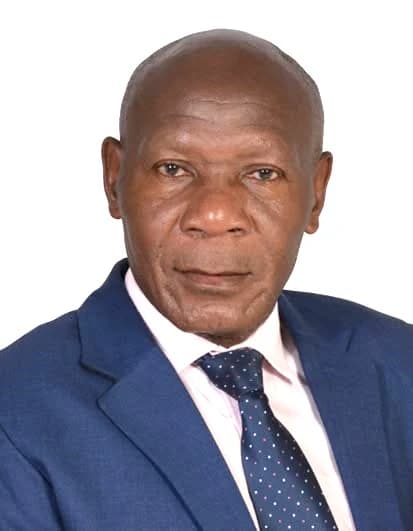




- Hillary Muhalya argues that Kenya’s teacher promotion challenge requires more than periodically advertising thousands of vacancies.
- He calls for predictable TSC funding, grade-by-grade promotion data and a long-term plan to tackle career stagnation.
- Muhlaya proposes a five-year model linking qualifications, performance, experience, retirement patterns and available promotion opportunities.
Kenya’s teacher-promotion debate has now moved beyond the question of how many vacancies the Teachers Service Commission (TSC) can advertise in a particular year. The deeper issue is whether the country has built a career-progression system capable of recognising experience, additional qualifications, professional competence and years of service before teachers reach retirement.
The current promotion exercise, with 34,016 positions spread across various grades and cadres, is a significant opportunity for teachers. The large number of positions should be welcomed. However, it also exposes a bigger challenge: thousands of teachers remain in the same grade for years despite gaining experience, upgrading their academic qualifications and meeting professional requirements.
The question Kenya must therefore confront is simple but profound: How long should a qualified teacher wait before career progression becomes a realistic possibility?
The 8 per cent question
If the reported 34,016 promotion vacancies are compared with a teaching workforce of roughly 425,000, the opportunities represent approximately 8 per cent of the total workforce.
That figure should not be misunderstood as saying that eight per cent of all teachers will automatically be promoted. The vacancies are distributed across different grades, and promotion depends on eligibility, qualifications, experience, performance, competition and the availability of positions.
Nevertheless, the calculation exposes an important policy question.
If the teaching workforce is more than 400,000 but the annual promotion capacity is only a fraction of that population, can the system realistically clear the accumulated promotion backlog?
The answer depends on a number that is still more important than the overall 34,016 vacancies: the number of eligible teachers in every grade.
The real promotion index must be grade by grade
Kenya should stop measuring the success of teacher promotion primarily by the number of vacancies announced.
The more meaningful measurement is:
Eligible teachers in a grade versus available promotion positions.
For example, if 40,000 teachers are eligible for a particular promotion and there are 13,490 vacancies, the theoretical opportunity is about 33.7 per cent.
If 60,000 are eligible, the opportunity falls to about 22.5 per cent.
If 100,000 are eligible, it falls to approximately 13.5 per cent.
The lesson is straightforward: the same number of vacancies can represent either a significant opportunity or a serious bottleneck depending on the number of teachers competing for them.
TSC should therefore publish an annual promotion index showing the number of teachers in every grade, the number eligible, the number applying, the number promoted and the number remaining.
That would replace speculation with evidence.
C1-C2 is a critical bottleneck
The 13,490 C1-C2 positions are particularly important because they constitute the largest single category in the current promotion exercise.
They represent nearly 40 per cent of the reported promotion vacancies.
The pathway is especially significant for primary teachers because Primary Teacher I is situated at C1, and eligible teachers can progress to Senior Teacher II at C2 subject to the applicable requirements.
But the crucial question remains:
How many C1 teachers are eligible for those 13,490 positions?
Without that denominator, it is impossible to determine the true promotion opportunity.
If 20,000 are eligible, the situation is considerably different from one where 50,000, 70,000 or 100,000 teachers are competing for the same positions.
This is why a national conversation about teacher promotions must be driven by grade-by-grade data rather than headline vacancy numbers.
The P1 issue must also be understood correctly
The situation of P1 teachers deserves particular attention, but the debate must be technically accurate.
P1 is a qualification, not a TSC employment grade.
A P1-trained teacher can occupy different grades depending on appointment, experience, professional progression and the applicable career structure.
The relevant questions should therefore be:
How many P1-trained teachers are at B5? How many are at C1? How many have spent three, five, seven or more years in the same grade? How many have upgraded their qualifications? How many are eligible for promotion?
These are the figures that would reveal the real pressure within the primary-teacher career pipeline.
The qualification-promotion paradox
One of the most frustrating aspects of the current system is the growing gap between academic advancement and employment-grade progression.
Many teachers have invested substantially in their education.
They have pursued diplomas, degrees, postgraduate qualifications and other professional courses. Some have studied during weekends and school holidays. Others have financed their education directly from their salaries.
They have upgraded their knowledge because they want to become better teachers and because they reasonably expect professional development to improve their career prospects.
Yet some have remained in the same employment grade for years.
This creates a troubling paradox:
More education. More experience. More professional competence. But the same grade.
There is nothing wrong with requiring merit before promotion. A higher qualification should not automatically guarantee a higher grade.
However, if a teacher meets the relevant professional requirements, performs effectively and remains eligible for progression, the absence of promotional opportunities should not become a permanent barrier.
The problem then ceases to be the teacher’s qualifications.
It becomes a structural problem of establishment, financing and workforce planning.
There is a delicate balance here.
Kenya cannot reasonably adopt a system in which every additional qualification automatically translates into promotion. Such a system could distort the career structure and create unsustainable wage pressures.
But the opposite extreme is equally problematic.
The government should not encourage teachers to continuously upgrade their knowledge and skills while providing no credible mechanism through which that additional professional capacity can be recognised.
A teacher who acquires a higher qualification should at least know:
What does this qualification mean for my career?
Which grade can I compete for?
What additional experience is required?
What performance standards apply?
How many positions exist?
How long might I realistically wait?
A professional career system should answer these questions clearly.
How long will it take to clear the backlog?
This is perhaps the most important calculation TSC and government need to undertake.
At its simplest:
Eligible teachers ÷ annual promotion capacity = theoretical years required to clear the existing queue.
If 40,000 teachers are eligible and 13,490 positions are available annually, the theoretical clearance period is about three years.
If 60,000 are eligible, it becomes about 4.4 years.
If 80,000 are eligible, it approaches six years.
If 100,000 are eligible, it rises to about 7.4 years.
But the real situation is more complicated because the workforce is constantly changing.
New teachers become eligible every year.
Others retire.
Some leave the service.
Others move into higher grades.
The real equation is therefore:
Existing backlog + newly eligible teachers − teachers leaving the grade = remaining promotion pressure.
This means that Kenya could continue advertising thousands of promotions every year and still fail to eliminate stagnation if the number entering the queue keeps pace with the number leaving it.
TSC needs more money
This is where the debate must become explicitly financial.
TSC cannot solve a structural promotion backlog without adequate resources.
If the government wants more teachers promoted, it must provide the funding necessary to support those promotions.
If it wants 50,000 promotions annually, the budget must be capable of financing 50,000 promotions.
If it can only finance 34,016 positions, then government should openly explain the gap and establish a credible timetable for closing it.
A target without money is a promise. Money without a plan is equally inadequate.
Kenya needs both.
Additional funding for TSC should therefore not simply be viewed as an increase in the wage bill. It should be viewed as an investment in teacher retention, professional motivation, institutional stability and education quality.
The government should establish a five-year teacher career-progression master plan.
The plan should identify:
The number of teachers in every grade.
The number eligible for promotion.
The number who have remained in each grade for extended periods.
The number with upgraded qualifications.
The number approaching retirement.
The number expected to become eligible annually.
The number expected to leave through natural attrition.
The number of promotional positions required.
The annual cost of those promotions.
The expected time required to reduce the backlog.
This would allow Treasury and TSC to budget systematically rather than treating promotions as an annual emergency.
Create a dedicated backlog-clearance fund
Where the data establishes a serious backlog, government should consider creating a dedicated, multi-year Teacher Career Progression and Promotion Fund within TSC’s budget.
The fund should not be used for automatic promotions.
Instead, it should finance additional promotional capacity where the evidence demonstrates that teachers are being held back primarily because of inadequate establishments and resources.
The objective would be to progressively reduce stagnation while maintaining merit, performance and professional standards.
Use retirement to create career movement
Retirement and promotion should also be connected.
When senior teachers leave the service, their departure creates opportunities elsewhere in the career structure.
Government should therefore integrate:
Recruitment + retirement + promotion + succession planning.
The question should be:
Who is leaving? Who is becoming eligible? Who can move into the resulting vacancy? And where must new recruitment occur?
This approach could allow government to use natural attrition more strategically while providing additional funding for areas where attrition alone cannot generate enough promotion opportunities.
The promotion pyramid must remain a pyramid
It is important to acknowledge that Kenya cannot promote every teacher to the highest administrative grades.
Schools need many classroom teachers but relatively few principals and chief principals.
The career structure must therefore narrow as teachers move upwards.
The problem is not the pyramid.
The problem is a pyramid with excessive congestion at its lower and middle levels.
The solution should not be to create unnecessary administrative positions simply to promote teachers.
Instead, Kenya should establish stronger professional classroom career pathways.
Outstanding teachers could progress as:
Senior classroom practitioners.
Instructional mentors.
Curriculum specialists.
Digital-learning specialists.
Assessment specialists.
Special-needs education specialists.
Teacher trainers.
Instructional leaders.
This would allow teachers to advance professionally without forcing everyone towards administration.
Long service must be part of the conversation
Merit should remain central to promotion.
However, long service cannot simply be ignored.
A teacher who has spent many years in one grade, consistently performed well, acquired additional qualifications and satisfied the professional requirements presents a different career-progression case from a newly appointed teacher.
Government should therefore consider a balanced framework incorporating:
Performance + qualifications + experience + time in grade + workforce needs + available positions.
This would preserve merit while recognising the reality of career stagnation.
Time is particularly important for older teachers.
A teacher has only a finite working life.
If a teacher spends five years acquiring additional qualifications and then another seven years waiting for a promotional opportunity, that teacher could approach retirement before fully benefiting from the investment.
The system must therefore consider the age profile of the workforce.
A promotion that comes immediately before retirement may satisfy the administrative requirement, but it cannot fully compensate for years of missed professional progression.
Backlog-clearance programmes should therefore pay attention to teachers who have remained stagnant for exceptionally long periods and those approaching retirement.
Establish a national promotion dashboard
TSC should publish a simple, transparent annual dashboard showing teachers in each grade, those eligible, upgraded qualifications, vacancies, applicants, shortlisted candidates, successful candidates, promotion rates, average waiting periods and expected future pressure.
This would answer the questions teachers are asking every year.
It would also help Parliament, Treasury, unions and education stakeholders understand exactly where the bottlenecks exist.
Review eligible teachers regularly
Government should consider a regular career-progression review for teachers who meet the requirements but remain unpromoted.
This would not guarantee promotion.
It would ensure that eligible teachers remain visible within the system.
A teacher who has been eligible for five or seven years should not simply become another forgotten statistic.
The system should know how many such teachers exist and what it would cost to progressively address their situation.
Recognise qualifications without creating automatic promotion
The solution to the qualification problem should be carefully designed.
Higher qualifications should not automatically translate into promotion.
But neither should they become irrelevant.
A teacher who acquires advanced knowledge should have opportunities to deploy that knowledge within the education system.
That is why classroom-based professional pathways are so important.
A teacher with advanced training in curriculum, technology, special-needs education, assessment or educational leadership should be able to use that expertise in a recognised professional role.
This would ensure that Kenya benefits from the money and time teachers invest in their own professional development.
Protect the promotion budget
Funding for teacher promotion should be predictable.
TSC should not have to repeatedly return to government to request resources for career progression.
Treasury should incorporate teacher promotion into medium-term expenditure planning and establish realistic annual targets.
If the country wants to clear the backlog within five years, it should know exactly how much that will cost.
If it will take ten years, teachers should be told.
Transparency is better than promises that cannot be financed.
This entire debate is ultimately about more than money.
Career progression tells teachers whether their institution values experience and professional growth.
A teacher who sees a credible pathway forward is more likely to remain motivated.
A teacher who spends decades in the same grade despite acquiring additional qualifications and demonstrating competence may eventually feel that professional advancement is disconnected from effort.
That can undermine morale.
If Kenya expects teachers to embrace curriculum reforms, technology, continuous professional development and improved learning outcomes, it must also ensure that professional growth has a credible place within the career structure.
The new model should be: Qualify, perform, progress
Kenya needs a simple principle:
Qualify. Perform. Progress.
Qualification should establish eligibility.
Performance should demonstrate readiness.
Experience should provide professional depth.
Available positions and public finances should determine the pace.
But the system should not allow the final component—funding—to permanently overwhelm the first three.
If teachers qualify and perform for years without any realistic opportunity to progress, the career ladder ceases to function effectively.
The bottom line
Kenya’s teacher-promotion challenge cannot be solved through advertisements alone.
The current 34,016 promotion opportunities are important, but they represent only a fraction of the entire teaching workforce. The real question is how they compare with the number of eligible teachers in each grade.
The country must also confront the growing number of teachers who have upgraded their academic and professional qualifications yet remain in the same employment grade.
Their situation should not be reduced to a demand for automatic promotion.
It is a demand for a credible relationship between professional growth and career progression.
The government therefore needs to provide TSC with more predictable and adequate funding, but that money must be accompanied by a comprehensive plan.
Kenya needs a five-year promotion master plan.
It needs a grade-by-grade promotion index.
It needs a backlog-clearance programme.
It needs to integrate retirement, recruitment and promotion.
It needs to recognise teachers who have upgraded their qualifications.
It needs alternative professional pathways for outstanding classroom practitioners.
It needs transparent data on eligibility, vacancies, applications, successful promotions and waiting periods.
And above all, it needs to answer the question that thousands of teachers silently ask:
“If I continue to improve myself, gain experience, acquire higher qualifications and perform well, when will the system give me a realistic opportunity to move forward?”
The answer cannot always be “wait for a vacancy.”
A serious education system must plan for those vacancies.
It must finance them.
It must forecast them.
And it must ensure that teachers do not spend the best years of their careers waiting for a promotion that arrives only when retirement is already approaching.
TSC therefore needs more cash—but Kenya also needs better workforce planning, stronger transparency and a fundamentally more predictable career-progression system.
The objective should not be to promote everyone to the top.
The objective should be to ensure that no qualified, competent and experienced teacher is condemned to career stagnation simply because the country failed to plan and finance the progression pipeline.
READ ALSO: Teachers’ president Mambo demands end to political influence in TSC recruitment
Teacher promotion should cease to be an annual event.
It should become a properly funded national career-development programme.
Get more stories from our website: Education News
To write to us or offer feedback, you can reach us at: editor@educationnews.co.ke
You can also follow our social media pages on Twitter: Education News KE and Facebook: Education News Newspaper for timely updates.
>>> Click here to stay up-to-date with trending regional stories


Reader Discussion (0)
Sign in to comment