- NTSA’s school-zone warning puts children’s safety at the centre as learners return for Third Term.
- Lower speeds give motorists more time to spot children, react and bring vehicles to a safe stop.
- Hillary Muhalya argues enforcement, safer infrastructure and responsible driving must now turn the directive into protection.
Kenya’s roads are about to become a little less forgiving to motorists who treat school zones like ordinary stretches of highway.
The National Transport and Safety Authority (NTSA) has directed motorists countrywide to observe a maximum speed of 30 km/h in school zones, putting renewed emphasis on the protection of school-going children who interact with roads every day.
The directive, announced by NTSA on August 25, comes with a simple but powerful message: slow down before a child becomes a statistic.
“Protect Our Children, Slow Down to 30 km/h in School Zones,” NTSA said in its road-safety advisory. The Authority further urged motorists to maintain 30 km/h around schools, saying lower speeds give drivers additional time to see children, react and stop safely.
The logic behind the 30 km/h limit is straightforward. A vehicle travelling at a lower speed gives its driver more time to identify a child stepping onto the road, react to an unexpected movement and bring the vehicle to a stop. More importantly, when a collision does occur, lower speeds can substantially reduce the severity of injuries.
That makes the school-zone speed limit not merely a traffic-management measure, but a child-protection intervention.
Children need greater protection
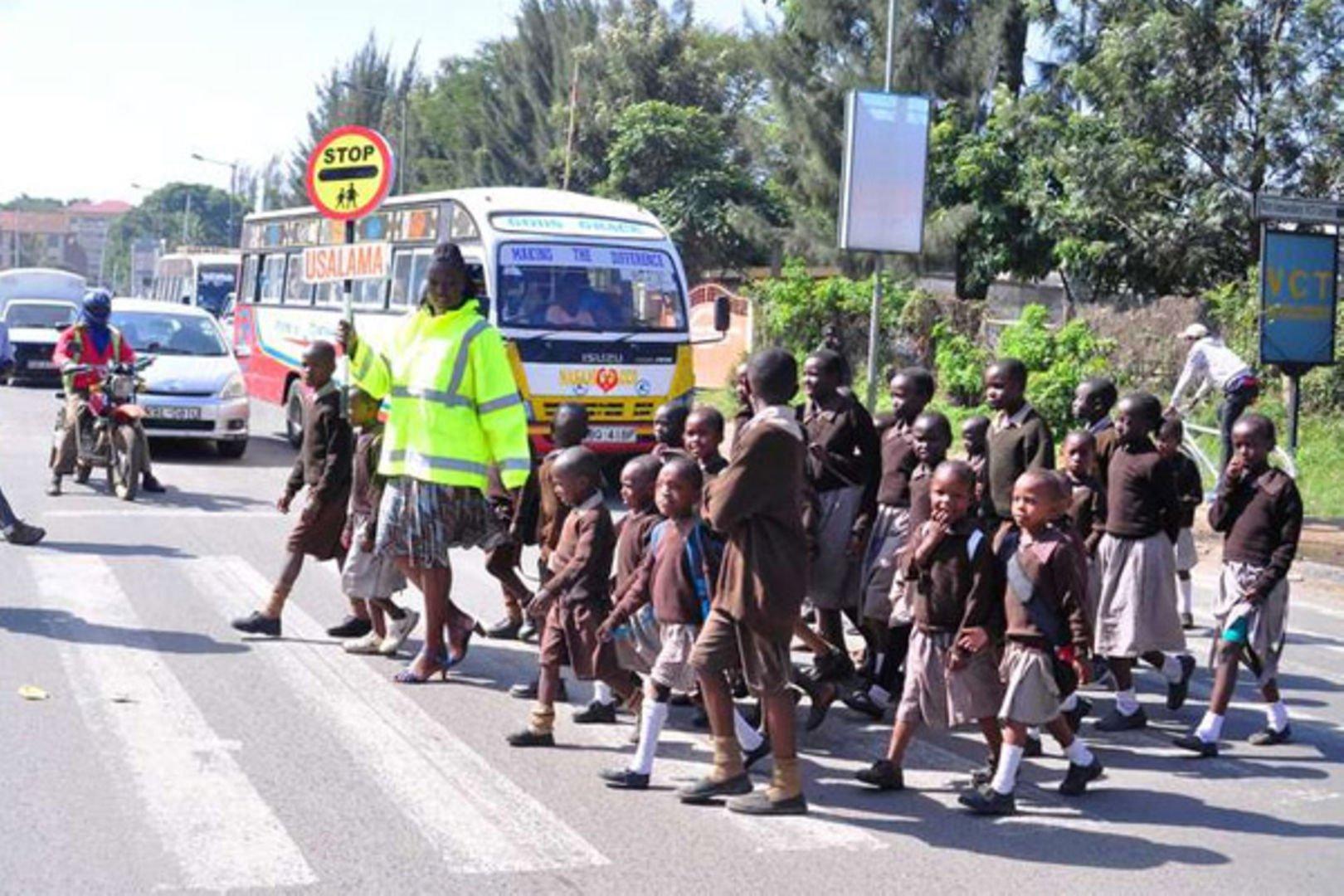
School environments are uniquely vulnerable road spaces. Children can emerge suddenly from school gates, cross roads in groups, run after balls, board or alight from vehicles and sometimes make decisions that an experienced adult road user would consider unpredictable.
A motorist approaching a school therefore cannot drive on the assumption that every pedestrian will behave perfectly.
The responsibility must begin with the person controlling the potentially dangerous machine.
NTSA’s message is consequently directed at motorists to exercise greater vigilance whenever they enter a school zone. The regulator has urged drivers to maintain 30 km/h and remain alert to the presence of school-going children.
The significance of the directive lies partly in its nationwide application. Rather than leaving school-zone safety to individual interpretation, NTSA is establishing a clear threshold around educational institutions.
That clarity matters.
One of the persistent problems on Kenyan roads is the gap between knowing a safety rule and actually observing it. Speed limits can exist on paper while motorists routinely exceed them. School zones can be marked, yet some drivers continue accelerating as though children are invisible.
The 30 km/h requirement therefore needs to be accompanied by enforcement, appropriate signage, road markings and public awareness.
A speed limit without enforcement can quickly become another regulation that exists principally on paper.
But enforcement should not be understood simply as a strategy for collecting penalties. Its ultimate objective should be behavioural change.
Drivers should begin slowing down before they reach a school gate, not after spotting a police officer.
Parents, teachers, school administrators, drivers, conductors, pedestrians and county authorities all have a role to play. Protecting children on the journey to and from school cannot be delegated entirely to NTSA.
School transport also under scrutiny
The issue becomes even more critical when considering school transport.
NTSA has also been advancing safety requirements for vehicles transporting learners, including compliance measures directed at drivers and attendants.
In 2025, proposed Traffic (School Transport) Rules sought to establish a comprehensive framework for the safe, professional and regulated transportation of school-going children. The proposals included licensing school transport providers and vehicles, minimum safety standards, seat belts, fire extinguishers and telematics systems. They also addressed the responsibilities of drivers, attendants and crossing guards.
These requirements reinforce a broader principle: the safety of children must remain the overriding consideration in school transportation.
A school bus is not merely another public-service vehicle. It carries passengers who are particularly vulnerable and whose safety depends heavily on the adults responsible for the journey.
Drivers transporting learners must therefore understand that punctuality, convenience or pressure to complete a route quickly can never justify dangerous driving.
For parents, the directive should also trigger difficult questions.
Is the vehicle carrying my child properly maintained? Is the driver qualified and responsible? Does the school have a clear transport-safety policy? Are children being picked up and dropped off at reasonably safe points? Are drivers respecting speed restrictions around schools?
These questions matter because road safety does not begin when a child enters the classroom. Education safety begins from the moment the learner leaves home.
Road design must support safety
There is also a responsibility on schools and local authorities to examine the physical environment surrounding educational institutions.
A 30 km/h limit will be far more effective where motorists can clearly see school-zone signs and road markings. Where possible, schools located along busy roads also need safe pedestrian crossings, walkways, traffic-calming measures, controlled entrances and exits and designated points for school transport.
The physical design of the road must support the behaviour expected from motorists.
It would be unrealistic to imagine that every accident can be prevented simply by reducing speed. But that argument misses the central point.
Road safety is about reducing risk and limiting consequences.
A child who suddenly runs onto a road leaves a driver with very little time to respond. At a high speed, that moment can determine whether the vehicle stops safely or strikes the child with devastating consequences.
At 30 km/h, the same driver has a better opportunity to react.
That difference can be measured in metres, milliseconds—and, ultimately, human lives.
Kenya should therefore resist the temptation to dismiss the NTSA directive as another traffic regulation. It represents an opportunity to rethink how the country treats roads passing through spaces where children live, learn and move.
A school zone should be treated as a high-alert environment, not a convenient section of road for overtaking, accelerating or racing against time.
Motorists who complain that 30 km/h is too slow should remember that the few seconds gained by speeding through a school zone are worth very little compared with the lifelong consequences of injuring a child.
The real question is not how quickly a motorist can pass a school.
It is whether the motorist can pass that school without putting a child at risk.
NTSA has now drawn the line at 30 km/h. The next challenge is ensuring that motorists respect it, enforcement agencies implement it consistently and communities understand why it exists.
READ ALSO: Before condemning TSC over political influence, prove the letter is genuine
Kenya cannot afford to wait for another tragedy to discover that prevention would have been cheaper than grief.
Thirty kilometres per hour is not an inconvenience. Around a school, it is a margin of safety. And sometimes, that margin can mean the difference between a child arriving home safely and a family receiving devastating news.
By Hillary Muhalya
Get more stories from our website: Education News
To write to us or offer feedback, you can reach us at: editor@educationnews.co.ke
You can also follow our social media pages on Twitter: Education News KE and Facebook: Education News Newspaper for timely updates.
>>> Click here to stay up-to-date with trending regional stories