
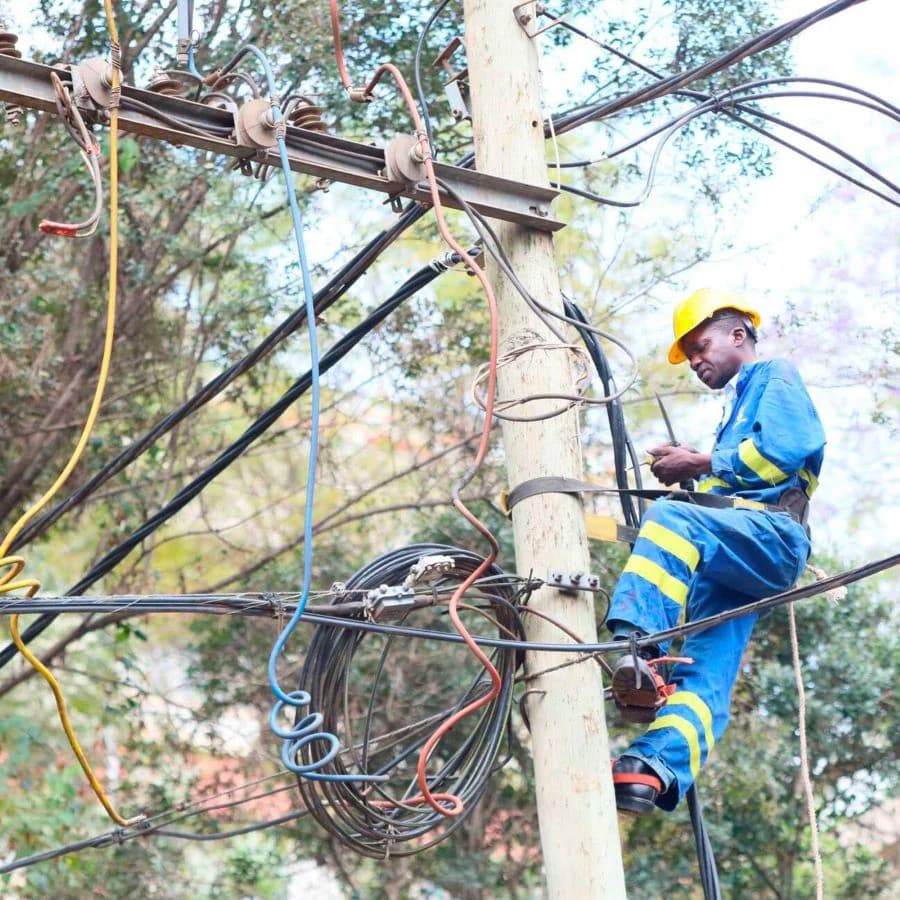






Young people have been urged to shun electricity infrastructure theft, illegal power connections and reckless handling of electrical equipment as Kenya grapples with the persistent danger of electrocution and the far-reaching consequences of vandalism targeting essential power installations.
The caution follows figures showing that 122 people died in electrocution incidents during the financial year ending June 30, 2025, according to reported Kenya Power statistics. The fatalities comprised 115 members of the public, five Kenya Power employees and two contractors, compared with 118 deaths in the preceding financial year.
Although the figures do not establish that all the fatalities were caused by illegal connections or vandalism, they underscore the urgent need for safer electricity practices, greater public awareness and collective responsibility in protecting power infrastructure.
Power theft is a danger to human life
The theft of electricity meters, copper wires, distribution cables and transformer components is more than an economic crime. It can expose live electrical conductors, endanger unsuspecting members of the public and trigger accidents with devastating consequences.
Young people seeking quick money through scrap-metal trading, casual construction or informal electrical work have been cautioned against participating in the removal, transportation or sale of stolen power equipment.
Tampering with transformers, cutting power cables, bypassing electricity meters and making unauthorised connections can expose individuals to lethal electric shocks, severe burns and other life-changing injuries. Damaged installations may also cause electrical fires, placing entire households and neighbouring properties at risk.
The danger does not end with the person handling the equipment. Exposed wires can threaten children playing nearby, pedestrians, residents and electricity workers called upon to restore damaged supplies.
Members of the public should therefore avoid touching fallen wires, approaching vandalised installations or attempting to repair electrical equipment themselves. Suspected theft, illegal connections and damaged infrastructure should be reported to Kenya Power through its official channels.
### Vandalism plunges communities into darkness
When electricity meters, distribution cables or transformers are stolen or damaged, the consequences can extend across entire neighbourhoods, disrupting domestic life, economic activity and essential public services.
Households may be left without lighting and other electrical services, while businesses risk losing income when equipment and operations are interrupted. Repairs can be costly and time-consuming, diverting resources from routine maintenance and the expansion of electricity access.
Schools are also vulnerable to the effects of power disruptions. Institutions that depend on electricity for computer-based learning, digital teaching equipment, laboratory activities, administrative operations, security systems and water pumping may struggle to maintain normal services when supplies are interrupted.
For learners, unreliable electricity can mean missed opportunities to use digital resources and interruptions to school activities. For teachers and school administrators, outages may complicate lesson preparation, record management and the effective use of technology.
The theft of a single component may therefore have consequences that reach far beyond its monetary value. Protecting electricity infrastructure is directly linked to community welfare, educational continuity and economic productivity.
Caring for KPLC equipment is a moral responsibility
Taking good care of Kenya Power and Lighting Company (KPLC) equipment is not merely a legal obligation; it is also a moral duty and an expression of responsible citizenship.
Electricity meters, transformers, cables and related installations provide an essential service to households, schools, hospitals, businesses and public institutions. Their protection reflects respect for public infrastructure and for the welfare of other electricity consumers.
Anyone who steals or vandalises these facilities for personal gain disregards the needs of the wider community. A damaged transformer can interrupt electricity supply to numerous households, disrupt children's learning, affect livelihoods and expose repair personnel to dangerous working conditions.
Responsible citizens should recognise that public infrastructure is a shared resource whose benefits depend on collective protection. Even where equipment belongs to a service provider, damaging it ultimately affects the people and institutions that rely on it.
Parents, community leaders, landlords, contractors and local businesses should help instil this sense of responsibility, particularly among young people. Scrap-metal dealers should also exercise due diligence and avoid transactions involving suspiciously sourced electrical equipment.
Respecting power installations is therefore both a matter of protecting property and an obligation to safeguard human life.
Young people must reject dangerous shortcuts
Young people facing unemployment and financial pressures may be tempted by offers of quick payment for illegal electrical work. However, no amount of money can justify risking death by dismantling transformers, cutting cables, bypassing meters or reconnecting disconnected supplies without proper authorisation.
The pursuit of income should instead encourage young people to acquire technical skills, undertake recognised training and seek lawful employment opportunities in the electrical sector.
Electrical installation, repair and modification should be carried out by appropriately qualified and authorised personnel. Consumers should resist the temptation to use unqualified individuals merely because they offer cheaper services.
Young people must also understand that involvement in theft, vandalism and unlawful interference with electricity infrastructure may attract legal consequences in addition to the risk of physical injury.
The responsibility, however, does not rest on young people alone. Employers, property owners and clients must not encourage unsafe electrical practices or engage individuals who lack the necessary qualifications and authorisation.
Preventing power theft and electrocution requires cooperation among Kenya Power, law enforcement agencies, community leaders, property owners, schools and individual consumers.
Residents should promptly report suspicious activities involving meters, transformers and power cables. Where vandalism has occurred, members of the public should keep their distance, warn others to stay away and allow authorised personnel to assess and secure the site.
Kenya Power and relevant authorities also have an important role in public education, timely responses to reported hazards, protection of vulnerable installations and investigation of suspected theft and vandalism.
Schools and community organisations can reinforce safety messages by teaching children and young people never to touch exposed wires, climb electricity poles or handle damaged electrical equipment.
Such efforts should go beyond warnings after accidents. Sustained awareness, responsible consumption and respect for the law are necessary to prevent avoidable injuries, protect livelihoods and maintain reliable electricity services.
The reported 122 electrocution fatalities in the financial year ending June 2025 provide a sobering reminder of the dangers associated with electricity. While the causes of individual incidents may differ, the need for caution, safe installations and responsible handling of electrical equipment remains undeniable.
Theft and vandalism compound these dangers by creating hazardous conditions, disrupting services and imposing additional costs on communities. Protecting electricity infrastructure must therefore be treated as a shared public responsibility rather than a concern belonging exclusively to the power company.
Stealing a meter may disrupt one household, but vandalising a transformer can plunge an entire neighbourhood into darkness. Protecting KPLC equipment is not simply about safeguarding property; it is about saving lives, supporting livelihoods and ensuring that learners can benefit from uninterrupted access to essential school services.
Young people must reject the lure of quick money from power theft, while every consumer should insist on safe and lawful electricity connections. Communities, too, must stand against vandalism and report dangerous practices before they lead to tragedy.
Ultimately, responsible citizenship begins with recognising that what serves the public deserves protection. No payment is worth a life, no shortcut justifies an unsafe connection, and no personal gain can outweigh the damage caused by destroying infrastructure on which an entire community depends.
Reader Discussion (0)
Sign in to comment