


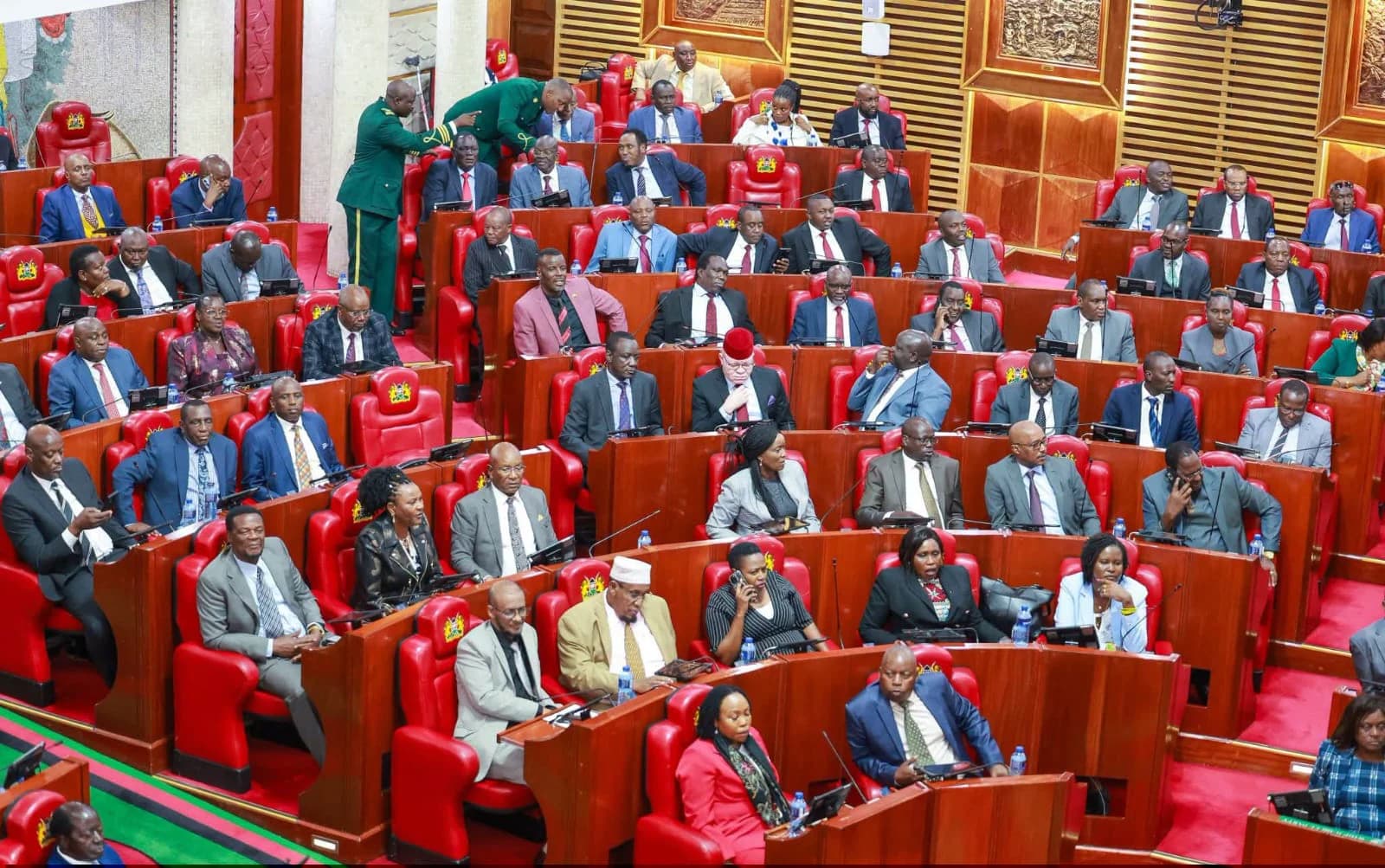






Members of Parliament are pressing the Ministry of Education (MoE) to establish clear career progression pathways for Junior School (JSS) teachers amid growing concerns that uncertainty over promotions, leadership and professional recognition is straining relations between primary and junior school staff and sharpening differences between the country’s two major teachers’ unions.
The controversy exposes a central challenge in implementing Competency-Based Education (CBE): integrating different levels of basic education without leaving teachers divided over their professional identity, administrative authority and prospects for advancement.
Nandi Woman Representative Cynthia Muge has raised concerns over the need for a clear framework governing JSS teachers’ career progression, placing the Ministry of Education and the Teachers Service Commission (TSC) under pressure to clarify how qualifications, experience and responsibilities will be recognised within the evolving school structure.
Grades 7, 8 and 9 operate in many public schools within existing primary school compounds, often under the overall administration of primary school headteachers. Although this arrangement has enabled the government to use existing infrastructure, it has raised questions about leadership, reporting lines and promotion opportunities for JSS teachers.
Many JSS teachers hold university degrees and specialised training in secondary-level subjects. They want clarity on how their qualifications, teaching responsibilities and professional experience translate into career advancement, particularly when they serve under administrators with different professional backgrounds.
However, the issue cannot be resolved through academic qualifications alone. Effective leadership also requires relevant experience, administrative competence and demonstrated performance. A fair framework must therefore establish transparent criteria that recognise different professional strengths without automatically placing one category of teacher above another.
Primary school teachers bring valuable experience in foundational learning, child development and school administration, while JSS teachers contribute subject specialisation and expertise in preparing learners for senior school. Both groups are essential to the success of CBE.
KNUT and KUPPET divided over the JSS model
The career progression debate has sharpened differences between the Kenya National Union of Teachers (KNUT) and the Kenya Union of Post-Primary Education Teachers (KUPPET).
KNUT has defended the comprehensive school model, under which pre-primary, primary and junior school operate under a unified administration. KUPPET has advocated greater recognition of JSS teachers’ professional interests and a clearer administrative framework for junior school.
The disagreement reflects a fundamental policy question: should junior school remain fully integrated into comprehensive institutions, or should it have a distinct administrative structure with identifiable leadership positions and career opportunities?
Greater autonomy could clarify accountability and strengthen curriculum supervision, but it would require additional decisions on staffing, infrastructure, funding and management. An integrated model can support continuity and shared facilities, but it must clearly define authority and protect the professional interests of teachers across the different levels.
The government must resolve this policy question through meaningful consultation rather than allowing uncertainty to deepen divisions within the teaching profession.
Workplace relationships under pressure
The debate has implications beyond union offices. In schools where primary and JSS teachers work under the same roof, uncertainty over reporting lines, leadership appointments and professional recognition can undermine cooperation.
Some JSS teachers may feel that their specialised training and responsibilities are inadequately recognised, while primary school teachers may fear that their experience and administrative roles are being undervalued.
These perceptions can turn routine administrative decisions into sources of tension, particularly when staff are unclear about who has authority over particular responsibilities or how leadership appointments are determined.
This does not mean that all primary and JSS teachers are in conflict. Many continue to collaborate in lesson preparation, assessment and learner support. However, a system that leaves responsibilities ambiguous risks allowing professional disagreements to become personalised or divided along union lines.
KNUT and KUPPET have a shared interest in protecting teachers’ welfare, professional dignity and job security. Their differences over junior school governance should not obscure those common interests or compromise cooperation among teachers.
Ministry and TSC must provide clarity
The Ministry of Education and TSC have complementary responsibilities in resolving the dispute. The ministry must clarify the policy and administrative direction of junior school, while TSC oversees teacher recruitment, deployment, promotion and other employment matters within its constitutional mandate.
The Career Progression Guidelines review presents an opportunity to address concerns about promotion criteria, leadership opportunities and recognition of professional experience.
President William Ruto announced during the World Teachers’ Day celebrations on October 5, 2026, that revised career progression guidelines were expected within two weeks, following discussions with the Salaries and Remuneration Commission over the job evaluation exercise.
For JSS teachers, the crucial question is whether the revised framework will provide practical answers on advancement, rather than broad assurances about future opportunities.
The guidelines should specify the qualifications, experience and competencies required for each career grade, explain the criteria for appointment to leadership positions and clarify how previous service and administrative experience will be considered.
The government must also distinguish deployment from promotion. Assignment to junior school does not automatically constitute promotion or guarantee a salary increase. Teachers need predictable rules that enable them to understand their professional standing and plan their careers accordingly.
A practical way forward
A workable solution should combine transparent career pathways with clear administrative responsibilities.
The ministry and TSC should define the authority of headteachers, junior school administrators and subject heads in institutions hosting different levels of basic education. They should also establish fair promotion criteria and accessible procedures for resolving disputes over deployment, responsibilities and career advancement.
Teachers and their unions should be involved in developing the framework to ensure it reflects practical realities in schools. Leadership appointments should be based on the requirements of each position, relevant qualifications, experience and demonstrated competence.
Above all, the government must make its preferred junior school governance model explicit. Schools cannot operate effectively if teachers are expected to implement a new curriculum without understanding the structure governing their work.
The bottom line
Kenya’s junior school reforms risk being undermined if uncertainty over career progression continues to strain relationships between teachers and deepen differences between KNUT and KUPPET.
The solution is not to pit primary teachers against JSS teachers, but to establish a fair system that recognises their different contributions, defines leadership responsibilities and provides transparent opportunities for professional advancement.
An education reform designed to connect learners across different stages must not leave the teachers responsible for delivering it divided over their own professional future. The success of CBE will depend not only on curriculum and infrastructure, but also on whether teachers can work together within a clear, equitable and professionally respectful system.



Reader Discussion (0)
Sign in to comment