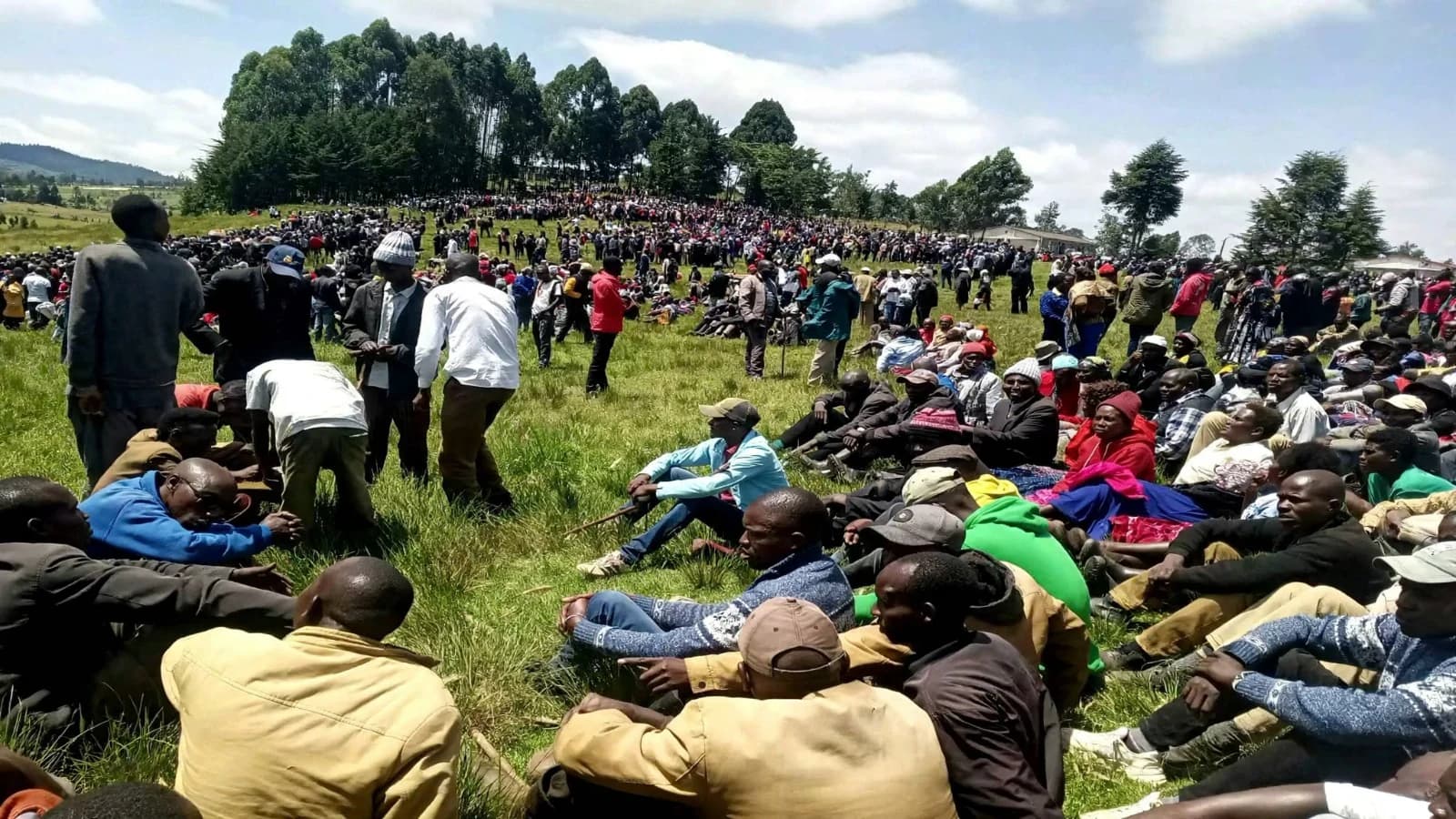
The education of tens of children living at the Lolama Internally Displaced Persons (IDP) camp in Trans Mara, Narok County, hangs in the balance following delays in their resettlement, despite promises by local leaders.
The prolonged stay at the makeshift camp has forced many learners to drop out of school, with their parents expressing fears that the situation could condemn their children to a cycle of poverty.
The families, who live in deplorable conditions, settled at the camp after they were evicted from their homes several years ago. They say they have since been waiting for resettlement, but their hopes continue to fade.
Led by Sarah Kurgat and Evelyne Koskei, the families said many of their children are currently out of school while other children continue with their education. Kurgat said denying the children access to education would have far-reaching consequences for their future.
"Our children's failure to get an education will only lead to continued poverty. We want to break this cycle," Kurgat said.
She said education was a fundamental right for every child and urged the authorities to intervene and ensure the learners return to school.
"Our children's education is key. Their continued stay at home is a gross violation of their rights," she said.
Kurgat appealed to President William Ruto to intervene in their plight, saying their hopes of seeing their children back in school were rapidly diminishing.
"We appeal to President Ruto to come to our aid. We want our children to go back to school and have a better future," she said.
Koskei echoed the concerns, saying the children were also exposed to harsh weather conditions as the country prepared for the El Niño rains. She said the families were living in tattered tents that offered little protection from the cold and rain.
"Our children are at risk of cold-related diseases because the tents we are living in are already tattered," Koskei said.
Koskei also warned that prolonged exclusion from school could expose the children to other social challenges, including crime.
"If our children remain out of school for long, some may be pushed into crime. This is because they have nothing meaningful to do," she said.
The IDPs said their property, including their children's books, school uniforms and other belongings, was destroyed during the eviction. They appealed to the government to address their resettlement concerns and ensure that their rights, as well as those of their children, are respected.
For the families, the return of their children to school is not only about education but also about securing a better future for a generation they fear could otherwise remain trapped in poverty.



Reader Discussion (0)
Sign in to comment