








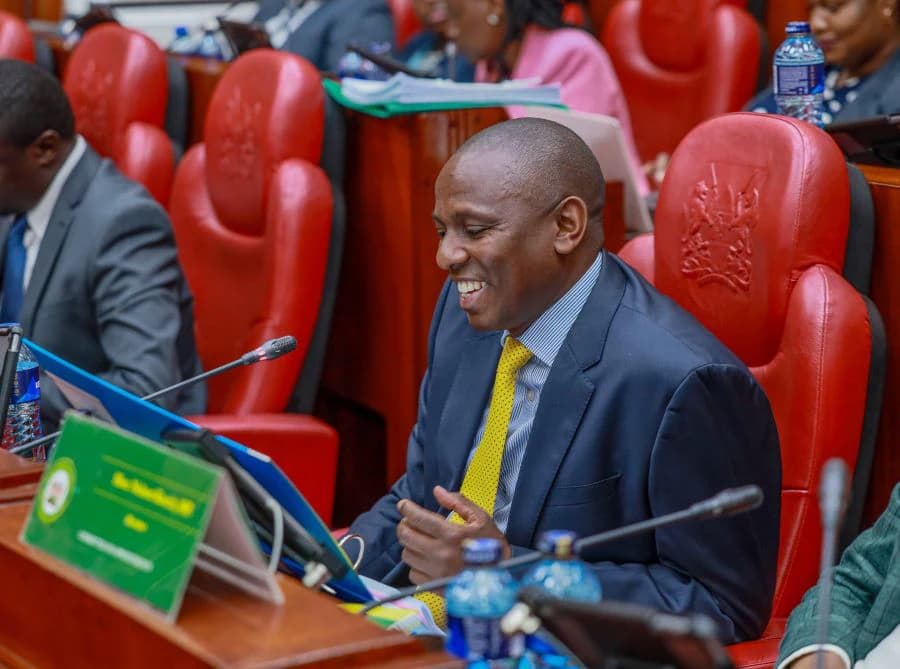
The Online Safety Bill, 2026, introduced in Parliament by Embakasi West MP Mark Mwenje, seeks to overhaul the country's digital space by establishing strict legal responsibilities for internet platforms to protect underage users.
The proposed law comes in response to alarming data showing that 1.2 million Kenyan children aged 12 to 17 have experienced sexual exploitation and abuse online, with 61 per cent of those incidents taking place directly through social media accounts.
Additionally, statistics indicate that one in five Kenyan minors has suffered online harassment and cyberbullying.
Parliament's legislative proposal highlights an expanding range of digital risks threatening children, including targeted algorithms driving addiction, exposure to explicit content, online grooming, sexual harassment and cybercrime.
Tougher requirements for digital platforms
Under the framework of the Bill, digital platforms would be required to actively assess, identify and reduce risks associated with illegal or predatory content.
The proposed measures would require companies to enforce robust age-verification systems, safeguard users' personal data and design safer algorithmic features that limit harm to minors.
Platforms would also be required to establish clear mechanisms for reporting, handling complaints and resolving violations, while parents and guardians would be tasked with maintaining reasonable supervision over their children's internet access.
To enforce compliance, the Communications Authority of Kenya (CA) would be granted supervisory authority over all covered online service providers.
Non-compliant tech companies could face administrative fines of up to Sh500 million or 10 per cent of their global annual turnover, whichever amount is higher.
Corporate leadership would also face direct accountability, with individual senior executives subject to personal fines of up to Sh10 million, prison sentences of up to five years, or both.
Public participation and digital rights
The publication of the Bill opens the formal public participation phase, offering citizens, industry stakeholders and legal experts an opportunity to review its provisions and submit feedback before the National Assembly moves the legislation to its next stage.
While child safety advocates have praised the Bill as a necessary step towards curbing digital abuse, rights organisations are closely monitoring the public consultation process to ensure enforcement powers do not infringe on user privacy or broader digital freedoms.


Reader Discussion (0)
Sign in to comment